You have narrowed your semi-automatic espresso machine search to two of the most recommended options under $700: the Breville Barista Express BES870XL and the De'Longhi La Specialista Arte EC9155MB. Both grind beans, pull shots, and steam milk in a single countertop footprint. Both sit within a few dollars of each other at retail. Yet they take fundamentally different approaches to the same goal — and that difference determines which one you will actually enjoy using every morning.
The Breville rewards patience and curiosity. The De'Longhi rewards consistency and simplicity. This comparison breaks down exactly where each machine wins and where it compromises so you can match the right one to how you actually make coffee.
Grinder: 16 settings versus 8
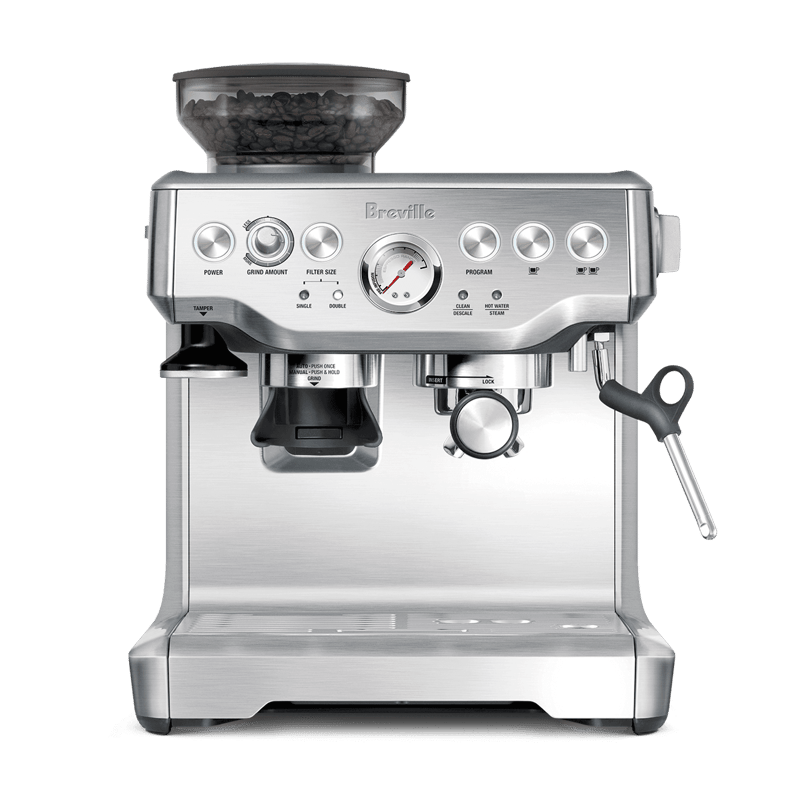
The grinder is the single most important component in any espresso machine, and this is where the Breville Barista Express pulls ahead clearly. It offers 16 external grind settings adjusted via a side dial, plus an adjustable inner burr that effectively multiplies your options. This range lets you dial in precisely for different bean origins, roast levels, and even day-to-day humidity changes that affect extraction.
The De'Longhi La Specialista Arte gives you 8 grind settings adjusted by twisting the collar at the base of the hopper. The jumps between settings are larger, which makes fine-tuning more difficult. If you land between two settings — one slightly too coarse, the next slightly too fine — you are stuck. The De'Longhi hopper is easier to remove and clean, and clearing jammed beans is straightforward. But fewer settings mean less precision where it matters most.
For anyone who plans to experiment with single-origin light roasts or switch between blends regularly, the Breville grinder is meaningfully better. If you buy one bag of medium roast and stick with it, the De'Longhi's 8 settings will likely be sufficient.
Extraction and pre-infusion
Since 2022, Breville ships the Barista Express with the overpressure valve adjusted to 9 bars — the widely accepted standard for proper espresso extraction. This change eliminated the common complaint that earlier units over-extracted at higher pressures, causing bitter shots and channeling problems.
The De'Longhi La Specialista Arte uses a 19-bar pump without a confirmed OPV adjustment to limit extraction pressure. Most reviewers note that the internal system regulates pressure during brewing, but the lack of a published 9-bar OPV specification means you have less certainty about what pressure reaches the puck.
Pre-infusion is where the gap widens. The Breville lets you hold the brew button to extend pre-infusion for as long as you want, giving the coffee puck time to saturate evenly before full pressure kicks in. This manual control is a real advantage when switching between bean types or grind sizes. The De'Longhi offers three fixed pre-infusion times: zero, one, or two seconds. This is simpler and more repeatable, but it removes the ability to experiment.
| Feature | Breville Barista Express | De'Longhi La Specialista Arte |
|---|---|---|
| Pump pressure | 15-bar pump, OPV set to 9 bars | 19-bar pump, no confirmed OPV limit |
| Pre-infusion | Manual hold — unlimited duration | Fixed: 0, 1, or 2 seconds |
| Temperature control | PID-controlled ThermoJet, 3-second heat-up | 3 infusion temperature settings |
| Portafilter size | 54 mm | 51 mm |
The Breville's 54 mm portafilter is also worth noting. While not the commercial-standard 58 mm, it is larger than the De'Longhi's 51 mm basket, which allows a slightly larger dose and more even extraction across the puck surface.
Milk steaming and frothing
If your drink of choice is a latte or cappuccino, the steam wand matters as much as the espresso itself.
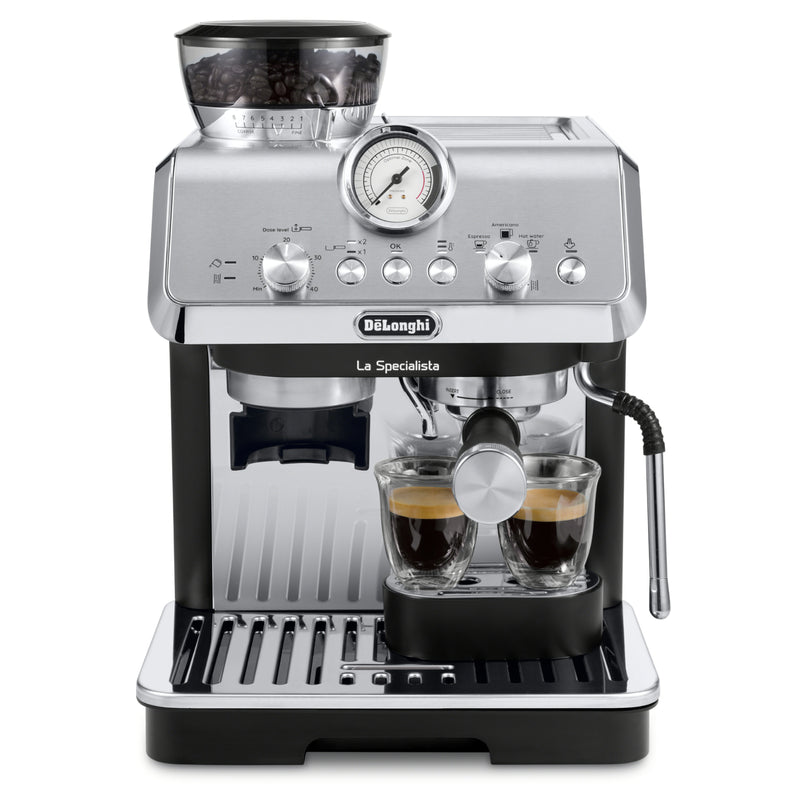
The De'Longhi La Specialista Arte includes a My Latte Art steam wand that stays cool to the touch after steaming. This is a genuine safety and convenience advantage — you can wipe the wand immediately after use without burning your fingers, and milk residue is less likely to bake onto a cooler surface. The wand produces dense, silky microfoam suitable for basic latte art patterns.
The Breville Barista Express has a commercial-style 360-degree swivel steam wand made of stainless steel. It heats up during use, so you need a damp cloth and quick reflexes to wipe it clean. It ships with a frothing attachment for beginners who want automated foam, but most users remove it quickly to learn manual milk texturing. The Breville wand offers more control over steam angle and depth, which experienced users prefer for advanced latte art.
For beginners making their first milk drinks, the De'Longhi wand is more forgiving. For users who plan to progress toward free-pour latte art, the Breville wand has a higher ceiling.
Build quality and durability
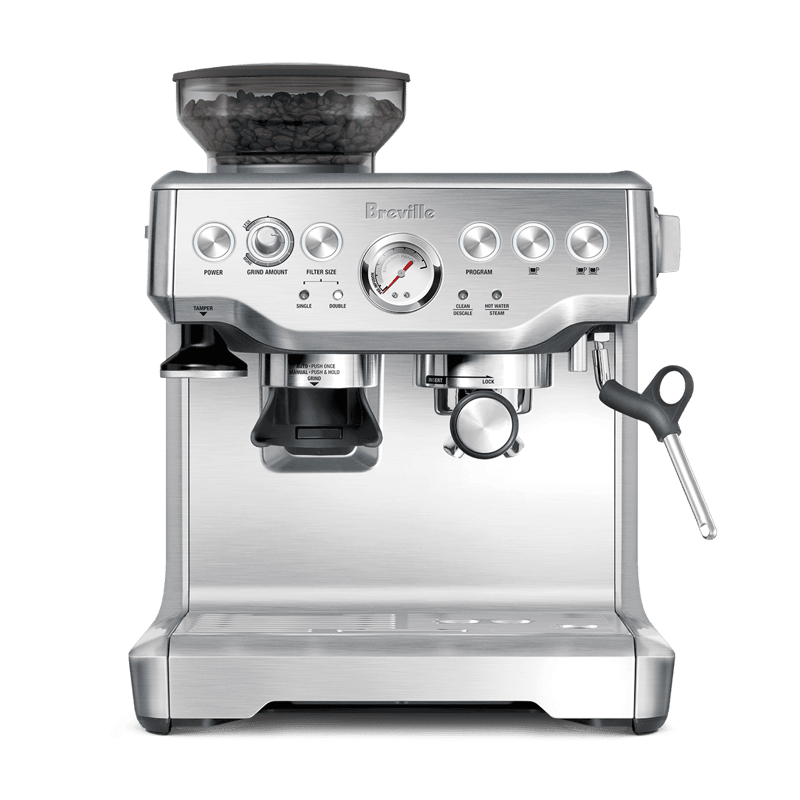
The Breville Barista Express is built with a stainless steel housing and has fewer visible plastic components. It weighs approximately 23 pounds and feels planted on the counter. The machine has been on the market since 2013, giving it over a decade of user feedback and iterative improvements. Long-term owner reports consistently describe machines lasting five to seven years of daily use.
The De'Longhi La Specialista Arte uses a mix of stainless steel and plastic in its housing. At 21.5 pounds, it is slightly lighter. It is a newer design with a more modern aesthetic. Some long-term reviewers note grinder wear issues appearing after two to three years of heavy use, though the longer warranty partially offsets this concern.
Warranty and included accessories
| Breville Barista Express | De'Longhi La Specialista Arte | |
|---|---|---|
| Warranty | 1 year limited | 2 years + optional 1-year extension with registration |
| Included tamper | Integrated storage tamper | Professional tamper + tamping mat |
| Milk jug | Not included | Stainless steel frothing jug included |
| Extras | Cleaning tablets, brush, tool kit | Dosing funnel, water hardness test strip, 100 mL descaler, cleaning needle |
| Price (retail) | ~$700 | ~$700 |
The De'Longhi clearly wins on warranty length and included accessories. Getting a tamping mat, milk jug, and descaler in the box saves $40–60 in initial accessory purchases. The three-year total warranty (with registration) versus Breville's single year is a significant difference at this price point.
Daily workflow comparison
Morning with the Breville: Grind into the portafilter (adjust the 16-setting dial if you changed beans). Tamp. Lock in. Hold the brew button for pre-infusion, then release for full extraction. Watch the pressure gauge. Steam milk manually. Total hands-on time: about four minutes once dialed in, longer during the learning phase.
Morning with the De'Longhi: Grind into the portafilter (8 settings, usually set-and-forget). Tamp with the included professional tamper. Select your pre-infusion time and temperature. Press brew. Steam milk with the cool-touch wand. Total hands-on time: about three minutes. Less variability day to day.
The Breville asks more of you but lets you improve over time. The De'Longhi asks less and delivers reliable results from day one.
Who should choose the Breville Barista Express
This machine is for you if you find the process of making espresso genuinely interesting — not just the drinking. You want to learn what happens when you adjust grind size by one notch, extend pre-infusion by two seconds, or switch from a Brazilian blend to an Ethiopian single-origin. The 16 grind settings, manual pre-infusion, and pressure gauge give you the feedback loop to keep improving. The stainless steel build means it will likely outlast the De'Longhi on your counter.
Who should choose the De'Longhi La Specialista Arte
This machine is for you if you want good espresso without a learning project. You care more about the drink in your cup than the ritual of making it. The cool-touch steam wand, longer warranty, and included accessories reduce friction from unboxing to first sip. The 8 grind settings and fixed pre-infusion times limit your ability to fine-tune, but they also limit the ways you can make a bad shot. For households where multiple people use the machine, the De'Longhi's consistency is an advantage.
Frequently asked questions
Is the Breville Barista Express hard to learn for a beginner?
The learning curve is moderate. Dialing in grind size, dose, and tamp pressure takes most new users one to two weeks of daily practice. The 16 grind settings plus adjustable inner burr give you precision, but that also means more variables to manage. If you prefer a machine that produces decent espresso with minimal adjustment, the De'Longhi La Specialista Arte is more forgiving out of the box.
Does the De'Longhi La Specialista Arte make real espresso or just strong coffee?
It makes real espresso. The 19-bar pump delivers well above the 9 bars needed for proper extraction, and the conical burr grinder produces a fine enough grind for genuine crema. The fixed pre-infusion times of zero, one, or two seconds help with even extraction. Shots are not as tunable as with the Breville, but the results are authentic espresso.
Which machine is better for making lattes and cappuccinos?
The De'Longhi has the edge for milk drinks. Its My Latte Art steam wand stays cool to the touch after steaming, which is safer and easier to wipe down. Both wands produce microfoam suitable for latte art, but the De'Longhi wand is more approachable for beginners learning to texture milk.
How often do these machines need descaling?
Both machines should be descaled every two to three months with regular use, though this varies with water hardness. The De'Longhi includes a total hardness test strip and a 100 mL descaler in the box. Breville does not include descaler but sells its own tablets. Both machines have indicator lights that remind you when descaling is due.
Can I use pre-ground coffee instead of whole beans?
Yes, both machines have a bypass chute for pre-ground coffee. This is useful when you want to try a decaf blend or a specialty single-origin that comes pre-ground. Simply dose the ground coffee directly into the portafilter, bypassing the built-in grinder.
Which machine holds its resale value better?
The Breville Barista Express has been on the market since 2013 and has a strong following in home barista communities. Used units in good condition typically sell for 50 to 60 percent of retail. The De'Longhi La Specialista Arte is newer, so resale data is thinner, but De'Longhi machines generally depreciate at a similar rate.
Related reading
If you are setting up a kitchen around your new espresso machine, our best kitchen organizers roundup covers counter and cabinet storage solutions that help you make room for a grinder and accessories. For lighting your kitchen workspace, see our guide to choosing lighting fixtures. And if you are furnishing other rooms alongside your kitchen upgrade, our IKEA vs Wayfair sofa comparison and Crate & Barrel vs West Elm dining table comparison cover two other high-consideration home purchases.
Scope note: This comparison is based on manufacturer specifications, published reviewer findings, and community feedback as of March 2026. We have not physically tested these machines. Prices reflect typical U.S. retail at time of writing and may vary.