
You have a dining room to furnish and two names keep appearing in every search: Crate & Barrel and West Elm. Both sit in the mid-to-premium segment. Both have physical stores. Both run sales regularly enough that "wait for the sale" is genuine advice. So how are they actually different?
The short answer: Crate & Barrel builds for permanence; West Elm builds for now. That distinction drives nearly every difference in material choice, price, return policy, and the type of buyer each brand actually suits.
This comparison focuses specifically on dining tables — the centrepiece purchase where build quality matters most and where the two brands diverge the sharpest.
At a glance: Crate & Barrel vs West Elm dining tables
| Crate & Barrel | West Elm | |
|---|---|---|
| Price range | $649–$5,299 | $399–$3,500+ |
| Entry-level option | ~$649 (wood, small) | ~$399 (engineered wood) |
| Most popular material | Solid wood (oak, walnut, acacia) | Solid mango wood, reclaimed wood |
| Engineered wood use | Limited | More common at lower price points |
| Style | Classic, versatile, timeless | Modern, trend-forward, mid-century |
| Sustainability | Responsible sourcing, less marketed | FSC-certified, Fair Trade options |
| Return window (furniture) | 7 days to notify | 14 days to notify |
| Build quality perception | High | Moderate (some durability complaints) |
| Best for | Forever-home shoppers | Trend-conscious, budget-flexible |
Crate & Barrel dining tables
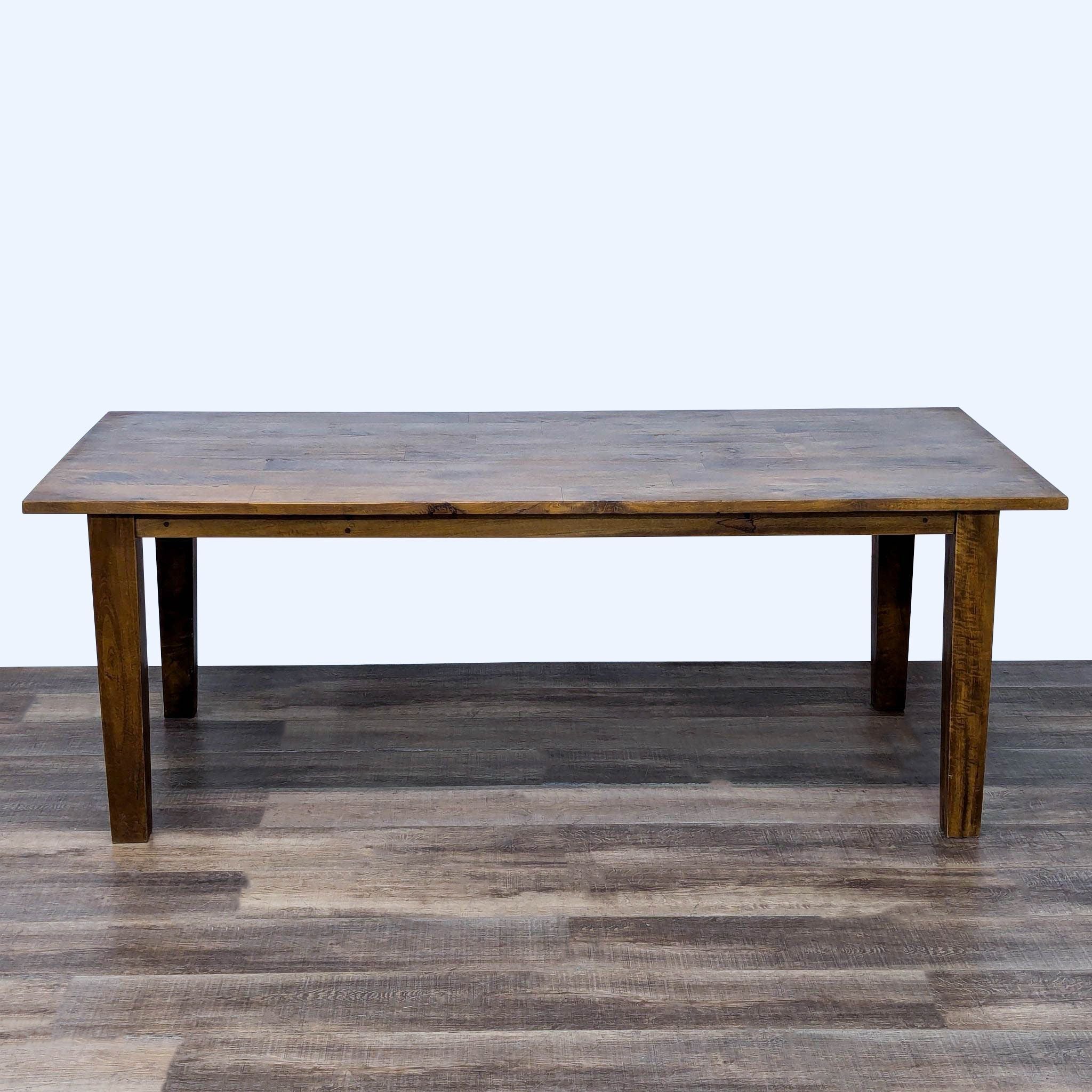
Crate & Barrel's dining table range runs from solidly made entry-level pieces to large-format statement tables in marble and handcrafted wood. The design language is consistent: clean lines, natural materials, neutral finishes that do not compete with whatever else is in the room.
Basque dining table — $899–$1,299
The Basque is Crate & Barrel's bread-and-butter dining table. It is available in multiple wood finishes and sizes, built from solid wood with a slightly live-edge-inspired silhouette. It reads as neither too rustic nor too contemporary, which is exactly what makes it a safe long-term choice. At around $999 for a 65-inch version, it is priced reasonably for what you get.
Monarch dining table — $1,499–$1,899
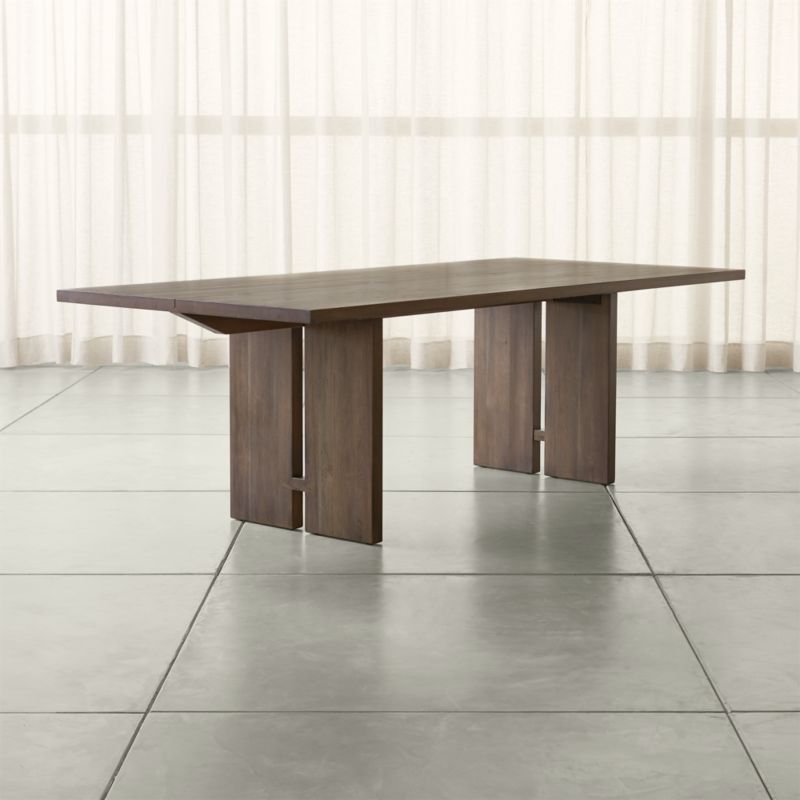
The Monarch steps up to a richer, more substantial silhouette with a solid wood top in a warm shiitake finish and a heavier base. It suits dining rooms where the table is meant to be the room's focal point rather than a background piece. Construction feels noticeably more substantial than West Elm tables at a comparable price.
Panos dining table — $2,299+
The Panos is where Crate & Barrel moves into marble and stone territory. If you are considering a stone-top table, Crate & Barrel's execution here is more reliable than West Elm's — customer reports of concrete tops cracking are more common at West Elm than at Crate & Barrel.
What Crate & Barrel gets right
- Solid wood is the default, not the exception. Even at the $649–$899 price point, you are typically getting real wood rather than an engineered core with a veneer top.
- Finishes age predictably. The neutral palette means the table does not look dated after two years of trend cycles.
- Consistent reviews for durability. Dining tables are not a low-complaint category for any retailer, but Crate & Barrel generates fewer structural complaints per dollar spent.
What Crate & Barrel gets wrong
- The return window for furniture — 7 days to notify — is tighter than West Elm's. If a table arrives damaged or misrepresents the online photo, the clock starts immediately.
- Sustainability credentials exist but are not prominently communicated. If FSC certification or Fair Trade sourcing matters to your decision, you will need to dig into product pages rather than finding it upfront.
West Elm dining tables
West Elm's dining table collection is larger and more varied than Crate & Barrel's. You will find tables in concrete, marble, reclaimed wood, solid mango, glass, and engineered composites. The design identity leans mid-century modern and Scandinavian-influenced, with bolder shapes and more visible material choices.
Anton solid wood dining table — $599–$1,399
The Anton is West Elm's best-known dining table and for good reason. It is built from solid mango wood, which has a distinctive grain pattern that makes each table unique. The legs are typically angled in a mid-century style, and the proportions feel right in rooms from 10×12 up to larger open-plan spaces. At around $699 for a 62-inch table, it hits a competitive price point.
Mango wood is a hardwood, but softer than oak or walnut. It dents and scratches more easily — something to weigh if you have young children or run a busy household.
Emmerson reclaimed wood dining table — $799–$1,499
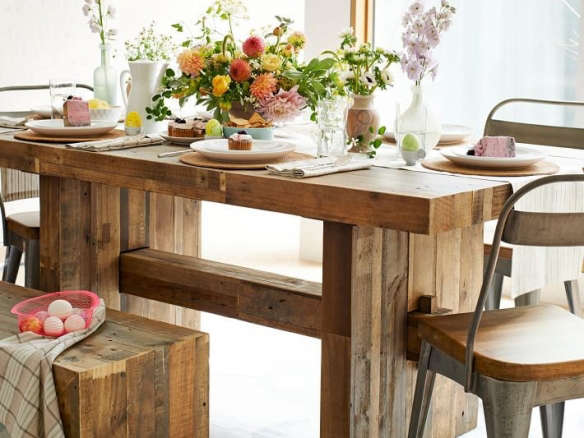
The Emmerson is built from reclaimed pine with a visible, rustic grain. It is FSC-certified and one of West Elm's most prominently sustainability-marketed pieces. The look is deliberately imperfect — knots, variation in stain, and raw edges are features rather than flaws. If you want a dining table that tells a materials story, this is a strong candidate.
Mid-century expandable dining table — $699–$999
West Elm's mid-century expandable table is the pragmatic pick for smaller apartments where the table needs to serve both everyday meals and occasional dinner parties. The expandable leaf mechanism is reliable at this price, and the tapered leg profile is attractive. It mixes solid and engineered wood in the top, which is a reasonable trade-off for an expandable design.
What West Elm gets right
- Lower entry price. You can get a legitimate solid-wood dining table from West Elm starting around $399–$499, which undercuts Crate & Barrel's range by $150–$250.
- Sustainability marketing is clear. FSC-certified and Fair Trade Certified product labelling is prominent on product pages. If this matters to you, West Elm makes it easy to find.
- Broader stylistic range. West Elm carries close to 100 dining table styles across different shapes, finishes, and materials. Crate & Barrel offers more consistency but less variety.
What West Elm gets wrong
- Durability complaints are real. Customer reviews and third-party assessments note recurring issues: concrete tops developing spider cracks, dining chairs wobbling under load, and construction that can feel lightweight relative to the price. This is not universal, but it is frequent enough to factor in.
- Trend-forward designs date faster. A table that looks perfect in a 2024 West Elm catalogue may feel self-consciously of its moment by 2028. Crate & Barrel's more neutral execution is less vulnerable to this.
- Return window is still short. 14 days to notify is more generous than Crate & Barrel's 7 days, but it is still a narrow window for large furniture that requires assembly and a few days of actual use before you know whether it works for your space.
Key decision factors
Price
West Elm wins on entry-level access. If your budget is $400–$700, West Elm gives you more genuine solid-wood options at that price than Crate & Barrel does.
At $900–$1,500, both brands offer solid-wood tables with strong construction. Crate & Barrel's edge in this range is build quality and durability track record. West Elm's edge is style variety.
Above $1,500, Crate & Barrel's marble and stone options are more dependable. West Elm's concrete tops at this price point carry a higher risk of cracking.
Style
Neither brand makes a wrong aesthetic choice — both have ranges that photograph well and look appropriate in contemporary homes. The distinction is in staying power.
Crate & Barrel's tables are styled to be invisible in the room: the wood is the feature, the lines are clean, and nothing screams a particular design moment. West Elm's tables are styled to be noticed, which is appealing when you buy them and occasionally regrettable five years later.
If you are decorating a rental apartment or a home you expect to leave within five years, West Elm's trend-forward approach is a reasonable trade. If you are furnishing a long-term space, Crate & Barrel's neutrality is an underrated asset.
Build quality and materials
Crate & Barrel uses solid wood more consistently across its range. West Elm uses solid wood in marquee products like the Anton and Emmerson but mixes in more engineered wood at lower price points.
For dining tables specifically, material honesty matters more than for sofas or chairs. A dining table takes daily mechanical stress — chairs scraping across legs, heavy pots placed directly on the surface, seasonal humidity changes. Solid wood handles this better than engineered alternatives over a 10-year horizon.
Returns and warranty
Neither brand's return policy is particularly generous for furniture. If you are ordering online and cannot view the piece in a showroom first, both brands leave you with a narrow window to change your mind. West Elm's 14-day notification window gives you a week more than Crate & Barrel's 7 days — a modest but real difference.
Both brands charge return shipping on furniture. Neither publishes a formal furniture warranty that covers normal wear.
Who should buy which
Choose Crate & Barrel if:
- You are furnishing a home you intend to stay in for five or more years
- You want a dining table that works across multiple interior refresh cycles without looking out of place
- Your budget is $900+ and you want construction quality to match
- You have had a bad experience with mid-priced furniture that degraded faster than expected
Choose West Elm if:
- You want a bolder, more contemporary statement piece at a lower entry price
- Sustainability certifications are a meaningful factor in your purchase decision
- You value variety — West Elm's collection is substantially larger
- You are furnishing a space for the medium term and are comfortable with the idea of replacing furniture in 7–10 years
Related guides
If you are still comparing brands for other rooms, our IKEA vs Wayfair sofas comparison covers a similar trade-off between price and build quality in seating. For timing your purchase, see our guide to the best time to buy furniture — both brands run predictable sales around major holidays that can save you 20–30%. You can also read our full Wayfair brand overview if you are considering a third option at a lower price point.
FAQ
Is Crate & Barrel better quality than West Elm?
Generally yes, particularly for dining tables. Crate & Barrel uses more solid wood across its range and generates fewer durability complaints per dollar spent. West Elm has standout products — the Anton and Emmerson are well-built — but quality is less consistent across the full collection.
Which is more expensive — Crate & Barrel or West Elm?
Crate & Barrel skews more expensive, with most dining tables starting around $649. West Elm has a wider price spread, with entry-level options from around $399 and clearance pieces below $300. At comparable price points, Crate & Barrel typically delivers more solid-wood construction.
What is West Elm's return policy for dining tables?
West Elm gives you 14 days to notify them of a furniture return. Furniture returns generally require return shipping, and custom or made-to-order pieces are final sale. Check the current policy on the West Elm website before purchasing, as terms can change.
Does Crate & Barrel make good dining tables?
Yes. Crate & Barrel's dining tables are consistently reviewed well for durability, material quality, and design versatility. They are a reliable choice for shoppers who want furniture that holds up over years rather than a few seasons.
Which dining table brand is better for sustainability?
West Elm is more explicit about sustainability, with FSC-certified wood and Fair Trade-certified options on several popular collections including the Emmerson. Crate & Barrel sources responsibly but markets its sustainability credentials less prominently. If certification labelling matters to your decision, West Elm makes it easier to verify.
Prices and policies are accurate as of April 2026 based on publicly available product information from crateandbarrel.com and westelm.com. Prices vary by size, finish, and promotional period. Always verify current pricing on the retailer's website before purchasing.
This site may earn a commission from qualifying purchases made through links on this page. This does not affect our editorial judgement — see our editorial policy for details.