Players Benefits independently researches every product and brand we cover. We compared publicly available specs, pricing, warranty terms, and aggregated customer reviews for IKEA and Wayfair sofas. We did not receive free product from either brand, and this article contains no sponsored placements.
The real question behind IKEA vs Wayfair
Most people framing this as "IKEA vs Wayfair" are really asking a deeper question: should I buy from a single-brand manufacturer I can visit in person, or from an online marketplace with ten times more options? The answer depends on your budget, your tolerance for research, and whether you care more about consistency or variety.
IKEA designs every sofa it sells. The company controls materials, factory standards, and testing protocols across its entire line. That means a KIVIK in Phoenix is identical to a KIVIK in Brooklyn. Wayfair, by contrast, is a platform — a digital storefront for hundreds of independent furniture manufacturers selling under house-brand labels like Corrigan Studio, Sand & Stable, Lark Manor, and AllModern. The sofa you get depends entirely on which supplier made it.
That distinction matters more for sofas than for almost any other furniture category. A sofa is the single highest-use piece in most homes, and getting construction quality wrong means living with a sagging seat for years or eating a costly return. Below, we compare real models from both brands across the metrics that actually determine long-term satisfaction.
For a deeper dive into each brand's full furniture range, see our IKEA brand profile and Wayfair brand profile.
Head-to-head comparison table
| Category | IKEA | Wayfair |
|---|---|---|
| Price range (3-seat sofa) | $499–$1,999 | $224–$3,000+ |
| Frame materials | Engineered wood, plywood, solid pine | Varies by brand — engineered wood to kiln-dried hardwood |
| Cushion construction | Pocket springs + HR foam (mid-range+) | Ranges from basic foam to eight-way hand-tied springs |
| Fabric options per model | 4–8 covers per sofa line | Dozens of options across marketplace brands |
| Washable covers | Yes, on most models | Rare — varies by manufacturer |
| Assembly | Full flat-pack DIY (60–90 min) | Partial assembly or delivered assembled |
| Delivery cost | $5.99 flat-rate or free pickup | Free shipping on most; White Glove $99–$199 |
| Return window | 180 days opened / 365 days unopened | 30 days (most items) |
| Warranty | 10–25 years depending on model | Varies by manufacturer; typically 1–5 years |
| In-store testing | Yes (400+ stores globally) | No — online only |
IKEA's strongest sofa picks
IKEA's sofa range spans from the $149 KLIPPAN loveseat to the $1,999 STOCKHOLM 2025 three-seater. The sweet spot for most buyers falls in the $800–$1,500 range, where IKEA uses pocket-spring construction and high-resilience foam rather than basic polyurethane slabs.
IKEA KIVIK — the everyday workhorse ($849)
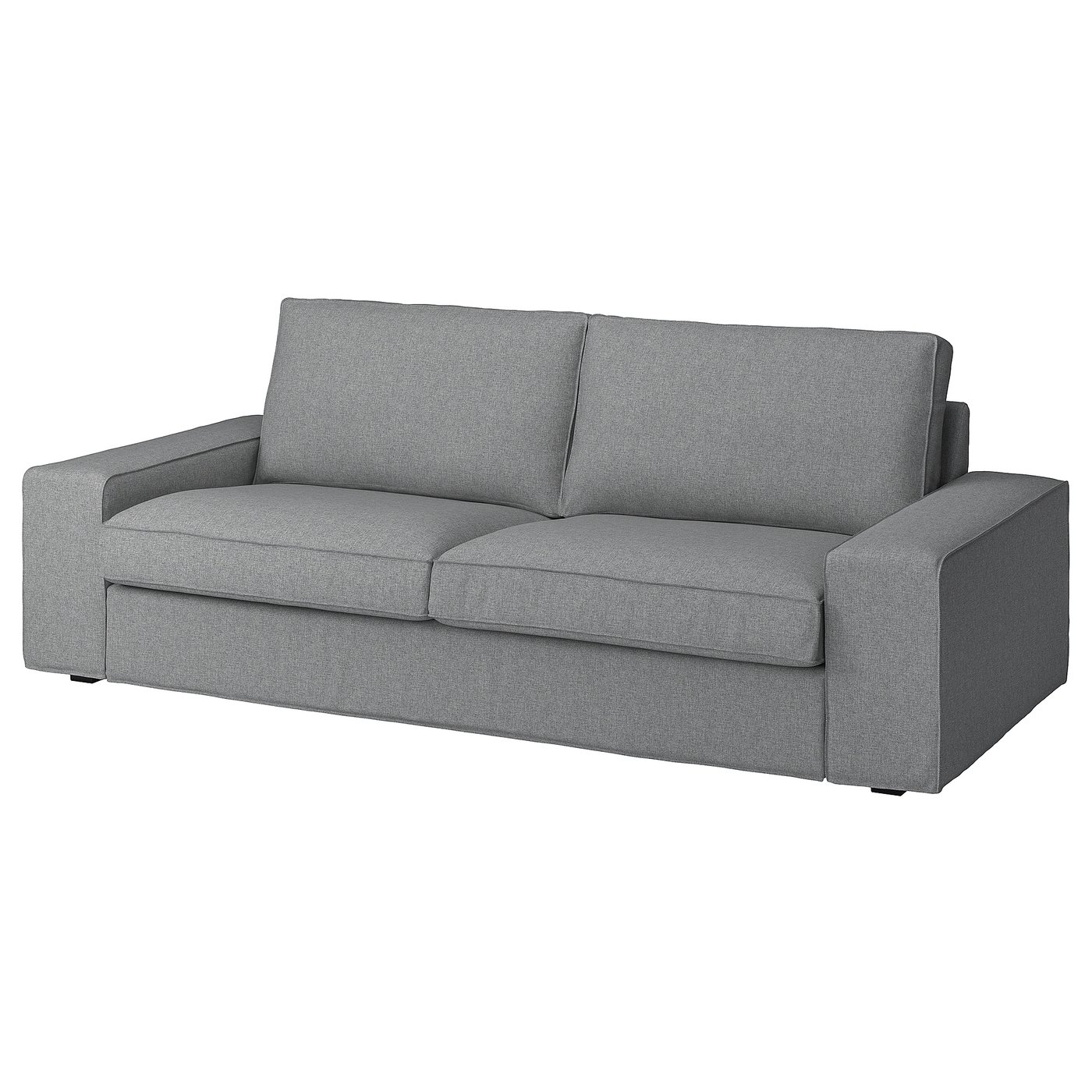
The KIVIK is IKEA's highest-volume sofa for good reason. At $849 for the three-seat version in Tibbleby beige/gray, it delivers pocket-spring seat cushions with high-resilience foam at a price point most competitors cannot match. Key specs:
- Dimensions: 89¾" W × 37⅜" D × 32⅝" H
- Seat depth: 23⅝" — deep enough for cross-legged sitting
- Seat height: 17¾"
- Frame: Fiberboard, plywood, solid wood, particleboard
- Cover: 100% recycled polyester (Tibbleby weave), removable and machine-washable
- Warranty: 10-year limited
The KIVIK is not a style piece — its boxy silhouette reads as functional rather than curated. But the low armrests double as extra seating, the chaise add-on ($1,749 for sofa + chaise) turns it into a sectional, and the washable covers make it family-proof. If you want one sofa that handles daily abuse without drama, this is IKEA's strongest value.
IKEA MORABO — mid-century polish at a mainstream price ($799)
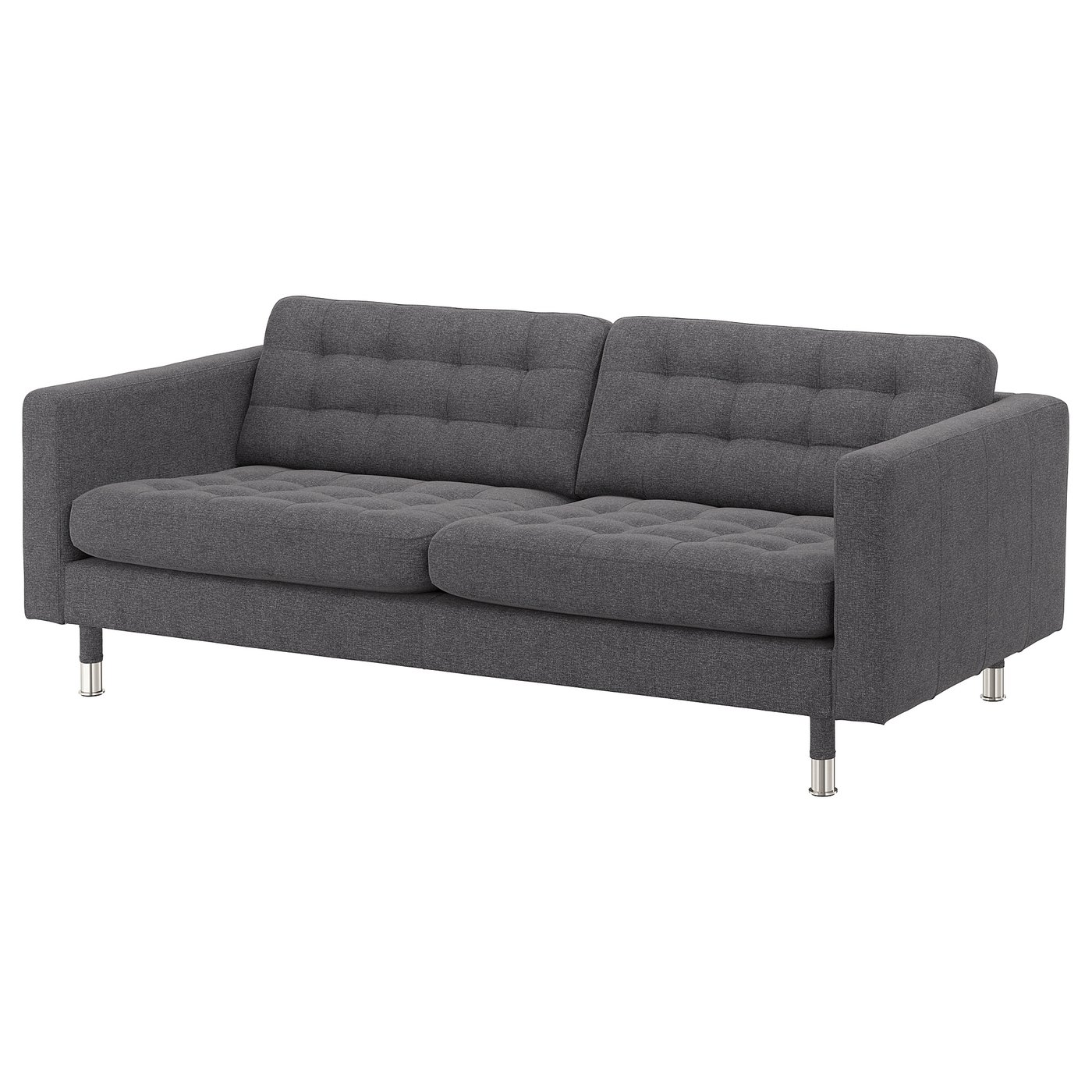
The MORABO is where IKEA starts competing with design-forward brands. At $799 in Gunnared dark gray, it features chrome-plated steel legs, buttoned seat cushions, and a slimmer profile that reads more "curated apartment" than "family room." Specs:
- Dimensions: 81⅛" W × 36¼" D × 31⅞" H
- Seat height: 18½" — slightly taller than the KIVIK
- Frame: Plywood, solid pine, particleboard, fiberboard
- Cushions: High-resilience polyurethane foam (2.2 lb/cu.ft. cold foam)
- Cover: 100% recycled polyester (Gunnared), removable
- Also available in: Grann/Bomstad leather ($1,399)
- Warranty: 10-year limited
The MORABO's removable armrests let you add a chaise lounge later, which is a nice modularity feature at this price. The leather version in Grann/Bomstad golden brown is one of IKEA's best style-per-dollar plays — genuine grain leather on contact surfaces for under $1,400.
IKEA FINNALA — the configurable sectional ($1,499+)
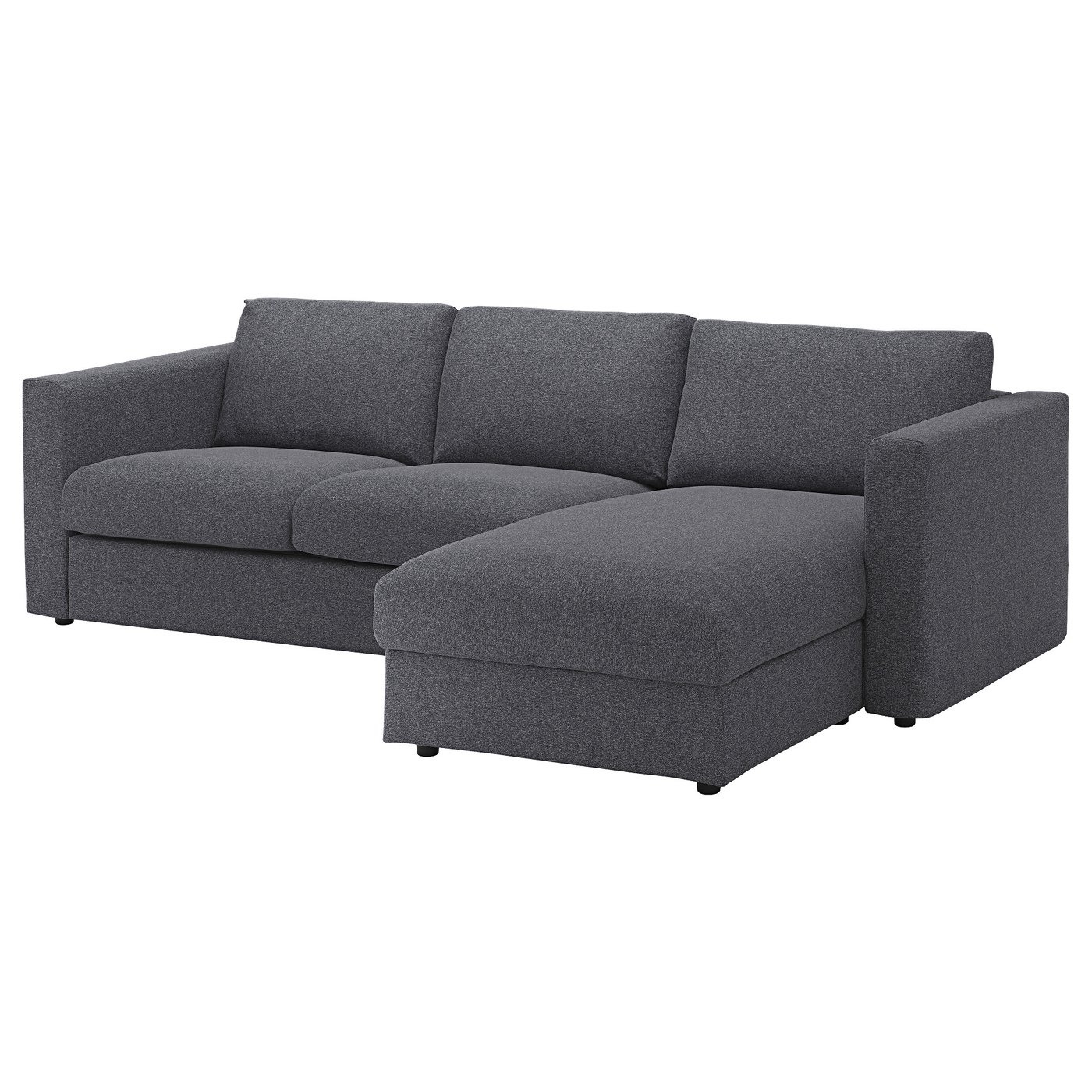
The FINNALA is IKEA's answer to custom sectionals. Starting at $1,499 for a sofa with chaise in Gunnared medium gray, it uses IKEA's online planner tool to let you build L-shapes, U-shapes, and corner configurations from modular sections. Highlights:
- Cushions: Pocket springs with high-resilience foam and wadding top layer
- Storage: Built-in under-seat storage with stay-open lids
- Cover: Machine-washable polyester or leather options
- Fabric options: Gunnared (polyester), Dalstorp (multicolor weave), Grann/Bomstad (leather)
- Warranty: 10-year limited
The FINNALA's chief advantage over comparable Wayfair sectionals is predictability. Every section is engineered to connect with every other section, and adding pieces years later is straightforward because IKEA maintains its product lines for extended runs.
IKEA STOCKHOLM 2025 — the premium play ($1,999)
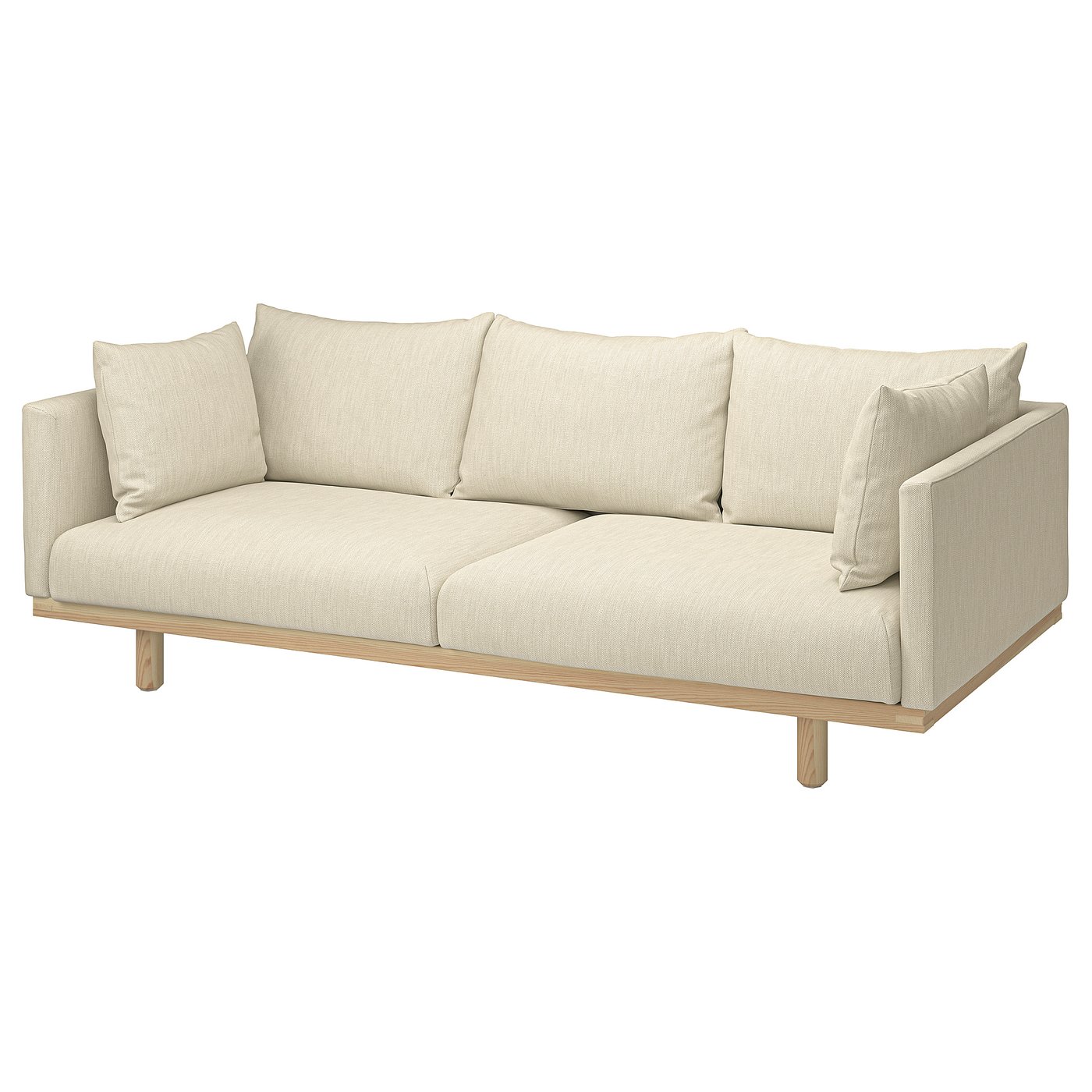
At $1,999, the STOCKHOLM 2025 is IKEA's most expensive sofa and the one most likely to surprise people who associate the brand with flat-pack basics. Designed by Nike Karlsson, it features a solid wood frame, latex foam with pocket springs, and a removable 68% cotton / 32% linen cover in Sundhamn beige. The construction is genuinely different from IKEA's mid-range:
- Dimensions: 91¾" W × 40½" D × 33⅛" H
- Seat depth: 27⅛" — lounge-depth seating
- Seat height: 16½" — low and modern
- Warranty: 25-year limited — IKEA's strongest guarantee
The 25-year warranty signals that IKEA considers this a different tier of product. The latex-and-spring cushion system should hold its shape significantly longer than the polyurethane foam in the KIVIK or MORABO. If you want IKEA reliability at a near-premium construction level, the STOCKHOLM 2025 is the sofa to consider.
IKEA FRIHETEN — the budget sleeper ($899)
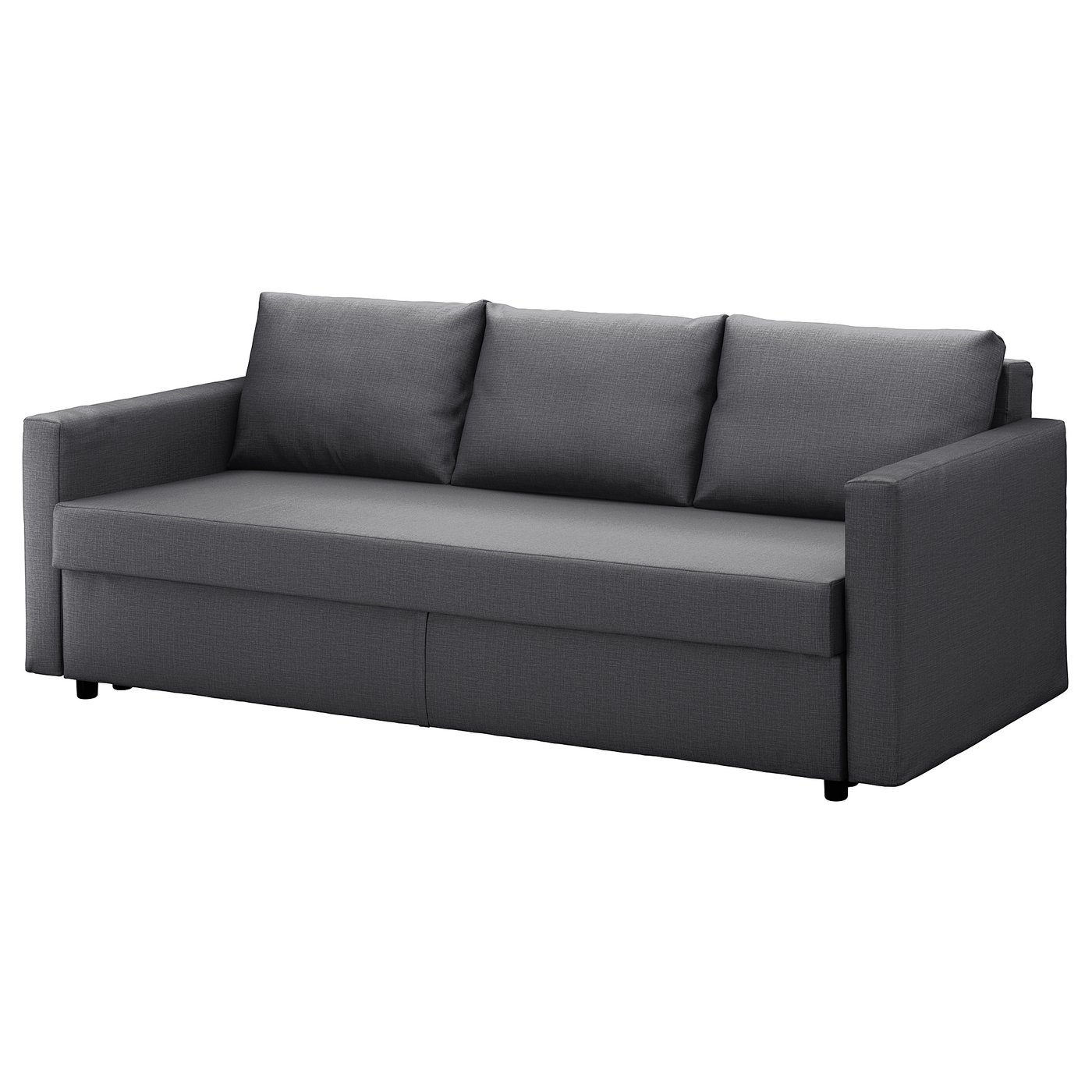
The FRIHETEN is not IKEA's best sofa, but it might be IKEA's most practical one. At $899 for the three-seat sleeper in Skiftebo dark gray, it converts to a queen-sized bed (56¾" × 78⅜") and includes built-in storage under the seat. For guest rooms, studio apartments, or anyone who needs dual-purpose furniture, the FRIHETEN's utility-per-dollar is hard to beat.
- Dimensions: 88⅝" W × 41⅜" D × 32⅝" H
- Cover: 100% recycled polyester, removable
- Warranty: 10-year limited
The sleeper sectional version ($999–$1,099) adds a chaise with even more storage. The seating comfort is adequate rather than luxurious — the foam is functional-grade, designed for the conversion mechanism rather than lounge-depth relaxation.
Wayfair's strongest sofa picks
Wayfair's catalog is vast, which is both its advantage and its hazard. The platform lists sofas from under $300 to well over $3,000 across dozens of house brands and third-party manufacturers. The key to buying well on Wayfair is understanding which brands and construction features signal quality, and which signal corners being cut.
Corrigan Studio Etta — the viral mid-century pick (~$350)

The Corrigan Studio Jeses Minimore Etta sofa has become one of Wayfair's most visible sofas, regularly featured in deal roundups at around $350 (down from a list price near $600). It checks a lot of aesthetic boxes:
- Width: 84.3"
- Style: Mid-century modern with square arms and matte-black metal legs
- Upholstery: Linen-blend fabric in dark gray, green, off-white, or rust
- Cushions: Coil-spring support with foam that firms up after break-in
- Rating: 4.5+ stars with 750+ five-star reviews, Wayfair Verified
The Etta's strength is visual impact at a low price — it looks like a $1,200 sofa in photos. The trade-off is that the frame is lighter-duty than IKEA's mid-range offerings, and some reviewers note that the foam feels firm initially and softens unevenly over time. For a first apartment or a secondary living area, the value proposition is strong. For a primary family sofa expected to last 7+ years, the KIVIK is the more durable choice at roughly double the price.
Lark Manor sectionals — farmhouse style on a budget (~$300–$500)
Lark Manor is Wayfair's farmhouse-and-traditional house brand, and its sectionals routinely land in the $300–$500 range during sales. The Ameliarae 4-Piece Upholstered Sectional (~$410) is a representative example:
- Seating capacity: 3, with reversible chaise
- Frame: Solid and engineered wood
- Upholstery: Linen-blend fabric with pocket-spring cushions
- Extras: Under-seat storage, pull-out sleeper mechanism, two accent pillows
- Weight capacity: 750 lbs
At this price, you are getting functional furniture with a specific aesthetic (rolled arms, pillow-back cushions, turned legs). The materials are entry-level — expect engineered wood frames and polyester-blend fabrics. The value makes sense for renters, guest rooms, or anyone who plans to upgrade within 3–5 years. It does not make sense if you want a 10-year sofa.
Sand & Stable — coastal and transitional options (~$400–$1,200)
Sand & Stable targets buyers who want a relaxed, coastal-influenced aesthetic. The brand spans a wider quality range than Lark Manor, with some models using genuine leather and solid wood frames:
- Talley Sofa & Chaise (~$1,100): Genuine top-grain leather, solid wood frame with tapered legs, foam-filled cushions. This is Wayfair's closest competitor to IKEA's MORABO leather version.
- Seylow Convertible Sofa (~$250 on sale): Faux leather loveseat that converts to a twin bed. Pure utility at a starter price.
The quality gap within a single Wayfair house brand illustrates the marketplace model's core challenge: the brand name tells you the aesthetic, not the construction quality. Always check the specific model's frame material, cushion type, and customer photos before ordering.
AllModern — the design-forward tier (~$800–$2,500)
AllModern is Wayfair's premium house brand, positioned against West Elm and CB2. The Vervino sectional and similar models use FSC-certified wood frames, GRS-certified upholstery materials, and options like boucle, velvet, and wool-blend fabrics. Some pieces are built in North Carolina with eight-way hand-tied spring construction — the same technique used in high-end furniture.
AllModern pricing starts around $800 for a standard sofa and pushes past $2,500 for configured sectionals. At this tier, you are paying for materials and construction that genuinely compete with specialty furniture brands, but you lose IKEA's in-store testing and generous return window.
Construction quality: what to actually check
Sofa marketing is full of noise. Here are the construction details that actually predict how a sofa will hold up:
Frame material is the single most important spec. Kiln-dried hardwood is best, followed by plywood and solid pine. Engineered wood (particleboard, fiberboard) is the weakest — acceptable in a $400 sofa, concerning in a $1,200 one. IKEA uses a plywood-and-pine combination in most models; Wayfair varies from particleboard to hardwood depending on the manufacturer.
Cushion construction determines comfort longevity. From best to worst: pocket springs with HR foam or latex (IKEA STOCKHOLM 2025, KIVIK), sinuous/S-springs with foam (most mid-range models), foam-only with no spring support (many budget Wayfair models). Eight-way hand-tied springs are the gold standard but rarely appear below $1,500.
Cover removability matters more than people realize. IKEA's removable, washable covers on the KIVIK, MORABO, and FINNALA let you clean or replace the cover without replacing the sofa. Most Wayfair sofas have fixed upholstery — if the fabric stains or wears, your options are professional cleaning or a slipcover.
Delivery, assembly, and the hidden costs
The sticker price on a sofa rarely tells the full story. Here is what each brand actually costs to get into your living room:
IKEA delivery runs $5.99 flat-rate for small orders or free with in-store pickup. The catch is assembly time — expect 60 to 90 minutes for a standard sofa and longer for sectionals. IKEA's visual instructions are well-designed, and missing hardware is rare thanks to centralized packaging. If you hire IKEA's TaskRabbit assembly service, add $80–$150.
Wayfair delivery is free on most sofas, which is a genuine cost advantage. Many models arrive partially assembled, requiring only leg attachment (15–20 minutes). For full White Glove delivery — in-home placement, full assembly, and packaging removal — Wayfair charges $99–$199 depending on the item. The variable here is freight carrier quality: Wayfair uses regional carriers, and delivery experiences vary by zip code.
If you are buying a sectional or sleeper sofa and value your time, Wayfair's delivered-assembled model can save 2–3 hours of frustration. If you are buying a standard three-seat sofa and live near an IKEA, picking it up and assembling it yourself saves $100+ compared to any delivery option.
For broader guidance on timing your purchase, our best time to buy furniture guide covers seasonal pricing patterns at both retailers.
Return policies: IKEA's decisive advantage
This is where IKEA pulls ahead by a wide margin. IKEA's 180-day return policy on opened furniture is among the most generous in the industry. You can live with a sofa for nearly six months and return it if the comfort or fit is wrong. Unopened items get a full 365 days.
Wayfair allows 30 days for most furniture returns, and the item must be in original packaging for a full refund. Assembled sofas often incur restocking fees or are return-ineligible, depending on the seller. For a $400 impulse buy, this may not matter. For a $1,500 sectional you cannot sit-test beforehand, a 30-day window with conditions is a real risk.
If you are considering a Wayfair sofa and cannot test it in person, read at least 20–30 customer reviews with photos, filter for reviewers who mention long-term use (3+ months), and check the specific return terms on the product page before ordering.
Style and selection: Wayfair's decisive advantage
IKEA's design language is consistent — Scandinavian modern with clean lines, neutral palettes, and functional details. If that aesthetic matches your home, the buying process is simple. If you want a tufted Chesterfield, a farmhouse sectional with nailhead trim, a curved boucle statement piece, or a traditional rolled-arm sofa, IKEA does not make one.
Wayfair's marketplace model means it can offer every mainstream furniture style simultaneously. A single search for "sofa" returns thousands of results across mid-century modern, contemporary, farmhouse, coastal, glam, industrial, and traditional categories. The trade-off is decision fatigue and the need to vet each individual product, since two sofas at the same price point on Wayfair may have wildly different construction quality.
Who should buy from IKEA
- First-time sofa buyers who want a safe, returnable purchase under $1,000
- Renters who value the ability to disassemble and move flat-pack furniture
- Families with kids or pets who need machine-washable covers
- Shoppers who want to sit-test before committing to a $800+ purchase
- Anyone who values warranty length — 10 to 25 years vs. Wayfair's typical 1 to 5
Who should buy from Wayfair
- Style-specific shoppers looking for farmhouse, traditional, glam, or other aesthetics IKEA does not carry
- Bargain hunters willing to research individual models to find high-value picks under $400
- Buyers who want leather, velvet, or boucle upholstery options at multiple price points
- Anyone who dislikes assembly and prefers delivered-ready or White Glove service
- Shoppers furnishing larger spaces who need size and configuration options beyond IKEA's modular systems
The bottom line
IKEA is the lower-risk choice. You know exactly what you are getting, you can return it for six months, and the mid-range models (KIVIK, MORABO, FINNALA) offer construction quality that matches or exceeds most Wayfair options at the same price. The STOCKHOLM 2025 proves that IKEA can compete at a near-premium level when it wants to.
Wayfair is the higher-ceiling choice. Its best sofas — particularly from AllModern and the upper end of Sand & Stable — offer materials and craftsmanship that IKEA's standardized production cannot match. But its worst sofas are significantly worse than anything IKEA sells, and the 30-day return window gives you less room to discover that.
For most shoppers spending $500 to $1,200 on a primary living room sofa, IKEA's combination of quality consistency, return flexibility, and in-store testing gives it the edge. If your budget exceeds $1,500 or your style needs are specific, Wayfair's marketplace breadth becomes a genuine advantage — just budget extra time for research.
If you are comparing other furniture categories across these price ranges, our Crate & Barrel vs West Elm dining table comparison applies a similar framework to dining room purchases.