This profile is based on published specifications, verified customer review data, and publicly available pricing from IKEA's U.S. website as of March 2026. Players Benefits does not accept payment from brands for editorial coverage. We have not tested every product in-home — where we reference durability or comfort, we cite aggregated customer reviews and materials analysis rather than claiming firsthand experience.
The IKEA proposition: what you're actually buying
IKEA needs no introduction, but it does need context. The Swedish retailer sells more furniture than any other company on earth, operating over 460 stores across 63 markets. Its design philosophy — democratic design, in company parlance — aims to make well-designed furniture accessible to everyone, not just people who can afford a $4,000 sofa.
That philosophy produces a specific tradeoff. IKEA compresses cost by using engineered wood (particleboard, MDF, fiberboard), flat-pack shipping, and self-assembly. The result is furniture that looks clean and modern on day one but may not survive your third apartment move. Understanding where that tradeoff works in your favor — and where it doesn't — is the entire point of this guide.
If you're weighing IKEA against online alternatives, our IKEA vs Wayfair sofas comparison breaks down the value question specifically for living room seating.
IKEA's three quality tiers
Not all IKEA furniture is created equal. The brand operates across three distinct tiers, and knowing which tier a product belongs to tells you more about its longevity than any showroom impression.
Entry tier: particleboard essentials
Products like BILLY, KALLAX, LACK, and parts of the MALM line form the backbone of IKEA's catalog. These use particleboard, fiberboard, and honeycomb paper filling — materials that are lightweight and inexpensive but structurally limited. Expect 3-5 years of service under normal use. Disassembling and reassembling these pieces for a move is risky; cam-lock joints lose grip in particleboard after the first teardown.
Best for: Renters, students, first apartments, and anyone who expects to upgrade within a few years.
Mid tier: solid wood lines
The HEMNES collection marks a meaningful jump in material quality. HEMNES uses solid pine for drawer fronts, side panels, and structural elements, finished with stain and lacquer. Drawers run on metal slides with pull-out stops. These pieces weigh considerably more than entry-tier equivalents and can survive a move or two without structural damage.
Best for: Homeowners and long-term renters who want classic styling with 8-12 years of useful life.
Premium tier: the STOCKHOLM collections
IKEA's STOCKHOLM line represents the brand's bid for the mid-range furniture market. The STOCKHOLM 2025 collection, designed by Ola Wihlborg, features solid wood frames, pocket-spring and natural-latex cushioning, and removable cotton-linen covers. These pieces carry 25-year limited warranties — a confidence signal rare at any price point, let alone IKEA's.
Best for: Shoppers who want design-forward furniture without West Elm or Crate & Barrel pricing.
Where IKEA genuinely excels: storage and shelving
This is IKEA's strongest category, full stop. The modular storage lines — KALLAX, BILLY, and PAX — are the reason designers, organizers, and first-time apartment renters all end up in the same blue-and-yellow warehouse.
KALLAX shelving unit
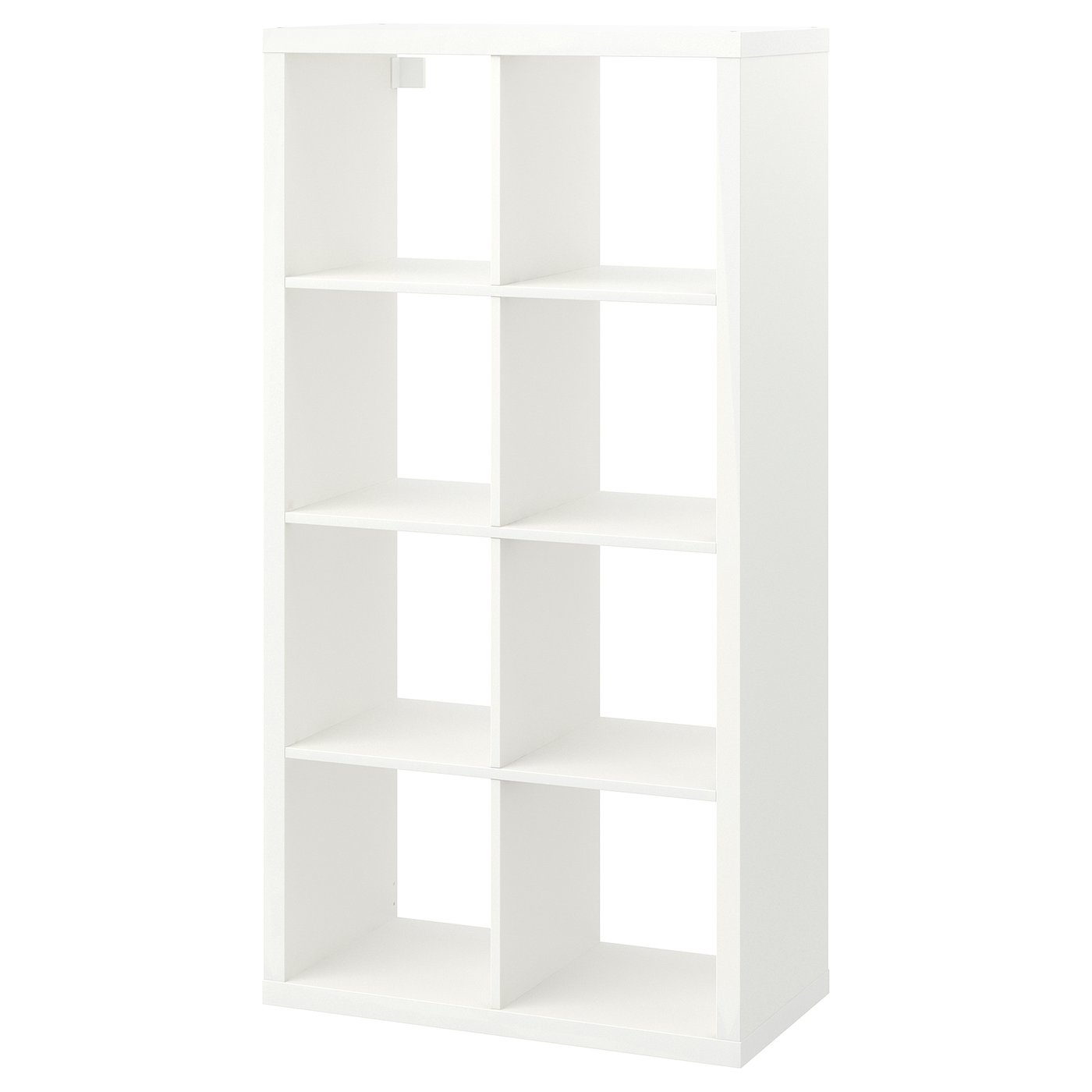
The KALLAX shelf unit ($79.99 for the 8-cube configuration at 30⅛ × 15⅜ × 57⅝ inches) remains one of the best furniture values in any store. The clean grid design works as a bookshelf, room divider, TV console, or vinyl record storage — and IKEA sells drawer inserts, door inserts, and basket inserts that snap into the cubes for closed storage.
Materials: Particleboard with acrylic paint finish and honeycomb paper filling (100% recycled). Maximum load per shelf is 29 lbs, with a 55-lb top load capacity. At 46 lbs assembled, it's sturdy enough to feel permanent without requiring two people to rearrange.
The 4-cube version starts at $49.99, making it one of the cheapest ways to add real storage to a small space. IKEA periodically runs 20-30% off KALLAX promotions during January and June member events — worth waiting for if you're outfitting an entire room.
BILLY bookcase
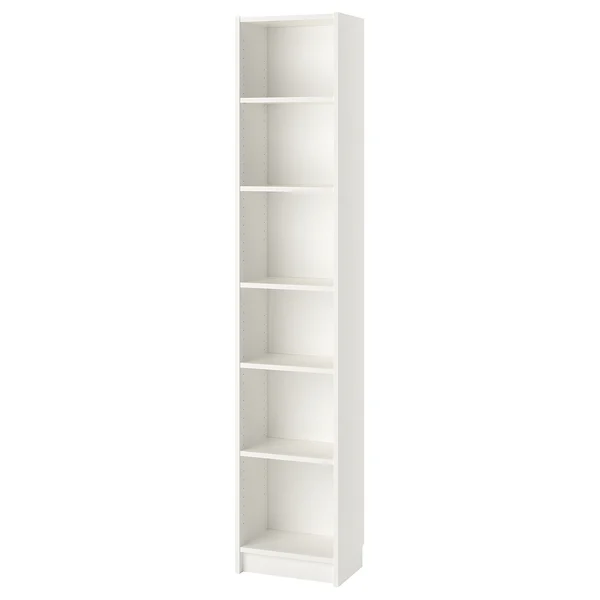
The BILLY bookcase ($49.00 for the single-width unit at 15¾ × 11 × 79½ inches) has been in production since 1979 and reportedly sells one unit every five seconds worldwide. That longevity isn't an accident — the narrow 11-inch depth fits against virtually any wall, and the five shelves (one fixed, four adjustable) handle 31 lbs each.
BILLY's real power is modularity. You can combine multiple units side by side with BILLY connecting hardware, add OXBERG glass doors ($25-40 per pair) for a built-in look, or use height extensions to reach 93-inch ceilings. Interior designers regularly cite the BILLY-to-built-in hack as one of the highest-value IKEA modifications.
Materials: Particleboard with paper foil and paper edging. Available in white, black, blue, brown, and oak effect. The construction is basic but competent — keep BILLY away from moisture and it will serve you for years.
PAX wardrobe system
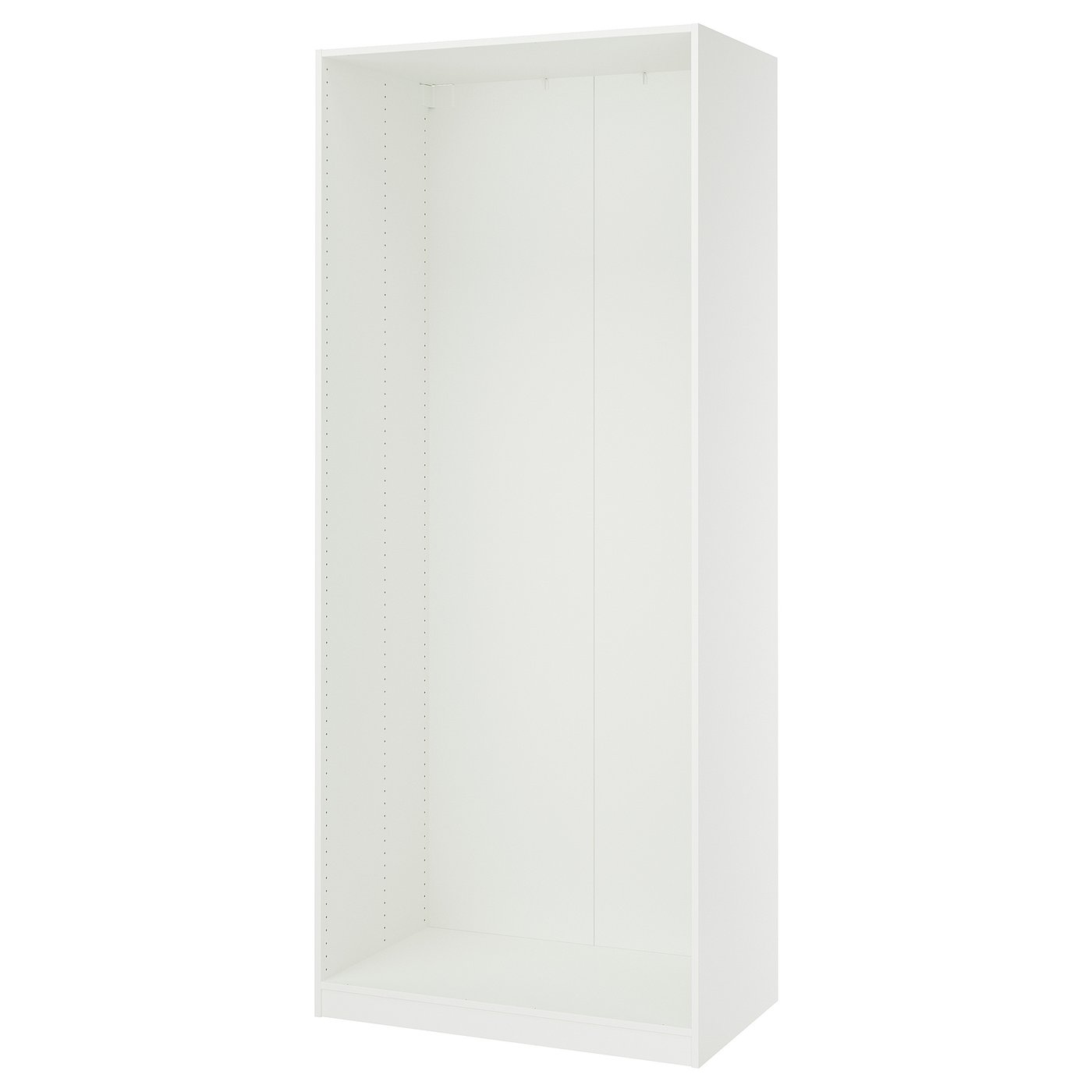
The PAX wardrobe system (frames from $110; complete combinations $435-$800+) is effectively a build-your-own closet. You choose frame widths (19¾, 29½, or 39⅜ inches), heights (79¼ or 93⅛ inches), then add doors, drawers, shelves, and hanging rails from the KOMPLEMENT range to suit your storage needs.
This is the IKEA product that most directly competes with custom cabinetry — and at roughly one-fifth the price. A PAX configuration that rivals a $4,000 California Closets setup costs $600-$900 with doors and interior fittings. The main limitation is depth: at 22⅞ inches, PAX is slightly shallower than standard closet depth, which can make hanging bulky coats tight.
For tips on timing your PAX purchase for the best price, see our guide to seasonal furniture sales.
Bedroom furniture: the solid-wood sweet spot
HEMNES 6-drawer dresser
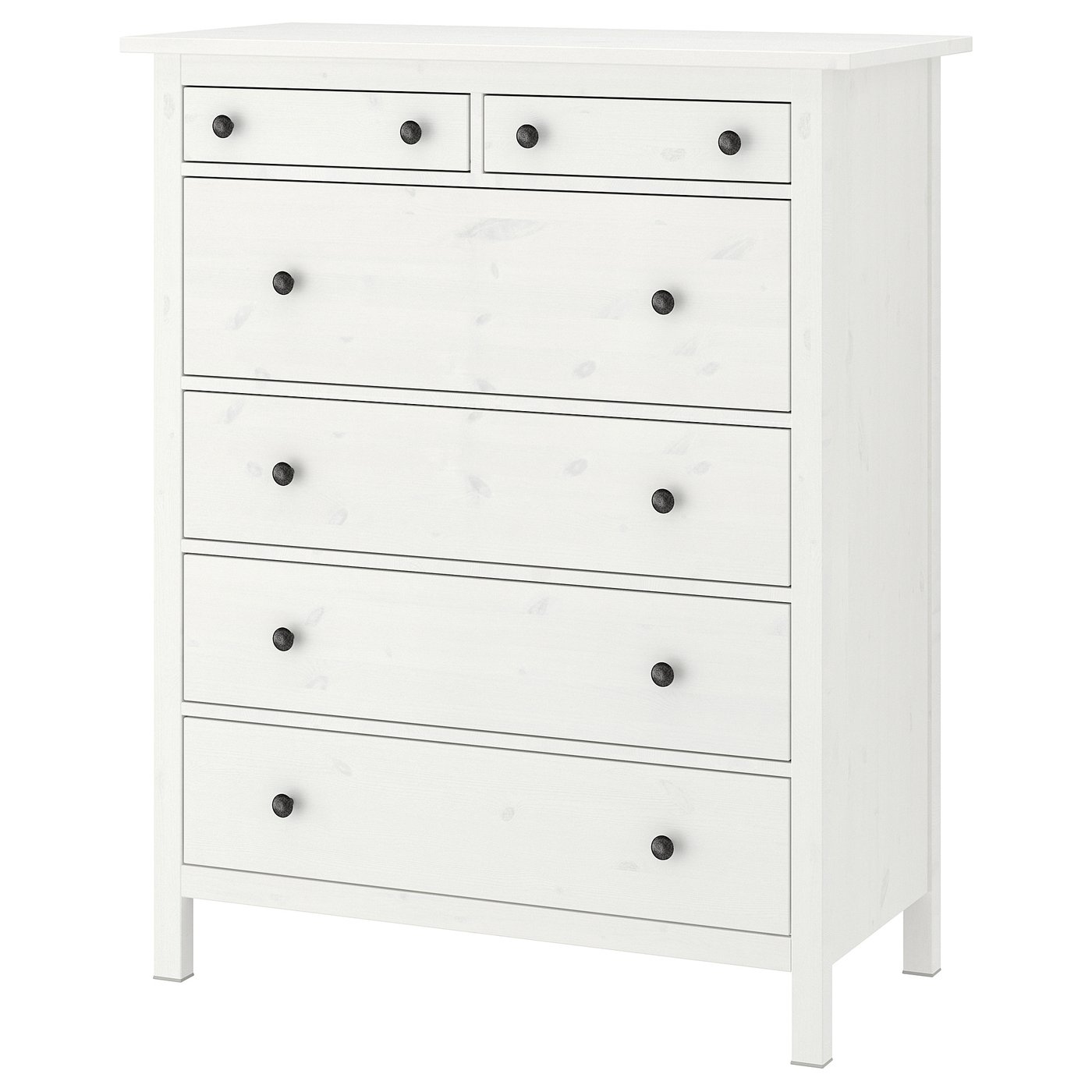
The HEMNES 6-drawer dresser ($399.99 at 42½ × 19⅝ × 51⅝ inches) is one of IKEA's most important products because it breaks the brand's particleboard stereotype. The drawer fronts and structural frame are solid pine — real wood with a stain-and-lacquer finish, not laminated fiberboard.
The six drawers run on smooth-glide tracks with pull-out stops, and an interlock system prevents more than one drawer per column from opening simultaneously — a meaningful anti-tip safety feature. Wall-anchoring hardware is included. Total storage capacity is 9.2 cubic feet.
At $399.99, the HEMNES undercuts comparable solid-wood dressers from West Elm ($800-$1,200) and Crate & Barrel ($900-$1,400) by 50-70%. The tradeoff: pine is a softwood that dents and scratches more easily than oak or walnut. For the price, this is genuinely hard to beat.
MALM bed frame
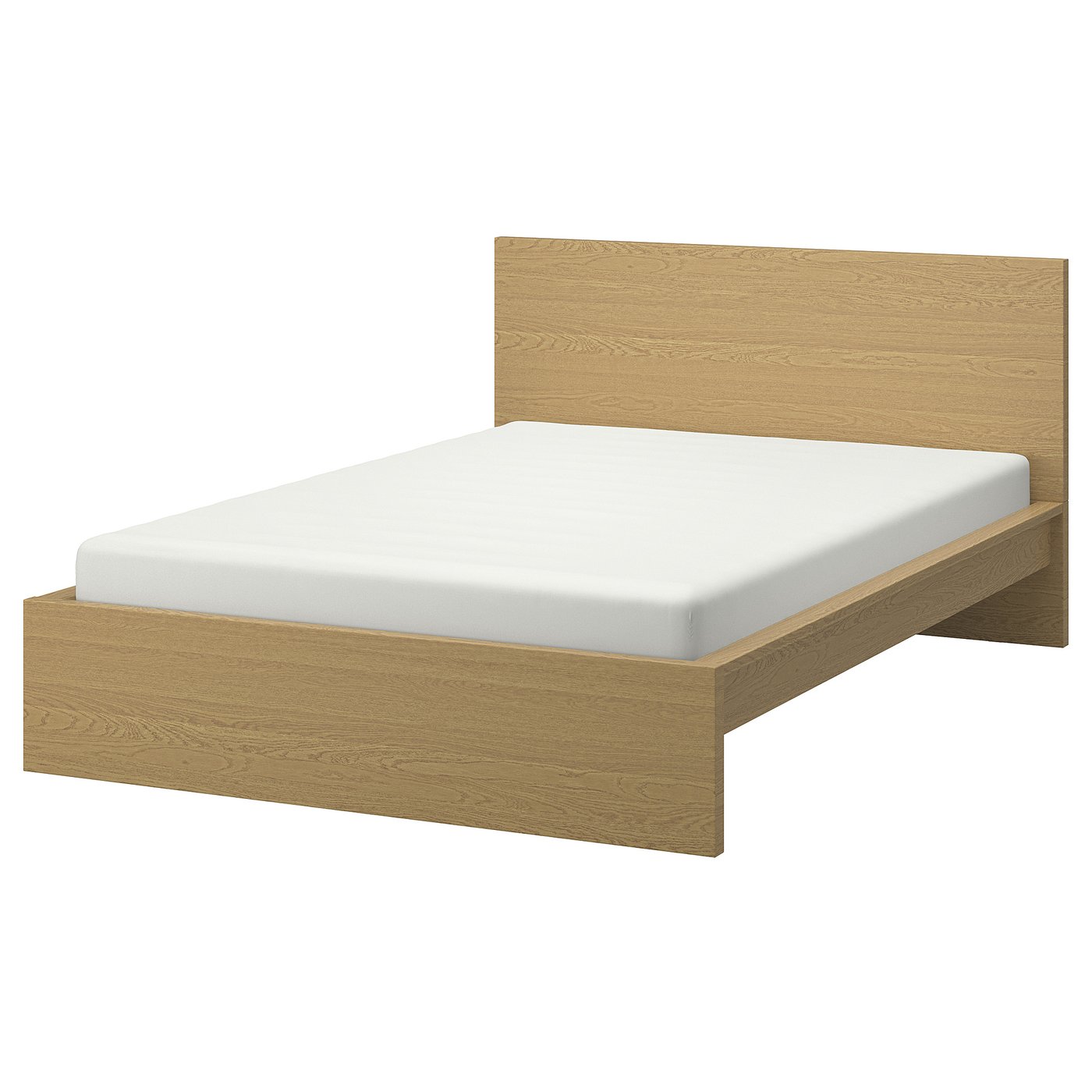
The MALM bed frame (from $219 for a twin, $249 for a queen in oak veneer) is the workhorse of IKEA's bedroom line. Clean Scandinavian lines, adjustable bed sides for different mattress thicknesses, and available under-bed storage drawers ($70-$100 additional) make it one of the most functional budget bed frames on the market.
The queen version carries a 4.1-star rating across over 1,200 reviews. Most complaints center on assembly difficulty rather than structural issues — the MALM is sturdy once built. Available in oak veneer, white, black-brown, and dark brown veneer finishes.
Storage variants: The MALM high bed frame with 2 storage boxes runs about $350 for a queen; the 4-storage-box version reaches approximately $450. Those under-bed drawers are genuinely useful in small bedrooms where a separate dresser won't fit.
Skip if: You plan to move frequently. The MALM bed frame is one of the more fragile IKEA products to disassemble and reassemble — the cam-lock fittings in the headboard panel are prone to stripping on the second assembly.
Living room: from budget to premium
FRIHETEN sleeper sofa
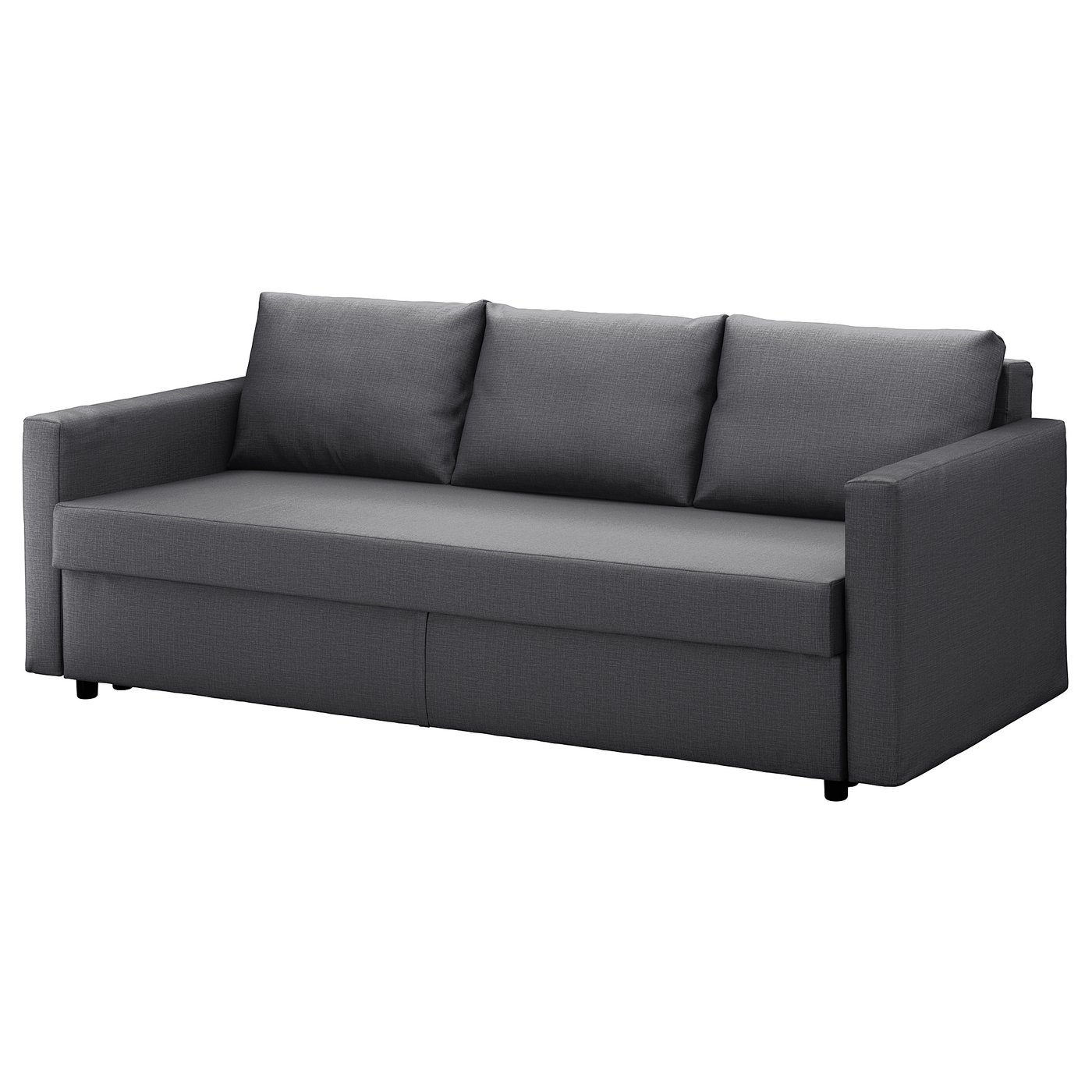
The FRIHETEN sleeper sofa ($899.00 in Skiftebo dark gray) is IKEA's bestselling convertible sofa and a legitimate space-saver. It converts from a 3-seat sofa (88⅝ × 41⅜ inches) to a full-size bed (56¾ × 78⅜ inches) with an under-seat storage compartment large enough for a duvet and pillows.
Materials: 100% recycled polyester upholstery over a particleboard and plywood frame with 2.0 lb/cu.ft. polyurethane foam. The 10-year limited warranty covers structural defects.
The FRIHETEN earns a 4.2-star rating, but comfort opinions are polarized. The sit is firm — supportive for seating, but most overnight guests will want a mattress topper for bed mode. The FRIHETEN sectional version ($1,099) adds a chaise and bumps the bed length to 80⅜ inches.
This is a sofa you buy for its function and price, not its cushion feel. If you want a sofa you'll sink into, look elsewhere. If you need a guest bed that doubles as everyday seating in a studio or one-bedroom, the FRIHETEN earns its popularity. For a broader comparison, our IKEA vs Wayfair sofas guide stacks the FRIHETEN against Wayfair's competing models.
STOCKHOLM 2025 sofa
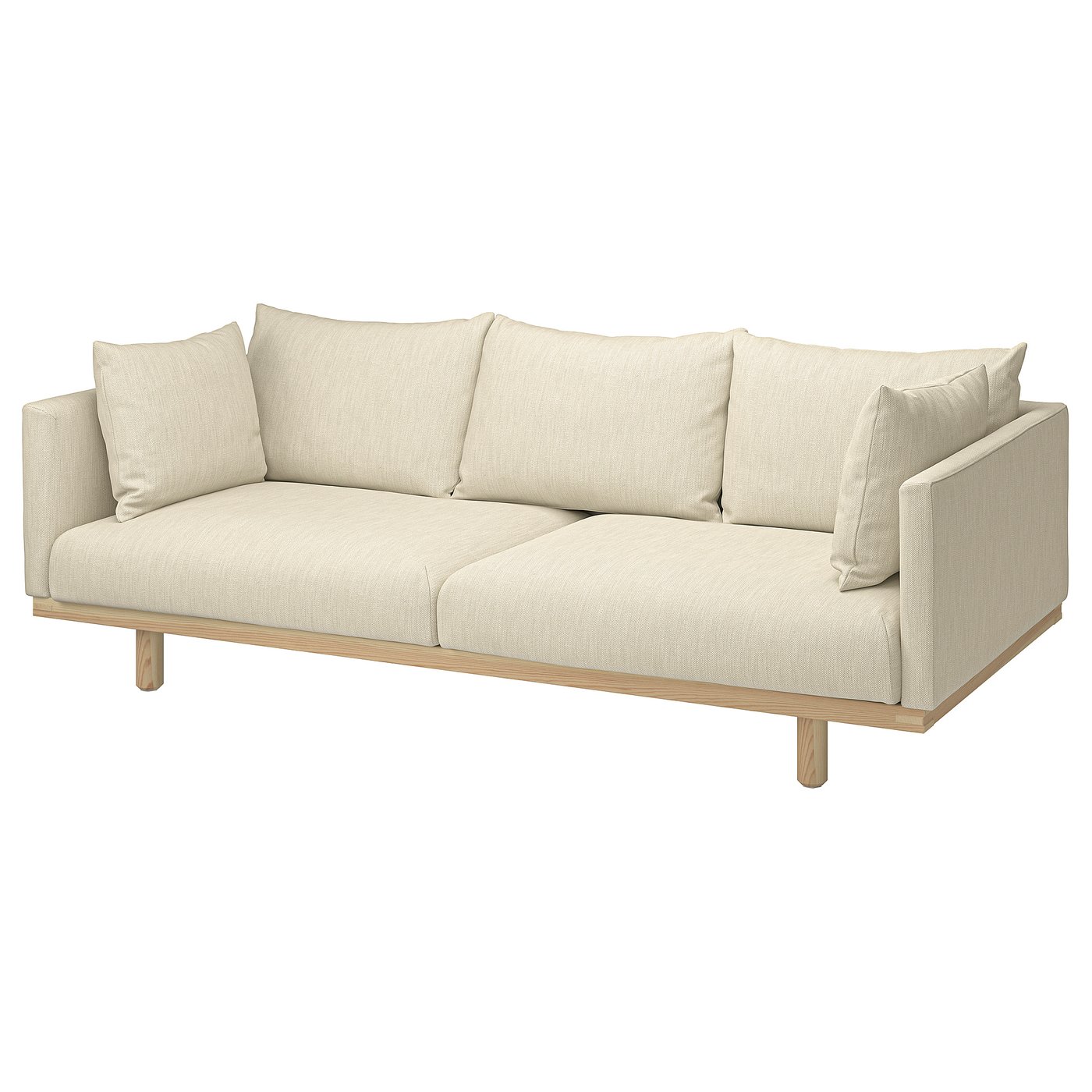
The STOCKHOLM 2025 sofa ($1,999.00 in Sundhamn beige) is the piece that proves IKEA can compete at a higher level when it chooses to. Designed by Ola Wihlborg, it features a 68% cotton, 32% linen removable and machine-washable cover over pocket springs and latex foam cushions — the same comfort construction used by brands charging $3,500-$5,000.
At 91¾ inches wide with a 16½-inch seat height, this is a full-size living room sofa, not a compact apartment piece. It carries a 25-year limited warranty — IKEA's strongest — and averages 4.5 stars across 63 reviews, with appearance ratings hitting 4.9 stars.
The STOCKHOLM 2025 collection represents a genuine shift in what IKEA offers at the upper end. The cotton-linen fabric, the solid wood frame, the spring-and-latex cushion system — these are decisions that cost more but produce a sofa with a meaningfully different lifespan and comfort profile than anything else in the IKEA catalog.
The entry-level essential: LACK side table
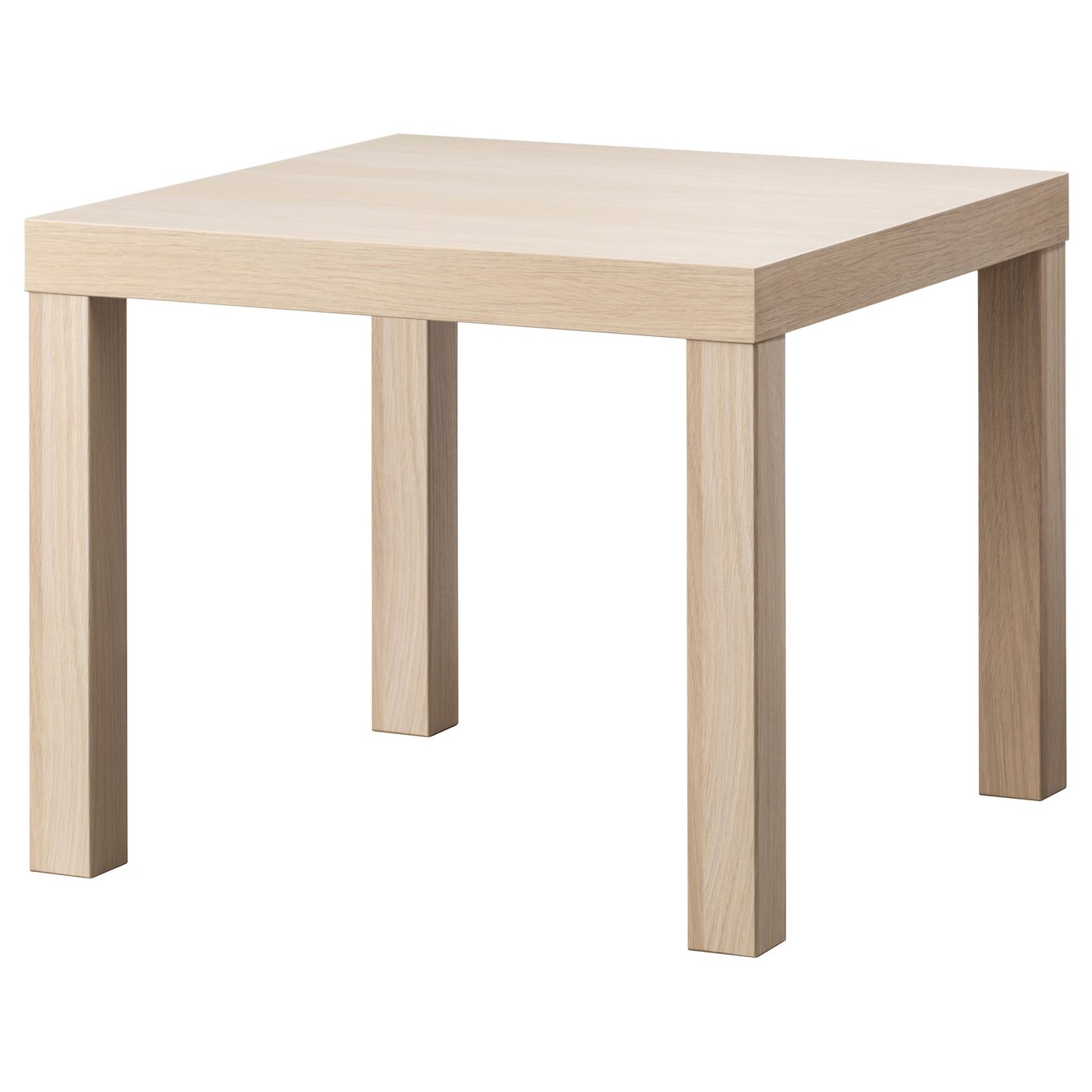
The LACK side table ($16.99 at 21⅝ × 21⅝ × 17¾ inches) is possibly the most purchased piece of furniture in human history. It uses a honeycomb paper core construction that keeps weight under 7 lbs while supporting up to 55 lbs — an engineering trick IKEA has perfected over decades.
At under $17, the LACK is essentially disposable furniture, which is both its strength and its limitation. It's perfect for staging a first apartment, filling a gap next to a sofa, or creating a bedside surface. It carries a 4.6-star rating from over 3,400 reviews — near-universal acceptance for what it is.
Where IKEA falls short
Not every product category deserves your money, and an honest brand profile requires saying so.
Mattresses
IKEA mattresses are the brand's most consistent disappointment. They're priced attractively ($149-$599 for most models), but customer reviews across platforms report sagging within 2-3 years. The foam densities and spring gauges simply don't match what specialized mattress brands offer at similar price points. If you're buying a MALM bed frame, budget separately for a mattress from a dedicated manufacturer.
Budget upholstered sofas
Below the STOCKHOLM tier, most IKEA sofas use relatively thin polyurethane foam over particleboard-and-plywood frames. The result is furniture that feels adequate in the showroom but compresses and sags with daily use. The KIVIK and EKTORP lines have loyal fans, but the consensus is that they're 3-5 year sofas, not 10-year sofas. If you need upholstered seating that lasts, you'll likely get better value from competitors in the $1,000-$1,500 range.
Particleboard in wet environments
Particleboard and moisture are enemies. IKEA's bathroom furniture line uses moisture-resistant treatments, but even treated particleboard is fundamentally less durable in humid environments than solid wood or marine-grade plywood. If your bathroom doesn't have good ventilation, proceed with caution.
Delivery logistics
IKEA delivery fees range from $5 for small parcels to $69+ for large furniture, and customer reviews on Trustpilot consistently flag delayed or damaged deliveries as a top complaint. If you live near a store, self-pickup eliminates this variable entirely.
Materials and construction: a category-by-category guide
Understanding IKEA's material tiers helps you shop smarter:
| Material tier | Product lines | What to expect | Lifespan |
|---|---|---|---|
| Particleboard + paper foil | LACK, KALLAX, BILLY | Lightweight, clean-looking, moisture-sensitive | 3-5 years |
| Particleboard + veneer | MALM (some finishes), BESTÅ | Better surface durability, still moisture-sensitive | 5-7 years |
| Solid pine | HEMNES, TARVA, IVAR | Real wood that can be sanded and refinished | 10+ years |
| Solid birch/oak | STOCKHOLM, select premium lines | Hardwood durability with designer finishes | 15+ years |
| Recycled polyester fabric | FRIHETEN, KIVIK, EKTORP | Stain-resistant, eco-friendly, but may pill over time | 3-7 years depending on use |
| Cotton-linen blend | STOCKHOLM 2025 | Breathable, machine-washable, premium hand-feel | 10+ years with care |
The key insight: IKEA's material quality correlates directly with product line, not with price alone. A $399 HEMNES dresser in solid pine will outlast a $699 BESTÅ TV unit in particleboard veneer. Always check the materials tab on IKEA's product pages before buying.
IKEA vs the competition
| Factor | IKEA | Wayfair | West Elm | Crate & Barrel |
|---|---|---|---|---|
| Price range | $10-$2,000 | $30-$5,000+ | $200-$4,000 | $300-$6,000 |
| Design style | Scandinavian modern | Everything (marketplace) | Mid-century modern | Contemporary classic |
| Material quality | Particleboard to solid wood | Varies wildly by brand | Engineered + solid hardwood | Solid hardwood + upholstery |
| Showrooms | 50+ US stores | Online only | 90+ US stores | 90+ US stores |
| Assembly | Self-assembly (Taskrabbit from $52) | Varies; some white-glove | White-glove available | White-glove available |
| Sustainability | Industry-leading commitments | Inconsistent | Growing program | Growing program |
| Warranty | 1-25 years by line | Varies by seller | 1-3 years typical | 1-3 years typical |
Choose IKEA when you need functional, well-designed furniture at the lowest possible price and you're comfortable with self-assembly. IKEA's storage solutions and kitchen accessories are particularly hard to beat on value.
Choose a competitor when you want heirloom-quality hardwood furniture, need white-glove delivery, or prefer styles outside the Scandinavian-modern vocabulary. For dining specifically, our Crate & Barrel vs West Elm comparison covers the premium end of the market.
Sustainability: the circular push
IKEA has made measurable commitments to sustainability that go beyond marketing. The Buy Back & Resell program, available to IKEA Family members at most U.S. locations, lets you return qualifying used furniture for store credit. Those pieces are resold in the As-Is section, extending their useful life.
The numbers are real: IKEA sold over 263,000 second-chance items through online reservation in 2023, up from 70,000 the prior year. The company's investment arm has committed over $1 billion to recycling infrastructure as part of its goal to become fully circular by 2030. IKEA's climate footprint has dropped 24.3% while revenue climbed 30.9% — proving that sustainability and growth aren't mutually exclusive at this scale.
Additional sustainability commitments worth noting:
- Wood sourcing: Over 98% of wood is FSC-certified or recycled, with a target of one-third recycled wood by 2030
- Renewable energy: 75% of production energy from renewables in FY24
- Plastic transition: Moving all plastic to renewable or recycled sources
- Net-zero target: 2050, without offsets
For shoppers, the practical takeaway: check the As-Is section before buying new. KALLAX units, BILLY bookcases, and MALM bed frames show up regularly at 30-50% off retail, often in excellent condition.
How to shop IKEA strategically
Buy confidently: Storage systems (KALLAX, BILLY, PAX), solid-wood bedroom furniture (HEMNES, MALM), kitchenware and accessories, the STOCKHOLM premium line.
Buy carefully: Budget sofas (acceptable for 3-5 year use), dining tables (check materials closely), children's furniture (good designs, short lifespans by design).
Skip or upgrade: Mattresses, bathroom furniture in poorly ventilated rooms, any particleboard piece destined for a high-humidity environment.
Timing your purchases: IKEA runs its deepest discounts during January and June IKEA Family member events. End-of-line clearances can hit 50% off. The As-Is section is always worth checking. For a broader look at when to buy, our furniture seasonal pricing guide covers IKEA alongside other major retailers.
If you're also considering lighting, IKEA's pendant and fixture range has become increasingly competitive — our lighting fixtures buying guide includes several IKEA options worth considering. And for broader seasonal deal tracking across home improvement categories, see our home improvement seasonal sales guide.
The bottom line
IKEA isn't trying to be everything to everyone, despite the size of its catalog. It's trying to make well-designed furniture affordable, and it succeeds at that mission more often than it fails. The brand's strongest products — KALLAX, BILLY, PAX, HEMNES, MALM, and the STOCKHOLM 2025 premium line — offer genuine value that competitors struggle to match at comparable price points.
The honest assessment: IKEA earns its dominance in storage, shelving, and bedroom furniture. It's adequate for budget seating if your expectations are calibrated. And with the STOCKHOLM 2025 collection, it's proving that affordable Scandinavian design doesn't have to mean disposable Scandinavian furniture.
Shop the material, not the brand name. Check the product page before the showroom. And if something's made of solid wood at an IKEA price, it's probably worth buying.