This guide reflects current pricing and product availability as of March 2026. We research materials specifications from manufacturer sources and cross-reference retail pricing — we do not claim hands-on testing of every product mentioned. Where we reference durability, we rely on manufacturer warranties, material science, and aggregated owner reviews.
Why material choice matters more than brand
Outdoor furniture lives in conditions that would destroy most indoor pieces within a season. UV radiation breaks down finishes and fabrics. Rain and humidity invite mold, mildew, and rot. Temperature swings cause expansion and contraction that loosen joints over time. Coastal salt air corrodes metal faster than you would expect.
The single biggest factor in whether your patio set lasts three years or thirty is the material it is made from — not the brand name stamped on it. A well-made aluminum frame from IKEA will outlast a poorly constructed teak knockoff from a no-name marketplace seller. That said, reputable brands tend to use better-grade materials and offer meaningful warranties, so brand does matter as a proxy for quality control.
This guide walks through the five major outdoor furniture materials, compares real products at every price point, and helps you match the right material to your climate, budget, and lifestyle.
The five core materials compared
| Material | Lifespan | Maintenance | Best Climate | Price Range (Dining Set) | Weight |
|---|---|---|---|---|---|
| Teak | 25-50 years | Low-medium (oil optional) | All climates | $2,000-$6,000+ | Heavy |
| Powder-coated aluminum | 15-20 years | Very low | All climates | $500-$3,000 | Light |
| Resin wicker (PE/HDPE) | 8-15 years | Low | Covered/mild | $300-$2,000 | Medium |
| HDPE lumber | 20-30 years | None | All climates, esp. coastal | $1,500-$4,000 | Heavy |
| Wrought iron/steel | 10-20 years | Medium-high | Dry climates | $800-$3,000 | Very heavy |
Teak: the gold standard with a gold-plated price
Teak is a tropical hardwood with naturally high oil content that repels water, resists insects, and prevents rot without any applied finish. It is the material against which all outdoor furniture is measured, and for good reason: properly maintained teak sets routinely last 25-50 years.
What to look for: Grade A teak comes from the heartwood of mature trees and has the highest oil content. Grade B and C teak (from younger trees or outer wood) costs less but weathers faster. FSC certification signals responsibly sourced wood — Crate & Barrel's outdoor teak line carries this certification.
The maintenance question: Left untreated, teak weathers from honey-gold to a silver-gray patina over 6-12 months. Many owners prefer this look. If you want to preserve the original color, apply teak oil or sealer once or twice a year. Either way, an annual cleaning with mild soap and a soft brush keeps the grain clear.
Who should buy teak: Homeowners who plan to stay put for a decade or longer, who want heirloom-quality furniture, and who can absorb the upfront cost knowing they will not need to replace it.
Aluminum: lightweight, rust-proof, and versatile
Modern outdoor aluminum furniture uses powder-coated frames that resist chipping, fading, and corrosion. Unlike steel or iron, aluminum does not rust — not even in salt air. It is also significantly lighter, making it easy to rearrange or move indoors during storms.
What to look for: Thicker-gauge aluminum (measured in millimeters of wall thickness) resists denting. Cast aluminum is heavier and more ornate; extruded aluminum is sleeker and lighter. Powder coating quality varies — look for brands that specify UV-resistant powder coating or electrostatic application.
The heat caveat: Aluminum absorbs heat quickly, so dark-colored frames can become uncomfortably hot in direct sun. Choose lighter finishes or always use cushions in hot climates.
Who should buy aluminum: People who want low maintenance, need to move furniture frequently, live in any climate (including coastal), or want a modern aesthetic without teak pricing.
Resin wicker: comfort and style at an accessible price
When retailers say "wicker," they almost always mean synthetic resin wicker woven over a metal frame — not natural rattan, which cannot survive outdoors. The resin is typically polyethylene (PE) or high-density polyethylene (HDPE), hand-woven to mimic the look of natural wicker.
What to look for: Check that the frame underneath is aluminum or powder-coated steel, not bare steel that will rust when the wicker coating inevitably gets nicked. HDPE resin is more UV-resistant than standard PE. Flat-weave wicker tends to trap less dirt and dry faster than round-weave.
The durability reality: Resin wicker sets are comfortable and attractive, but they do not match the lifespan of teak or aluminum. Expect 8-15 years in a covered or semi-covered setting, less if exposed to full sun and extreme temperatures year-round. The wicker itself may crack or fade, and the cushions that come bundled with budget sets tend to deteriorate within 2-3 seasons.
Who should buy wicker: Renters, budget-conscious buyers, and anyone furnishing a covered patio or screened porch where the furniture gets some protection from the elements.
HDPE lumber: the zero-maintenance workhorse
High-density polyethylene lumber is a synthetic material often made from recycled plastics. Brands like Polywood have built an entire product line around it. HDPE will not crack, warp, splinter, rot, or fade — it is essentially impervious to moisture, UV, salt, and insects.
What to look for: HDPE furniture from established brands uses lumber with color molded all the way through (not surface-painted), which means scratches do not show. Check that hardware is stainless steel. Some cheaper "poly" furniture uses thinner material that flexes and feels flimsy.
The aesthetic trade-off: HDPE furniture mimics the look of painted wood, but it does not have the warmth or grain of real timber. If design matters as much as durability, teak or well-finished aluminum may be more satisfying.
Who should buy HDPE: Coastal homeowners, anyone who truly wants zero maintenance, families with kids who will abuse the furniture, and buyers in extreme climates (desert heat or northern freeze-thaw cycles).
Wrought iron and steel: classic weight with real upkeep
Cast iron and steel furniture has an undeniable presence — heavy, ornate, wind-resistant, and reminiscent of European café terraces. However, both materials require regular maintenance to prevent rust. Powder coating helps significantly, but once the coating chips (which it will, over time), moisture reaches bare metal and corrosion begins.
Who should buy iron/steel: Buyers in dry climates who love the traditional aesthetic and are willing to touch up chips and apply rust-inhibiting spray annually. Steel dining chairs are also excellent as accent pieces mixed with a teak or aluminum table.
Cushions and fabric: the hidden cost that matters
Even the best frame is only as comfortable as its cushions, and cushion fabric is where most buyers get burned. Cheap polyester cushions that come bundled with budget sets will fade, mildew, and flatten within one or two seasons. Replacing them often costs as much as the furniture itself.
What to spend on
Sunbrella fabric is the industry standard for outdoor cushions. Sunbrella fibers are solution-dyed — meaning the pigment goes all the way through the fiber, not just on the surface. This makes them fade-resistant, mold-resistant, mildew-resistant, and water-repellent. Sunbrella offers a 5-year warranty against fading under normal use.
Other performance fabrics to look for include Outdura, Phifer GeoBella, and Tempotest. All use similar solution-dyed acrylic technology.
What to avoid
Any cushion described only as "polyester" or "olefin" without further UV-resistance specs will likely disappoint within a year of sun exposure. If your furniture ships with cheap cushions, budget $200-$500 to upgrade to Sunbrella covers or buy a set that includes them.
Crate & Barrel's Batten collection includes Sunbrella cushions as standard. West Elm's Portside line uses yarn-dyed, weather-resistant fabric. IKEA's NÄMMARÖ cushions (FRÖSÖN/DUVHOLMEN covers) are water-repellent but not Sunbrella-grade — they are adequate for covered spaces but should be stored or covered during prolonged rain.
Product picks by budget tier
Budget tier: $300-$800
IKEA NÄMMARÖ Dining Set (Table + 2 Chairs + Bench)

The IKEA NÄMMARÖ collection is built from acacia wood — a durable hardwood that shares some of teak's weather-resistant properties at a fraction of the cost. The table-and-two-chairs-plus-bench set starts at approximately $450, making it one of the most accessible solid-wood outdoor dining options available.
Acacia is not teak: it needs periodic oiling and will weather faster without treatment. But for the price, it offers real wood character that no resin set can match. The NÄMMARÖ line also includes modular seating components — a 2-seat modular sofa runs about $300 with cushions, and individual armchairs start at $75.
Best for: Small patios and balconies, first-time outdoor furniture buyers, and anyone who wants real wood without the teak price tag. If you already like IKEA's approach to value, see our IKEA brand profile for a deeper look at their manufacturing and sourcing.
Wayfair Beachcrest Home Conversation Sets
Wayfair's Beachcrest Home house brand offers 4-piece resin wicker conversation sets — typically a loveseat, two chairs, and a coffee table — for $300-$500. The frames are powder-coated steel wrapped in all-weather PE wicker, and most sets include basic polyester cushions.
At this price point, you are buying 3-5 seasons of use, not a decade. The cushions will need replacing or upgrading. But if you need to furnish a rental patio or want a low-stakes set for a covered porch, these deliver solid comfort and decent looks. During Wayfair's Way Day sale (typically late April), prices drop an additional 30-50%.
Best for: Renters, covered patios, anyone who wants the wicker look without committing to a four-figure purchase. For more on what Wayfair does well and where they fall short, read our Wayfair brand profile.
Mid-range tier: $800-$2,500
IKEA NÄMMARÖ 6-Person Dining Set
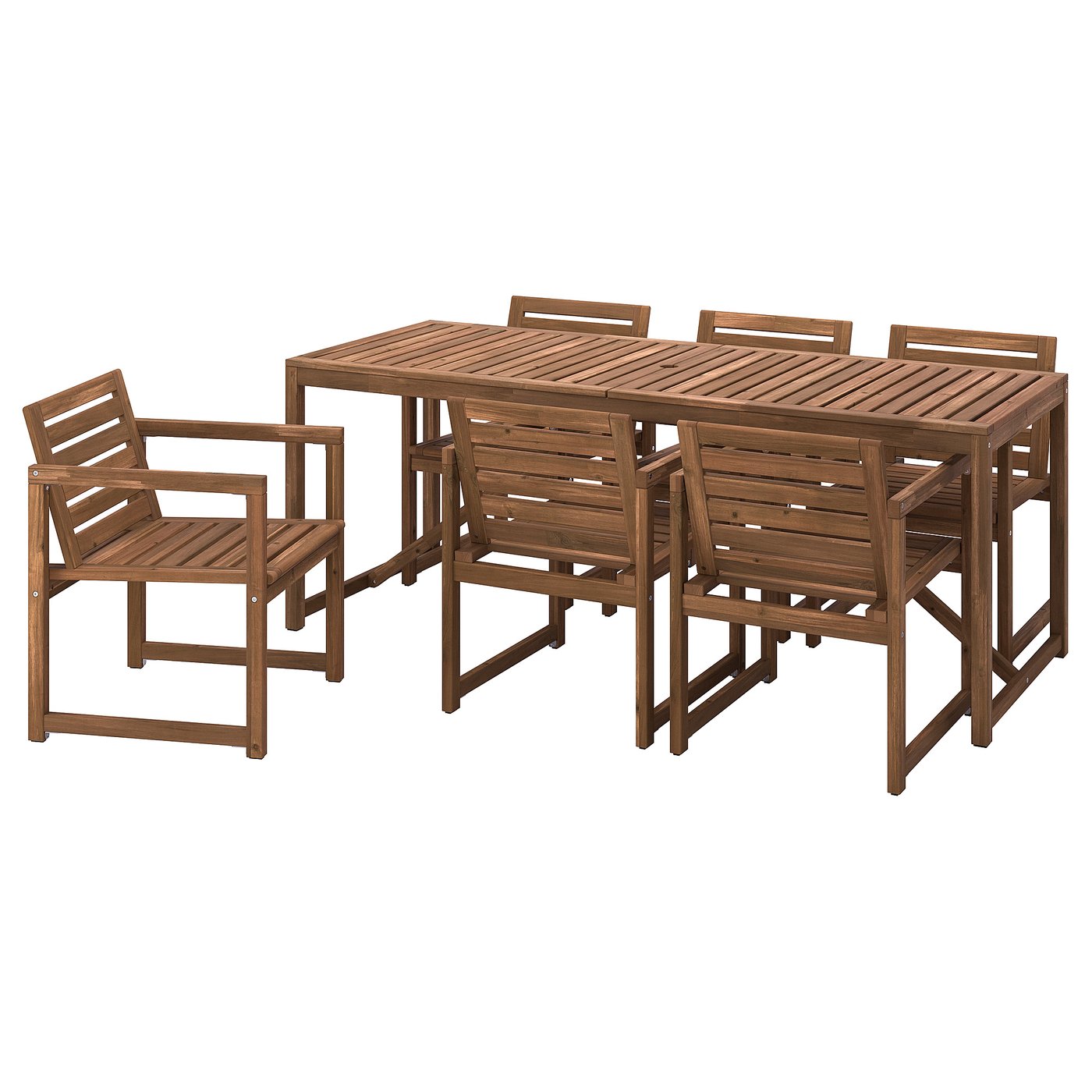
Stepping up to the NÄMMARÖ table with 6 armchairs (approximately $700-$900 depending on configuration) gets you a full family-sized dining setup in solid acacia. The armchairs are more comfortable than the basic folding chairs and stack reasonably well for storage.
At this price, you are competing with entry-level aluminum sets from other retailers. The trade-off is real wood warmth versus aluminum's zero-maintenance durability. If you enjoy oiling and caring for wood furniture, the NÄMMARÖ set rewards that effort handsomely.
West Elm Portside Collection
West Elm's Portside line uses moisture-resistant solid mahogany and eucalyptus with a wire-brushed, weathered finish that reads more expensive than it is. The Portside sofa (65"-85") runs approximately $1,200-$1,800, while the expandable dining table (76.5"-106") lists around $1,000-$1,500 with benches.
The design advantage here is significant: Portside pieces have a relaxed, modern-rustic aesthetic that photographs well and ages gracefully. The wood is FSC-certified, and cushions use yarn-dyed, weather-resistant fabric (though upgrading to Sunbrella is possible for additional cost).
Best for: Design-conscious buyers who want real-wood warmth with a cohesive collection look, and who plan to keep the furniture under a covered patio or pergola. If you are weighing West Elm against other mid-range options, our IKEA vs Wayfair sofas comparison touches on similar value-versus-quality trade-offs in indoor furniture.
Premium tier: $2,500+
Crate & Barrel Batten Natural Teak Collection
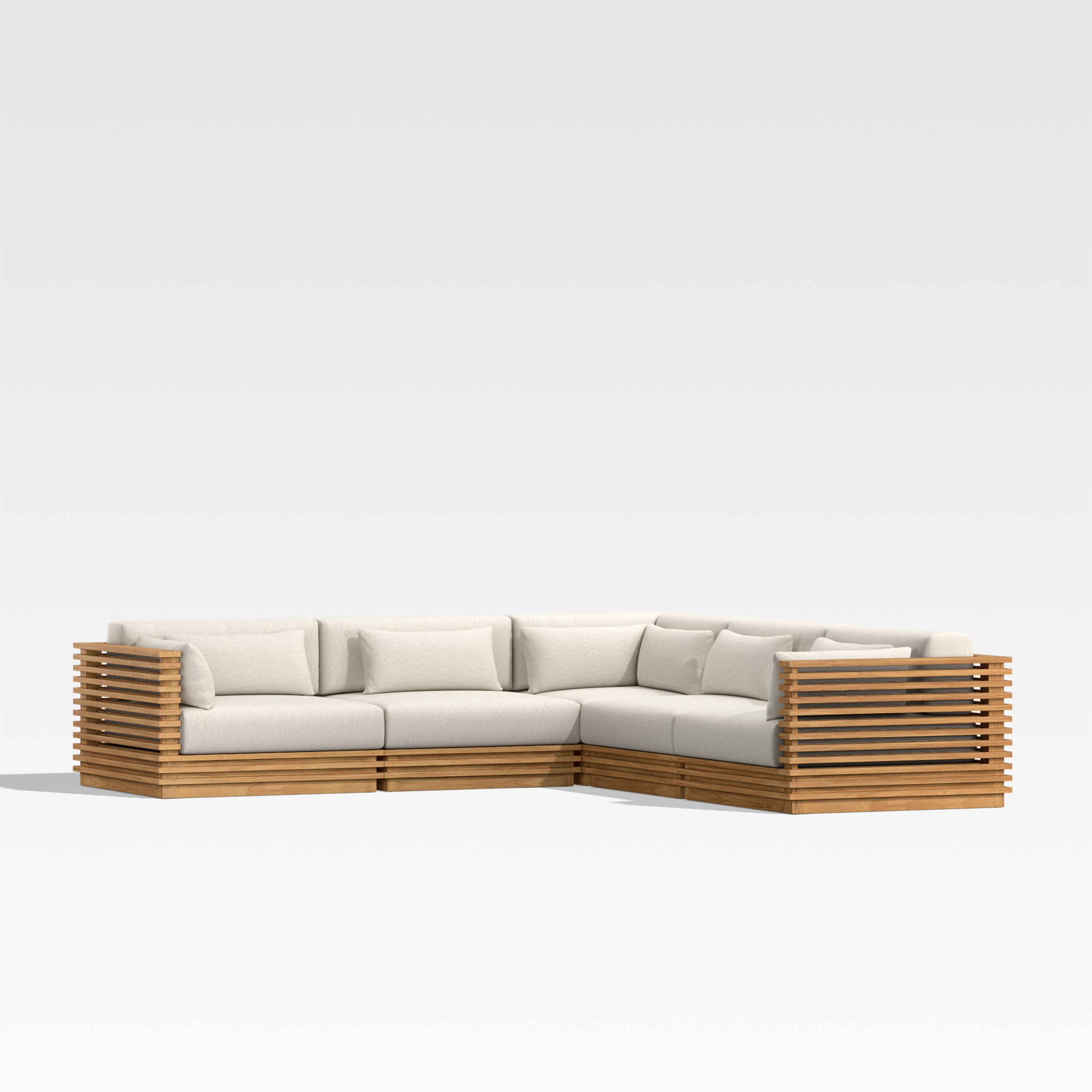
The Batten collection is Crate & Barrel's flagship outdoor line, crafted from FSC-certified, unfinished solid teak with bold horizontal slats and a minimalist silhouette. The 120" sofa with Sunbrella oat cushions lists at approximately $4,498-$6,247. The 5-piece L-shaped sectional runs around $5,500-$7,000. A dining chair is $449 (frequently found on clearance for under $100).
This is buy-it-once furniture. The teak will outlast your mortgage if left untreated, developing a silver patina that many designers consider more beautiful than the original honey tone. The Sunbrella cushions are fade-resistant and come in multiple neutral colorways.
Best for: Homeowners investing in a forever patio, entertainers who want a statement outdoor living room, and anyone who recognizes that a $5,000 teak set over 25 years costs less per year than replacing a $500 wicker set every 3-4 years.
IKEA NÄMMARÖ Modular Lounge Setup
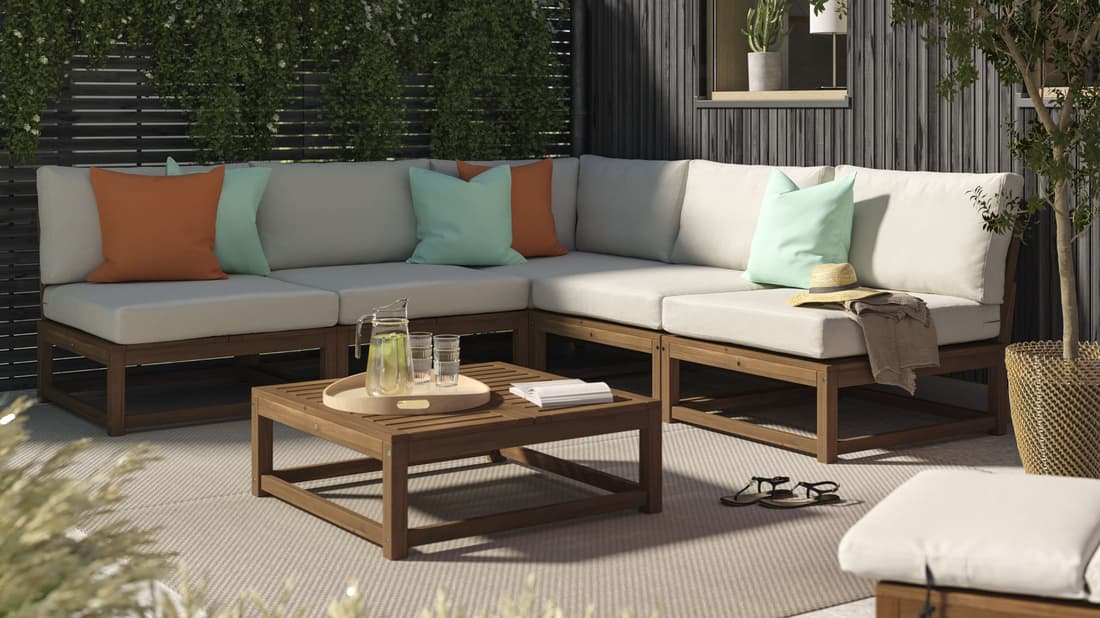
While not premium by price, IKEA's modular approach deserves mention here because you can build a custom outdoor lounge configuration by mixing seat sections ($70-$120), backrests ($30), and cushions. A full modular corner sofa setup runs $600-$1,000 — a fraction of the Batten sectional, albeit in acacia rather than teak.
This is the LEGO approach to outdoor furniture: buy what you need now, add pieces later. It works particularly well for irregular spaces or renters who may need to reconfigure when they move.
Climate-specific recommendations
Hot, dry climates (Southwest, Mediterranean)
Best: Aluminum (choose light colors to reduce heat absorption) or HDPE lumber. Both handle intense UV without degradation. Teak also performs well but may dry out faster — oil it twice a year instead of once.
Avoid: Dark-colored metal that becomes too hot to touch, and natural wicker that dries and cracks.
Humid, rainy climates (Southeast, Pacific Northwest)
Best: Teak (its natural oils resist mold), aluminum, or HDPE. All three handle constant moisture without structural damage.
Avoid: Untreated wood, natural rattan, and any cushion fabric without mold-resistant treatment.
Coastal and salt-air environments
Best: HDPE lumber (completely salt-immune), marine-grade aluminum, or teak. These three materials can sit in salt spray indefinitely without corroding.
Avoid: Any uncoated steel or iron, and cheap powder coatings that chip easily.
Cold-winter climates (Northeast, Midwest, Mountain)
Best: Teak and HDPE lumber survive freeze-thaw cycles without cracking. Aluminum is fine if stored or covered.
Avoid: Resin wicker, which becomes brittle in extreme cold, and terra cotta or ceramic accent pieces that crack when frozen.
When to buy: timing your purchase for maximum savings
Outdoor furniture follows a predictable pricing calendar. Knowing the cycle saves you 20-50% without sacrificing quality.
- Presidents' Day (February): Early-season previews with modest 15-20% discounts. Good selection, average prices.
- Memorial Day (May): The traditional outdoor-season kickoff. Reliable 20-30% markdowns at most retailers.
- Fourth of July (July): Mid-season sales, often comparable to Memorial Day deals.
- Labor Day (September): End-of-season clearance begins. Expect 30-40% off current-year inventory.
- September-October: The sweet spot. Retailers aggressively clear warehouse space, and markdowns reach 40-60% off. Selection thins, but the deals are the best of the year.
- Wayfair Way Day (late April): One of the biggest online furniture sales events, with outdoor category discounts of 30-50%.
For a deeper dive into seasonal pricing patterns, read our best time to buy furniture guide. And if you are also planning home improvement projects, our seasonal sales calendar covers lighting, flooring, and fixtures.
How to measure your space (and avoid the most common mistake)
The number-one error in outdoor furniture buying is purchasing pieces that are too large for the space. Outdoor furniture dimensions are generous — a standard 4-person dining table is 48" x 30", and you need 36" of clearance on all sides for chairs and foot traffic.
Before you shop:
- Measure your patio, deck, or balcony in both directions
- Subtract 36" from each wall or railing edge for walkways
- The remaining footprint is your furniture zone
- For conversation sets, allow a 48" x 48" minimum for a coffee table plus legroom
A 10' x 12' patio (120" x 144") sounds large but after walkway clearance you have roughly 48" x 72" of furniture space — enough for a 4-person dining set or a loveseat-plus-two-chairs conversation group, but not both.
Care and maintenance by material
Teak care schedule
- Monthly: Wipe down with damp cloth to remove surface dirt
- Quarterly: Scrub with mild soap and soft-bristle brush
- Annually (optional): Apply teak oil or sealer if you want to maintain honey color
- Every 2-3 years: Light sanding to refresh the grain (only if oiling)
Aluminum care schedule
- Monthly: Wipe with soap and water
- Annually: Inspect powder coating for chips; touch up with matching spray paint
- As needed: Use a mild aluminum cleaner for stubborn water spots
Resin wicker care schedule
- Monthly: Hose down to remove dust and pollen
- Quarterly: Scrub with soap and water, paying attention to weave crevices
- Before winter: Store cushions indoors; cover or store the frame if possible
HDPE lumber care schedule
- Occasionally: Hose down or scrub with soap and water
- That's it. HDPE requires no painting, sealing, oiling, or sanding — ever.
The bottom line
Your outdoor furniture decision comes down to three variables: how long you want it to last, how much maintenance you will realistically do, and how much you can spend upfront.
If money is tight and you need something now, an IKEA NÄMMARÖ acacia set or a Wayfair Beachcrest Home wicker group will serve you well for several seasons at minimal cost. If you want a decade of service with minimal effort, powder-coated aluminum from West Elm or a better Wayfair line hits the sweet spot. And if you are furnishing a forever home, Crate & Barrel's Batten teak or a comparable FSC-certified teak collection is the most cost-effective choice measured across its full lifespan.
Whatever you choose, invest in quality cushion fabric (Sunbrella or equivalent) and furniture covers for off-season storage. Those two additions will extend the life of any outdoor set by years — and they are far cheaper than buying replacement furniture.