Our approach: we compared published specifications, independent test results from Vacuum Wars and RTINGS, and verified owner review patterns across major retailers. We did not conduct hands-on lab testing. Prices reflect early 2026 retail and may vary by retailer.
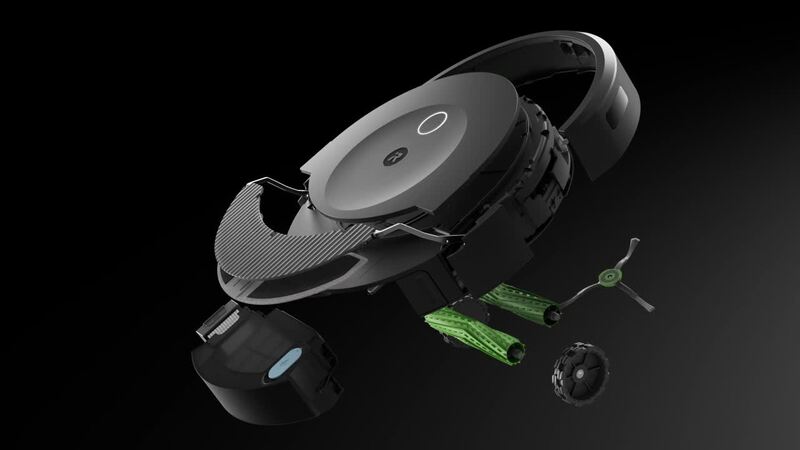
Two flagships, one real question
Every premium robot vacuum in 2026 promises the same thing: it vacuums, it mops, it empties itself, and it avoids your dog. The Roomba Combo 10 Max and Roborock Saros 10R both retail in the $1,000-plus range, both include self-emptying docks with mop washing, and both claim best-in-class navigation.
So the question is not whether these are good robots. The question is whether the differences between them justify picking one over the other — or whether you are just paying for a logo.
We dug into independent test data, spec sheets, and owner review patterns to find out where these two actually diverge. The gaps are larger than the marketing suggests.
Specs at a glance
| Spec | Roomba Combo 10 Max | Roborock Saros 10R |
|---|---|---|
| Suction power | Not disclosed | 19,000 Pa |
| Runtime | 120 minutes | 220 minutes |
| Battery | 4,460 mAh | 6,400 mAh |
| Height | 87 mm | 79.8 mm |
| Dustbin capacity | 0.4 L | 0.27 L |
| Noise level | 60 dB | 68 dB |
| Charge time | 4 hours | 2.5 hours |
| Dock empty interval | ~60 days | ~49 days |
| Matter support | No | Yes |
| Mop lift on carpet | Full retract to top | Automatic lift |
| Power consumption | 33 W | 60 W |
Two things jump out immediately. First, iRobot still refuses to publish suction power numbers — a transparency gap that makes independent data even more important. Second, the Saros 10R nearly doubles the Roomba's runtime, which directly affects how much floor it can cover before needing a recharge.
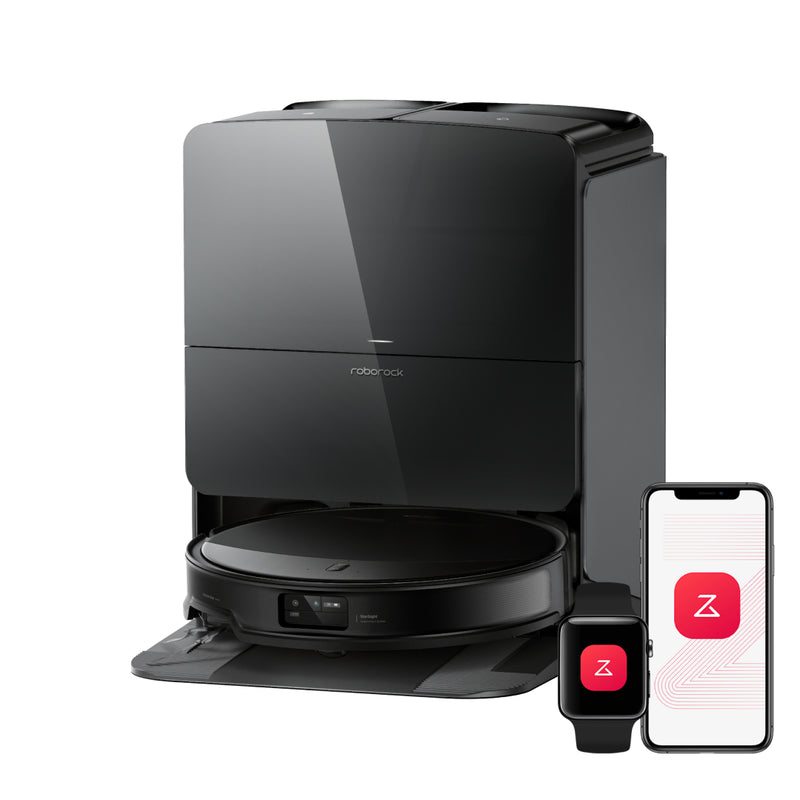
Cleaning performance: what the test data shows
Spec sheets tell you what a robot should do. Independent testing tells you what it actually does.
Vacuum performance
Vacuum Wars, which tests robots with standardized debris loads on controlled surfaces, gave the Saros 10R an overall score of 3.76 out of 5.0 — well above the 2.58 category average. Key results:
- Carpet deep clean: 80% debris pickup (category average: 75%)
- Flattened pet hair on carpet: 92% pickup (category average: 80%)
- Hair tangle test (7-inch strands): 0% tangling — a perfect score
The Roomba Combo 10 Max has not been subjected to the same standardized Vacuum Wars protocol, so we cannot make a direct apples-to-apples comparison on these specific tests. What we can observe is Amazon review data: the Combo 10 Max's predecessor, the Combo j9+, carried a 2.8-star Amazon average with 41% one-star reviews, primarily citing navigation failures and error codes. The Combo 10 Max improves on the j9+'s navigation, but iRobot's reluctance to submit to independent performance testing leaves buyers relying on anecdotal reports rather than data.
Versus.com's aggregate scoring gives the Roomba Combo 10 Max 72 points and the Saros 10R 86 points — a 14-point gap that reflects differences across cleaning, battery, and features.
Mopping performance
Both robots include mopping functionality with automatic carpet detection — the mop engages on hard floors and disengages on carpet.
The Saros 10R scored 103 points on Vacuum Wars' dried stain test (category average: 98), with slightly higher water usage (1.05g vs 0.95g average) that translates to more effective stain removal. Its dock washes the mop pad with heated water between sessions.
The Roomba Combo 10 Max's mop fully retracts to the top of the robot when it detects carpet — a design approach that prevents any mop-to-carpet contact. The Saros 10R lifts its mop but does not retract it as far. For homes with lots of carpet-to-hard-floor transitions, the Roomba's full retraction is a legitimate advantage.
Navigation and obstacle avoidance
This is where the gap widens most dramatically.
The Saros 10R achieved a perfect 24 out of 24 score in Vacuum Wars' obstacle avoidance testing, recognizing 108 distinct object types. Its 79.8 mm height — roughly 3.14 inches — lets it access spaces under low furniture that taller robots skip entirely.
The Roomba Combo 10 Max uses iRobot's updated Imprint Smart Mapping with front-facing obstacle detection. It handles common objects like shoes and cables, but independent obstacle avoidance scoring at the same rigor as the Saros 10R's testing is not publicly available.
Coverage per charge further separates these two. The Saros 10R covers approximately 1,389 square feet per charge (category average: 1,020 sq ft). The Roomba Combo 10 Max's 120-minute runtime limits its single-charge coverage to roughly 700-900 square feet depending on floor type and obstacles. For homes over 1,000 square feet, the Roomba may need a mid-clean recharge cycle that extends total cleaning time.
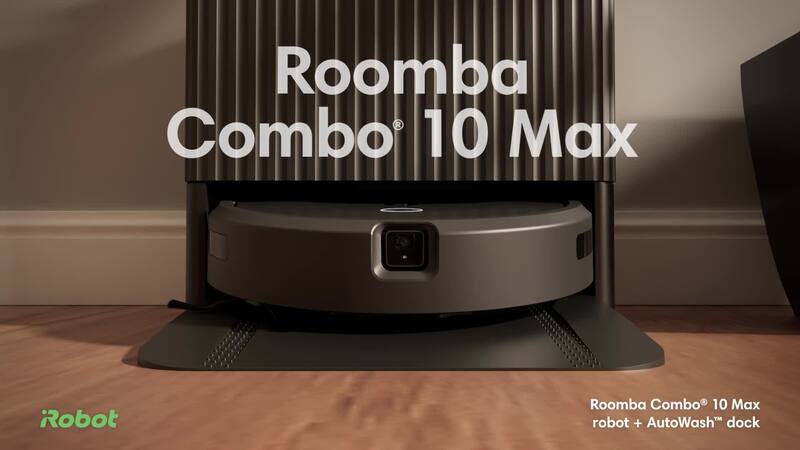
The dock: where maintenance happens
Both docks handle the three essentials — dust collection, mop washing, and drying. The differences are in the details.
| Dock feature | Roomba Combo 10 Max | Roborock Saros 10R |
|---|---|---|
| Auto-empty | Yes | Yes |
| Empty interval | ~60 days | ~49 days |
| Mop washing | Yes | Yes, with heated water |
| Mop drying | Air dry | Heated drying |
| Dustbag type | Proprietary | Disposable bags |
The Saros 10R's heated water washing and heated drying are meaningful for mop hygiene — cold water alone does not sanitize the way hot water does, and heated drying prevents the musty smell that air-dried mop pads develop in humid climates.
The Roomba's longer dock empty interval (60 vs 49 days) is a minor convenience advantage, though both intervals are long enough that you are unlikely to notice the difference in daily life.
Noise: the Roomba's real advantage
At 60 dB, the Roomba Combo 10 Max is noticeably quieter than the Saros 10R's 68 dB. That 8 dB difference is perceptible — roughly the gap between normal conversation and a running dishwasher.
If you run your robot vacuum during work-from-home hours, during naps, or in an open-plan living space where someone is watching TV, this matters. The Roomba can operate in the background without demanding attention. The Saros 10R, while not loud by vacuum standards, announces its presence.
This is not a trivial consideration. A robot vacuum that annoys you into turning it off cleans zero square feet.
Smart home integration
The Saros 10R supports Matter, the cross-platform smart home standard backed by Apple, Google, and Amazon. This means it works natively within Apple Home, Google Home, and Alexa ecosystems without relying on a manufacturer-specific skill or integration.
The Roomba Combo 10 Max works with Alexa and Google Assistant through the iRobot app, but does not support Matter. If iRobot adds Matter support later, existing owners may benefit — but as of early 2026, it is not available.
For households already invested in a Matter-based smart home setup, the Saros 10R plugs in without friction. For everyone else, both robots work fine with voice commands through their respective apps.
Long-term ownership costs
Premium robot vacuums are not one-time purchases. Both robots require periodic maintenance:
- Brushes: Replace every 6-12 months (~$20-30 per set)
- Filters: Replace every 2-3 months (~$15-20 for a multi-pack)
- Dustbags: Replace when full (~$15-25 for a pack of several)
- Mop pads: Replace every 3-6 months (~$15-20)
Replacement part pricing is comparable between brands. Both sell parts directly and through Amazon. The Saros 10R's washable filter option slightly reduces ongoing filter costs.
Battery degradation is the most common long-term issue for any robot vacuum. Expect roughly 20-30% capacity loss after two to three years of daily use, which affects runtime proportionally. Given the Saros 10R starts with nearly double the Roomba's runtime, it has more headroom to absorb degradation before coverage becomes a practical issue.
Who should buy which
Choose the Roomba Combo 10 Max if:
- Quiet operation is non-negotiable — you run the robot during work calls, naps, or evening TV
- Your home is under 800 square feet with mostly hard floors, so the shorter runtime is not a limitation
- You are already in the iRobot ecosystem with accessories and familiarity with the app
- The full mop retraction on carpet matters because you have frequent carpet-to-hard-floor transitions in tight spaces
Choose the Roborock Saros 10R if:
- Your home is over 1,000 square feet and you need single-charge full coverage
- Pet hair is a daily reality — the 92% carpet pet hair pickup and zero-tangle brush system handle it measurably better
- You want independent test data confirming performance rather than relying on manufacturer claims
- Matter support matters for your smart home setup
- You prefer heated mop washing and drying for hygiene in humid climates
The bottom line
The Roborock Saros 10R is the stronger machine by the numbers. It runs longer, cleans deeper on carpet, avoids obstacles with unmatched accuracy, and offers a more hygienic dock. Independent testing backs this up consistently.
The Roomba Combo 10 Max's advantages are real but narrow: it is meaningfully quieter, has a slightly larger dustbin, and fully retracts its mop on carpet. These matter in specific households — but they do not close the performance gap.
At similar price points, the Saros 10R delivers more measurable value per dollar. The Roomba Combo 10 Max is not a bad product, but it faces a transparency problem: without publishing suction specs or submitting to standardized independent tests, iRobot is asking buyers to trust the brand rather than the data. In a category where Roborock is showing its work, that is a harder sell.
Sources: RTINGS.com robot vacuum rankings, Vacuum Wars Saros 10R review, Versus.com spec comparison, Digital Trends Roomba vs Roborock. Prices verified March 2026.