Keurig vs Nespresso: which single-serve machine fits your coffee habit?
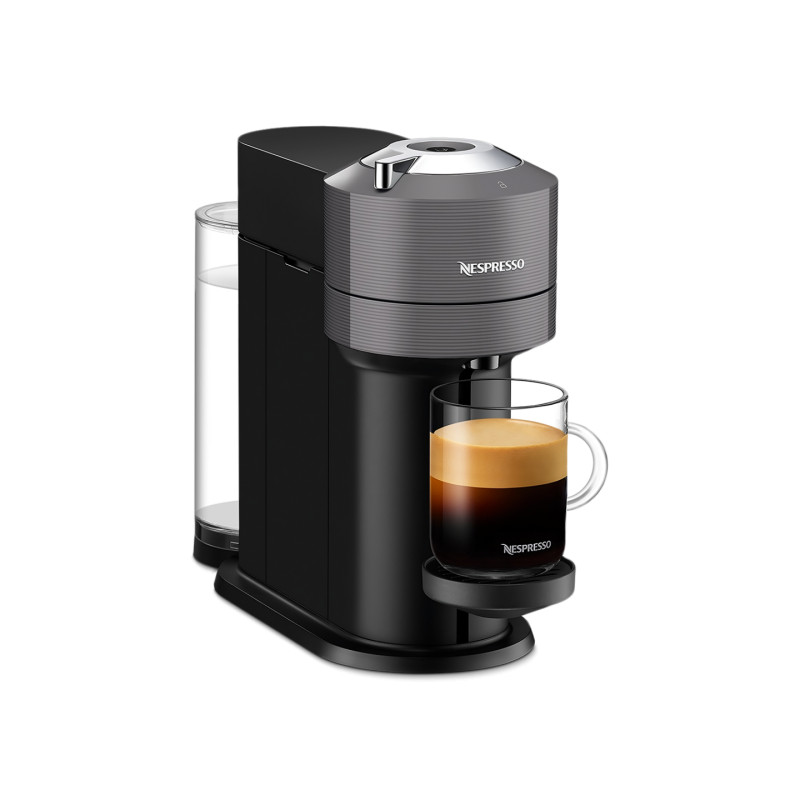
Two machines, two pod systems, two fundamentally different cups. Keurig and Nespresso both promise a fresh drink in under 60 seconds with no cleanup and no grinder. But once you understand how each one brews — and what ends up in the mug — the buying decision is usually obvious.
The core question is not which brand is better. It is what type of coffee do you actually drink in the morning? This comparison focuses on two of the most widely purchased mid-range models: the Keurig K-Supreme Plus ($219.99) and the Nespresso Vertuo Next ($125.99–$179.99). We sourced product data directly from keurig.com and nespresso.com, reviewed specifications and customer ratings, and applied the research standards described in our editorial policy. You can read more about our approach.
At a glance: key differences
| Keurig K-Supreme Plus | Nespresso Vertuo Next | |
|---|---|---|
| Price | $219.99 | $125.99–$179.99 |
| Brew sizes | 4, 6, 8, 10, 12 oz | Espresso (1.35 oz) to Carafe (18 oz) |
| Brewing method | Pressurized drip (MultiStream™) | Centrifusion extraction |
| Pod type | K-Cup (universal) | Vertuo capsule (proprietary) |
| Pod cost | $0.35–$0.75 per cup | $0.75–$1.15 per cup |
| Crema | None | Yes |
| Water reservoir | 78 oz (removable) | 37 oz (removable) |
| Heat-up time | ~30 seconds | 15–20 seconds |
| Milk frother | Not included | Optional (Aeroccino3, ~$50 add-on) |
| Rating | 3.9★ (2,984 reviews) | 4.0★ (7,609 reviews) |
How each system works
The machines are not in competition on the same technical level. They use different extraction methods for different drinks.
Keurig uses pressurized drip. The K-Supreme Plus pushes hot water through a punctured K-Cup pod using MultiStream Technology™ — five separate water streams that saturate the grounds more evenly than single-needle competitors. The result is American-style filter coffee: clean, mild, and available in any size from 4 to 12 oz. Keurig machines do not produce espresso or crema.
Nespresso Vertuo uses centrifusion. The machine reads a barcode on each capsule, then spins it at up to 7,000 rpm while hot water is injected. The centrifugal force blends water through the grounds and creates a thick, stable crema layer on top of the drink. This is closer to espresso in texture and flavour concentration — even at the larger 5 oz and 8 oz sizes.
The practical outcome: if you want a 10 oz mug of coffee to take to your desk, Keurig is the right choice. If you want a 2 oz espresso or a 5 oz lungo with actual crema, Nespresso is the right choice.
Keurig K-Supreme Plus: detailed look
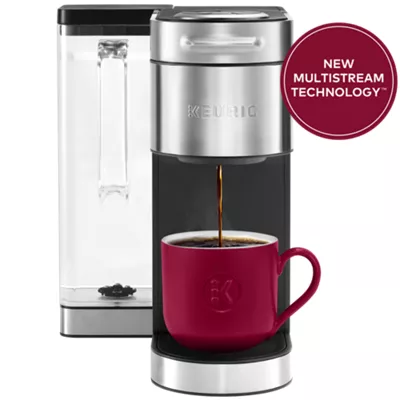
The K-Supreme Plus targets daily multi-cup households who want flexibility without much configuration.
Brew variety is the key advantage. K-Cup pods are sold by hundreds of brands — Starbucks, Dunkin', Newman's Own, Green Mountain, and dozens of store-label alternatives — at every grocery store and on Amazon. Keurig's open pod system means you are never locked into one brand's catalogue or prices. If a pod costs $0.35 at Costco and you drink two cups a day, your annual pod spend is roughly $255. At $0.75/cup for premium varieties, that rises to $548.
Temperature and strength settings give users more control than most single-serve machines. Three temperature levels (192°F, 197°F, 205°F) and three strength settings (regular, strong, extra-strong) let you adjust to taste without measuring anything. The 78 oz removable reservoir means most households refill it every 3–4 days rather than every morning.
The brew-over-ice setting adds a practical option for iced coffee: the machine brews a smaller, more concentrated dose hot, then pours it directly over ice without diluting the flavour.
Where the K-Supreme Plus falls short: At 3.9 stars across nearly 3,000 reviews, it is a competent but not exceptional machine. Common complaints involve the pump becoming louder over time and the need for regular descaling to maintain flavour quality. The machine also does not include a frother, so milk-based drinks require a separate accessory.
Price verified May 2026 at keurig.com ($219.99 standard; promotional starter kits reduce entry cost).
Nespresso Vertuo Next: detailed look
The Vertuo Next sits at the entry level of Nespresso's Vertuo range and targets buyers who want espresso-quality drinks without a traditional espresso machine's complexity.
Centrifusion is the defining feature. The barcode-reading system means there is no dial to adjust — the machine reads each capsule and configures itself automatically. Nespresso Vertuo capsules are available in five brew sizes (Espresso, Double Espresso, Gran Lungo, Coffee, Alto) plus an 18 oz Carafe variant, covering single espresso shots through to a small pot of coffee. The crema produced is noticeably thicker and longer-lasting than anything from a drip machine.
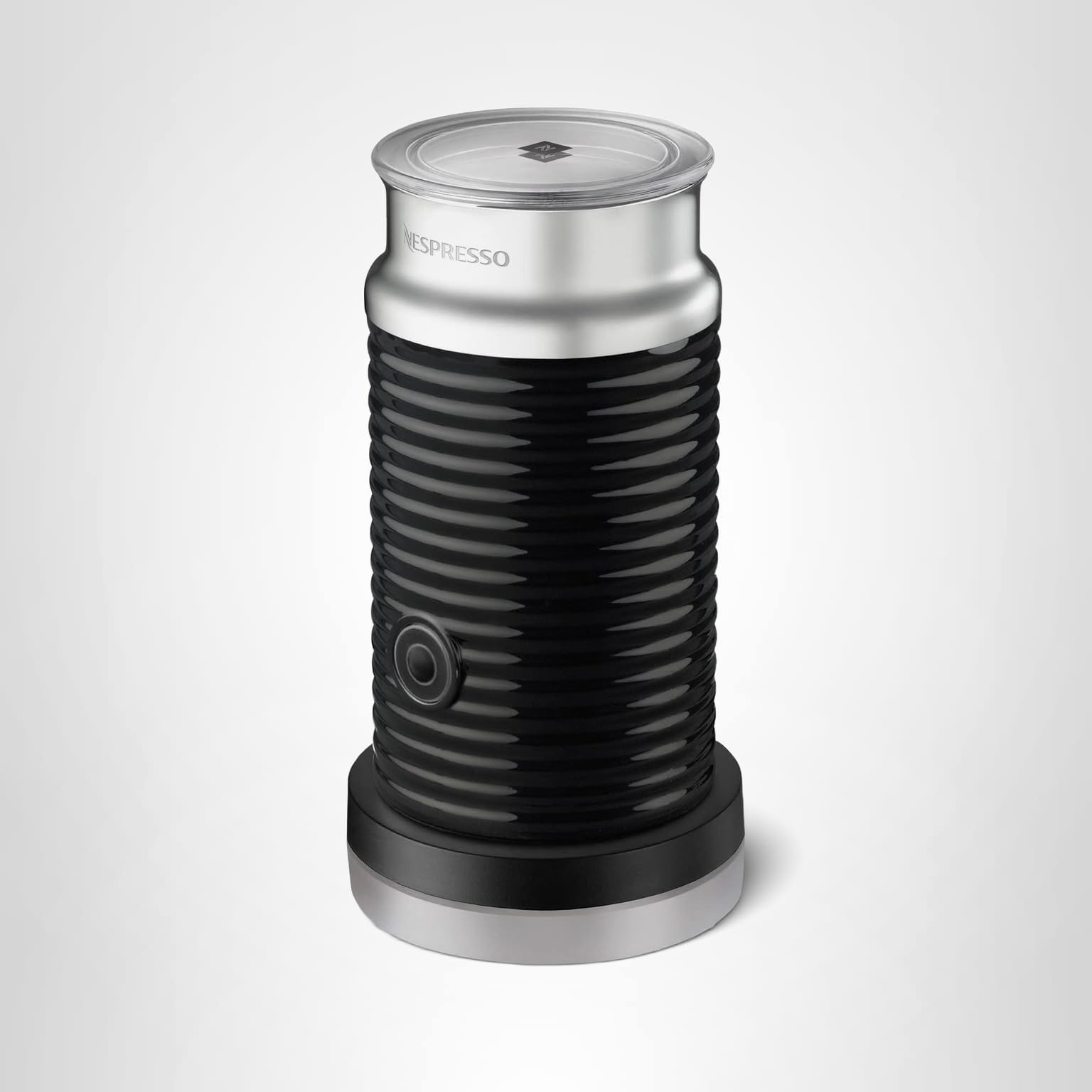
The compact footprint (5.5 inches wide, 12.4 inches tall) makes the Vertuo Next easy to fit on counter space that cannot accommodate a traditional espresso machine. The Aeroccino3 milk frother (sold separately at ~$50, or bundled in some retail packages) turns any espresso into a latte or cappuccino in 60 seconds.
Pod selection is narrower. Nespresso controls the Vertuo capsule format. You buy pods directly from nespresso.com, from Nespresso boutiques, or from authorized retailers like Williams-Sonoma. Third-party Vertuo pods exist but are limited compared to the K-Cup ecosystem. At $0.75–$1.15 per capsule, two espresso shots per day costs $547–$840 annually — roughly 2–3× what a Keurig drinker spends on K-Cups for the same number of cups.
Bluetooth and WiFi connectivity via the Nespresso app allows remote brewing, firmware updates, and machine diagnostics. It is a convenience feature, not a necessity, but useful for households where a brewing delay of even 20 seconds matters.
Price verified May 2026 at nespresso.com ($125.99 in Dark Grey; $179.99 for Deluxe and Premium variants).
Pod cost over time
The machines have a smaller price gap than most buyers expect. The ongoing pod cost is the bigger financial variable.
| Scenario | Keurig K-Supreme Plus | Nespresso Vertuo Next |
|---|---|---|
| Machine cost | $219.99 | $125.99–$179.99 |
| Pod cost/cup (mid estimate) | $0.55 | $0.95 |
| 365 cups/year | $200.75 | $346.75 |
| Year 1 total | ~$421 | ~$472–$527 |
| Year 2 total (pods only) | ~$201 | ~$347 |
After Year 1, the Keurig is significantly cheaper to operate — roughly $145 less per year at mid-range pod prices and one cup per day. For households drinking two cups per day, the gap doubles to ~$290 annually.
The Nespresso case for the higher ongoing cost is quality: if you drink espresso-style drinks, there is no Keurig equivalent at any price point. You would need a standalone espresso machine and grinder — typically $300–$700+ — to get the same crema. Measured against that alternative, Nespresso's $0.95/capsule is competitive.
Which one fits your situation?
Choose Keurig K-Supreme Plus if:
- You drink 8–12 oz mugs of black coffee or flavoured coffee
- You want pods available at the grocery store or Costco
- Multiple people in your household prefer different coffee brands or strengths
- You brew iced coffee regularly
Choose Nespresso Vertuo Next if:
- You drink espresso, ristretto, or lattes and cappuccinos
- You want genuine crema without the learning curve of a manual espresso machine
- Counter space is limited and you want one machine for espresso and regular coffee sizes
- You already use Nespresso pods and want to stay in the ecosystem
For buyers who want to go deeper on espresso machines specifically, our Breville espresso machines review covers standalone machines from $299 to $799 — the range where manual or semi-automatic espresso quality exceeds what Nespresso's capsule system can produce. Our Breville vs IKEA coffee comparison also addresses the drip-vs-espresso decision from a different angle.
If counter space or kitchen organisation is part of the decision, the best kitchen organisers guide addresses how to plan appliance placement for daily-use machines.
Frequently asked questions
Can Nespresso make regular drip coffee? Only the Vertuo system can. Vertuo machines brew 5 oz, 8 oz, 14 oz, and 18 oz sizes using centrifusion technology, producing a result similar to American filter coffee. Original Nespresso machines (Pixie, Essenza) are limited to espresso and lungo sizes — roughly 1.35 oz and 5 oz.
Are Keurig K-Cups cheaper than Nespresso capsules? Per cup, yes. K-Cups typically run $0.35–$0.75 depending on brand and where you buy. Nespresso Vertuo capsules cost $0.75–$1.15 per pod. Over 365 cups, that gap is roughly $130–$270 for Keurig vs $275–$420 for Nespresso — a meaningful difference for daily drinkers.
Which is easier to clean — Keurig or Nespresso? Both are low maintenance. Keurig requires descaling every 3–6 months and a weekly drip tray rinse. The Vertuo Next triggers its own descaling alert via a light indicator and walks you through the cycle. Neither machine needs cleaning after every use.
Do Keurig and Nespresso pods work in each other's machines? No. K-Cups only work in Keurig machines. Nespresso Vertuo capsules only work in Vertuo machines. The systems are proprietary and entirely incompatible.
Is Nespresso worth the higher pod cost? For espresso-based drinks, yes — the centrifusion extraction produces genuine crema and noticeably better flavour depth than Keurig's pressurised drip. For plain black coffee, the quality difference is smaller and Keurig's lower per-cup cost is a reasonable argument for budget-focused buyers.
Summary
Keurig and Nespresso are not competing for the same drinker. Keurig wins on variety, per-cup cost, and large mug sizes. Nespresso wins on espresso quality, crema, and the ability to serve a range from espresso through carafe in one machine.
The K-Supreme Plus at $219.99 is a reliable, flexible machine for households with varied tastes. The Vertuo Next at $125.99–$179.99 is an accessible entry to espresso-quality drinks without the complexity of a traditional machine.
Start with your coffee order, not the spec sheet.
Prices and ratings verified May 2026 via keurig.com and nespresso.com. Prices can change — verify before purchasing. This article follows the research standards described in our editorial policy.