X Sense Review: 7 Smart Smoke Alarm Checks Before You Replace Home Smoke and CO Sensors
Replacing smoke alarms feels like a small weekend task until you realize the decision affects every bedroom, hallway, floor, fuel-burning appliance, and emergency plan in the house. The product page may promise app alerts, voice warnings, wireless interconnection, and a tidy battery design. The harder question is whether the exact alarm you install is right for your code situation and the way your home is actually wired.
This X Sense review looks at X-Sense as a home safety brand, not as a gadget brand. The short version: X-Sense is most interesting for shoppers who want affordable wireless interconnected alarms, app notifications, voice location alerts, or add-on leak detection. It is less straightforward if you need a hardwired code replacement, want a familiar U.S. legacy brand, or cannot verify the exact certification mark on the model you plan to install.
Players Benefits may earn a commission when commerce links are added by our publishing system. We did not lab-test or install these alarms. This review is based on X-Sense official product pages, official manuals, U.S. safety guidance, PCWorld and TechHive reviews, Trustpilot customer-signal checks, and public buyer discussions reviewed on June 6, 2026. Our source-led review standards are explained in our editorial policy, and our site model is covered on the about page.
X Sense review: quick verdict
X-Sense is a serious brand to compare if you want battery-powered alarms with more flexibility than a basic standalone detector. The lineup covers smoke alarms, smoke and CO combination alarms, carbon monoxide alarms, water leak alarms, heat alarms, temperature sensors, and radon detectors. That makes the brand useful for people trying to build a broader home safety layer without paying for a full security system.
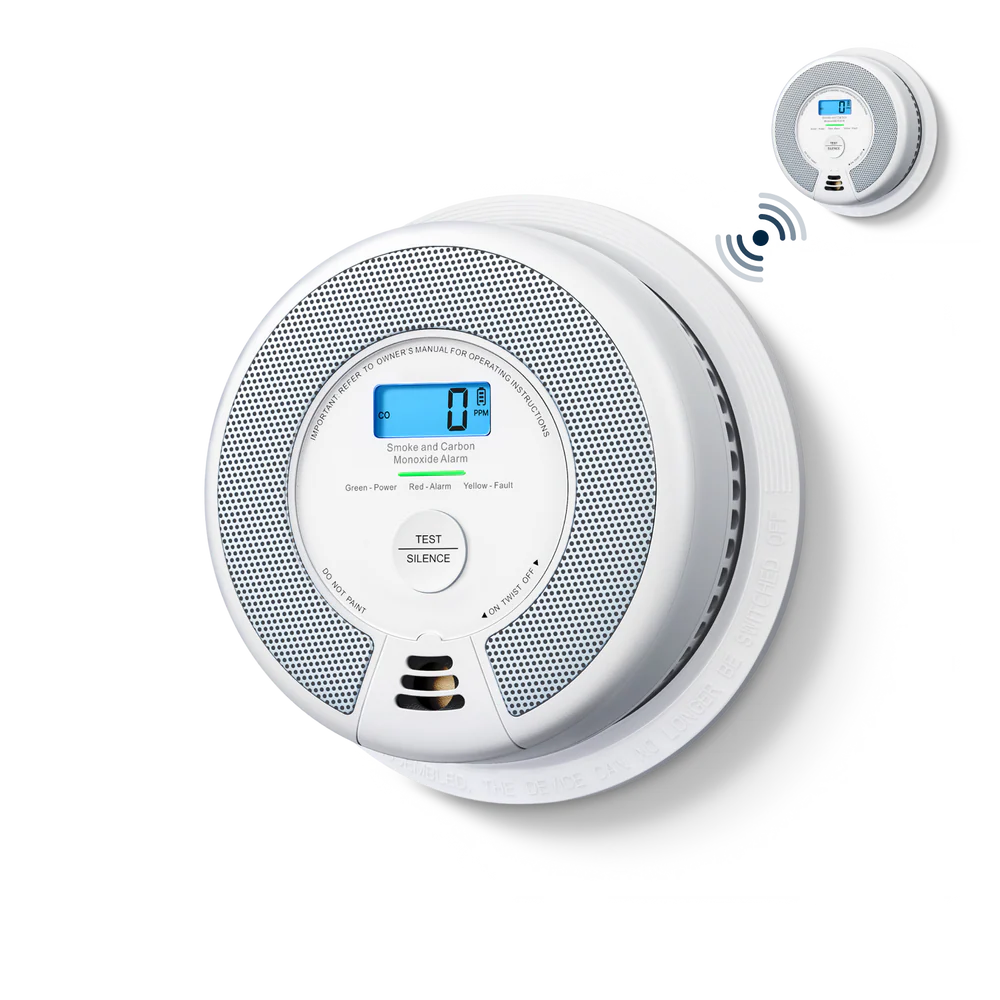
The best X-Sense fit is a home where battery-powered wireless interconnection solves a real problem: older rooms without interconnect wiring, a detached garage, a rental where hardwiring is not practical, or a household that wants phone alerts when nobody is home. Models such as SC07-W, SC07-WX, XP0A-MR, and XS0B-MR target different versions of that need.
The caution is certification and infrastructure. X-Sense official pages say specific models are ETL listed to UL 217 and UL 2034 standards, but that does not mean every product page, generation, country version, and marketplace listing carries the same mark. For a life-safety product, verify the exact model number, manufacturing label, manual, and local code requirement before you remove existing alarms.
What X-Sense sells for home safety
X-Sense is not just a smoke detector seller. Its official navigation includes combination smoke and CO alarms, smoke alarms, CO alarms, water leak alarms, heat alarms, thermometer and hygrometer devices, and radon detectors. The home safety angle is broader than a single smoke puck.
That breadth is useful if you want one app ecosystem for smoke, carbon monoxide, leaks, and environmental alerts. It also creates product confusion. Some units are standalone. Some are RF wireless interconnected. Some connect directly to 2.4 GHz Wi-Fi. Some require the SBS50 base station for app alerts. Some are smoke-only, while others combine smoke and CO. The first buying task is not choosing the most advanced model. It is matching the alarm architecture to your house.
U.S. safety guidance is also clear that coverage matters more than app polish. The U.S. Fire Administration recommends smoke alarms inside each bedroom, outside each sleeping area, and on every level of the home, including the basement. CPSC guidance for CO alarms points to every level and outside sleeping areas. Use those placement rules as the map, then decide which X-Sense product type can cover it.
7 checks before buying X-Sense alarms
1. Verify the exact certification mark
X-Sense says on its official homepage that some models are ETL Listed to UL 217 and UL 2034 standards, and it lists ETL-certified product models such as SC07-W, SC07, SC01, SC01-W, SC06-W, and SC06. The SC07-W product page also states ETL Certified and describes Intertek ETL as meeting North American safety standards.
That is useful, but do not turn it into a blanket claim. If you are buying SC07-WX, XP0A-MR, XS0B-MR, or a marketplace bundle, check that exact product. Look for the certification mark on the device label, product manual, official page, and Intertek or local authority records where applicable. Reddit and forum discussions around X-Sense show why this matters: buyers are actively debating UL, ETL, Amazon listing changes, and insurance or inspection concerns.
2. Decide whether you need standalone, interconnected, or Wi-Fi alerts
X-Sense splits its lineup across three practical paths. Standalone alarms are simplest: they sound locally and do not depend on an app. Wireless interconnected alarms are better for multi-room coverage because triggering one alarm can trigger the others. Wi-Fi models add phone alerts, low-battery notices, or app controls.
The trap is assuming Wi-Fi and interconnection are the same thing. They are not. The SC07-W is positioned as a wireless interconnected smoke and CO alarm with a sealed 10-year battery, but its FAQ says it is not Wi-Fi compatible and cannot be controlled by an app. SC07-WX, by contrast, is a smart smoke and CO alarm with 2.4 GHz Wi-Fi app alerts, but it is a different architecture.
3. Treat app alerts as backup, not the safety system
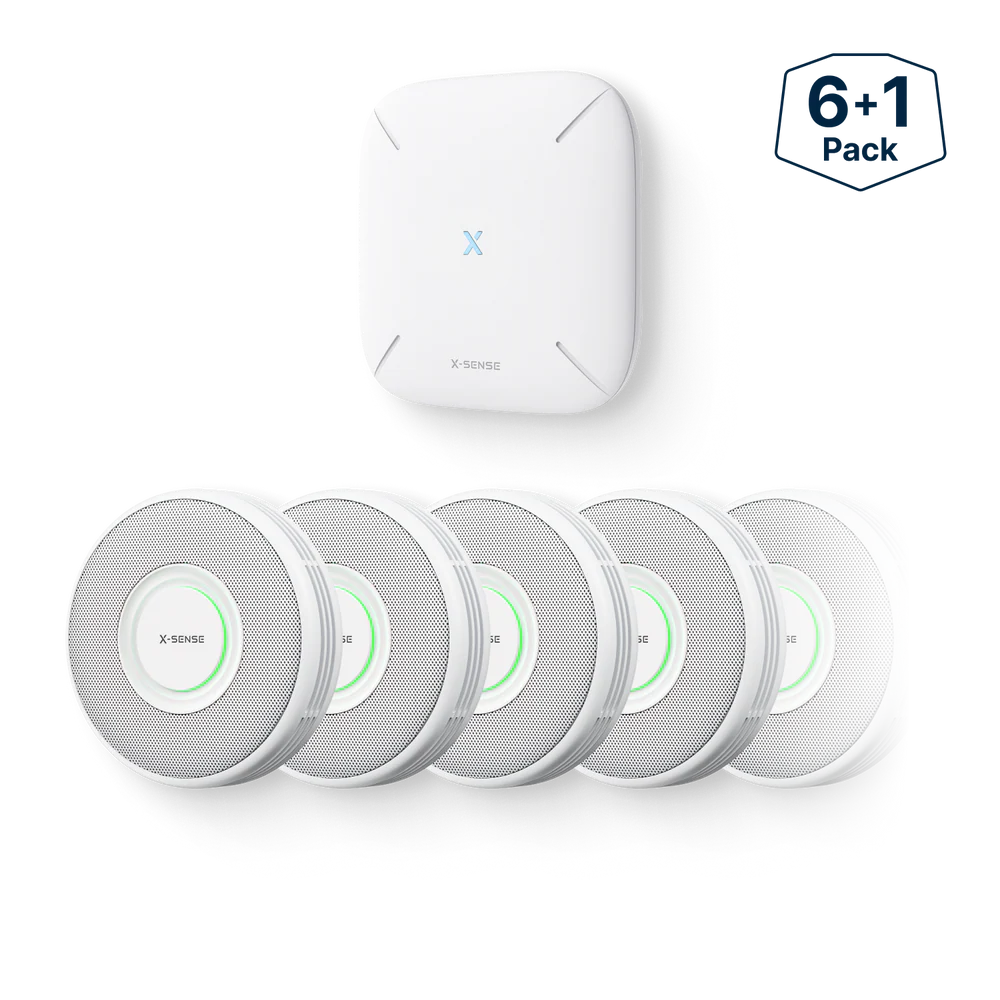
Phone notifications are useful when you are away, but they should never be the primary reason you trust a smoke alarm. PCWorld reviewed the X-Sense XS0B-MR system and found that the SBS50 base station does not have battery backup, so push notifications stop if the base station loses power. The same review found the interconnected alarms still sounded when triggered, but app features and silencing depended on the base station.
That is the right way to think about smart alarms: the siren is primary, interconnection is the next safety layer, and the app is a convenience layer. If remote alerts are critical, plug the base station into a small UPS and test what happens when Wi-Fi or power fails.
4. Check battery design and replacement schedule
X-Sense battery claims vary by model. SC07-W uses a 10-year sealed lithium battery and has a 10-year product lifespan. SC07-WX has a maximum service life of 10 years but uses a replaceable CR123A battery with a listed 1-year battery life. XP0A-MR uses a replaceable CR123A lithium battery and lists 5 years in wireless interconnected network use, or 3 to 5 years when connected to a base station.
This matters because a sealed 10-year alarm and a replaceable-battery smart alarm create different maintenance habits. If you are buying for a rental, elderly parent, or second home, fewer battery interventions may matter more than app features.
5. Confirm smoke-only versus smoke and CO coverage
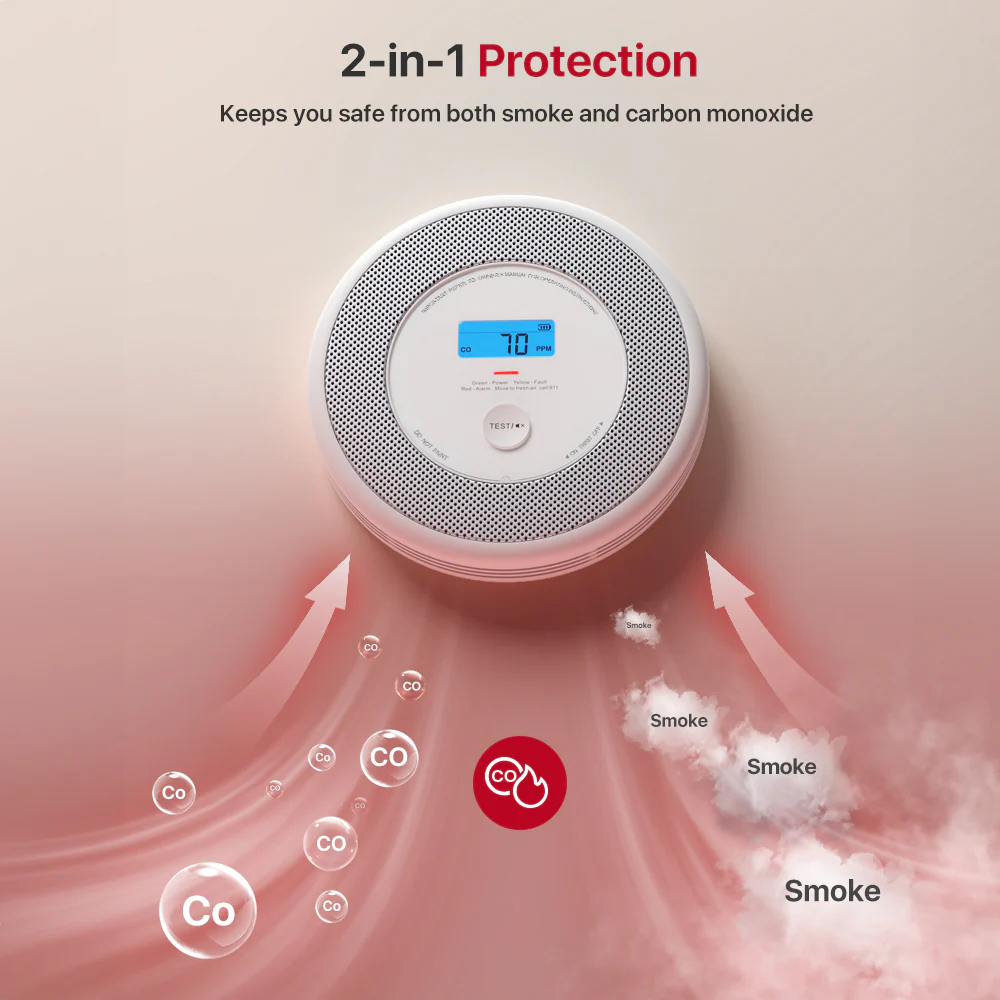
X-Sense model names can blur together. XS01-WX and XS0B-MR are smoke alarms. SC07-W, SC07-WX, XP0A-MR, and XP0A-iR are smoke and CO combination alarms. The difference matters if you have gas appliances, an attached garage, fireplace, furnace, or generator risk.
Combination models use different sensors for different hazards. X-Sense SC07-W and XP0A-MR pages describe photoelectric smoke sensing and electrochemical CO sensing. Official CO sensitivity ranges show alarm response changes by CO concentration, so do not expect every low reading to trigger an immediate siren.
6. Check the Wi-Fi limits before installing
X-Sense smart models commonly use 2.4 GHz Wi-Fi and do not support 5 GHz-only setup. That is normal for smart-home sensors, but it causes setup frustration in homes with merged networks, weak hallway coverage, metal electrical boxes, or routers that hide 2.4 GHz configuration.
Before you mount ten devices, pair one unit in the intended room, test alerts, then test again after a router reboot. If your home already has weak Wi-Fi at ceiling height, a non-Wi-Fi interconnected model may be more reliable than forcing every alarm into the app layer.
7. Compare hardwired replacements before removing hardwired alarms
If your current alarms are hardwired and interconnected, do not replace them with battery-only smart alarms without checking local rules. Many homes have code-required hardwired alarms, and some jurisdictions have specific rules for bedrooms, rental properties, new construction, and interconnection.
X-Sense does sell hardwired models, but many popular smart and wireless options are battery-powered. For a simple expired-alarm swap in a hardwired system, First Alert, Kidde, or another matching hardwired replacement may be the safer starting comparison. X-Sense makes more sense when wireless coverage, app alerts, or add-on sensors solve a real gap.
X-Sense models worth understanding first
| Model | Type | Strong fit | Check before buying |
|---|---|---|---|
| SC07-W | Wireless interconnected smoke and CO alarm | Homes wanting linked alarms without Wi-Fi dependence | Confirm local code fit and exact certification label |
| SC07-WX | Smart Wi-Fi smoke and CO alarm | Buyers who want direct app alerts and low-battery notices | 1-year replaceable battery and 2.4 GHz Wi-Fi requirement |
| XP0A-MR | Smart interconnected smoke and CO alarm with voice alerts | Larger homes needing location voice alerts and base-station app features | SBS50 base station power, app dependence, battery schedule |
| XS0B-MR | Smart interconnected smoke alarm with voice alerts | Smoke-only network with room-specific voice alerts | Does not detect CO; base station has no battery backup |
| XS01-WX | Compact Wi-Fi smoke alarm | Small apartments or added smoke-only phone alerts | Smoke-only, no CO detection, Wi-Fi setup limits |
SC07-W: the simpler interconnected combo alarm
The SC07-W official page is the cleanest place to start for many shoppers. It combines smoke and CO detection, uses a sealed 10-year lithium battery, and can interconnect with up to 24 compatible X-Sense wireless alarms. X-Sense lists its alarm loudness at at least 85 dB at 10 feet and gives an open-air transmission range over 250 meters.
The main reason to choose this path is simplicity. You get linked alarms without depending on Wi-Fi for the basic emergency sound. The main reason to pause is that it is not the same as a full app-controlled system. The product FAQ says it is not Wi-Fi compatible and cannot work with AI assistants.
XP0A-MR and XS0B-MR: voice alerts and base-station tradeoffs
The XP0A-MR page is the more feature-heavy route. It combines smoke and CO sensing, voice alerts, app alerts, optional fire dispatch service, and SBS50 base-station interconnection. X-Sense says the device can directly interconnect with up to 24 compatible wireless alarms without the base station, while a base station can support a broader Link+ Pro network.
The XS0B-MR smoke-only system is similar in spirit but does not include CO detection. PCWorld found its voice location alerts useful because they identify the room where smoke was detected. That can matter in a larger home, especially if children, older adults, or people with mobility issues need help.
The tradeoff is system complexity. PCWorld also criticized the setup process and called out the lack of battery backup in the SBS50 base station. If you buy a base-station X-Sense kit, test local sirens, interconnection, phone notifications, and behavior during a power or Wi-Fi outage.
SC07-WX and XS01-WX: direct Wi-Fi alerts
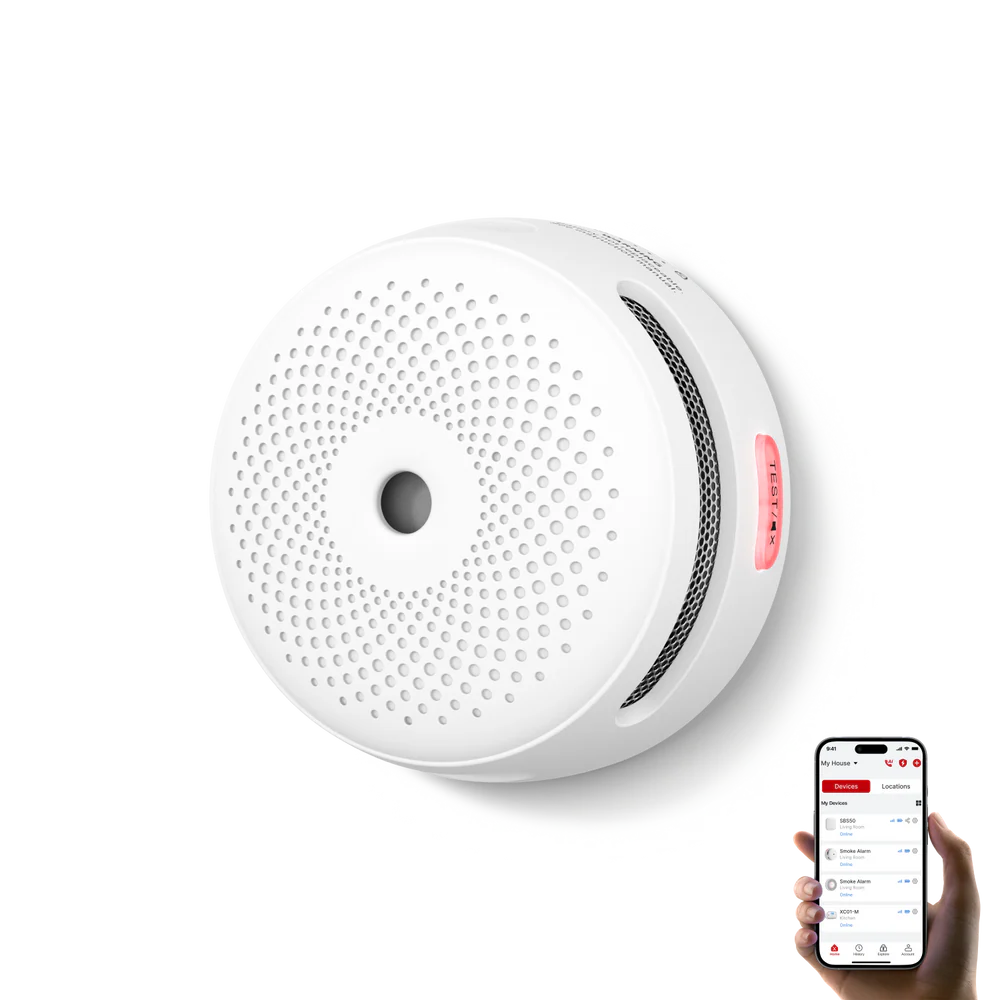
The SC07-WX page targets buyers who want a smoke and CO alarm with real-time app alerts, low-battery warnings, and optional dispatch service without a base station. Its technical specs list 2.4 GHz Wi-Fi, photoelectric smoke sensing, electrochemical CO sensing, and at least 85 dB alarm loudness.
The XS01-WX page is the smoke-only version to compare if CO detection is already handled elsewhere. Its page lists photoelectric sensing, coverage of 215 to 430 square feet, 2.4 GHz Wi-Fi, and app sharing for multiple users.
These are practical if phone alerts are your priority. They are weaker if you want alarms to trigger each other without relying on Wi-Fi or if you dislike annual CR123A battery replacement.
Customer signal and independent review notes
TechHive reviewed the X-Sense XP0A-SR standalone smoke and CO alarm and found its smoke response quick and the mute button easy to use, while noting that its smart features are limited because it has no app, wireless connectivity, or interconnect features. That review supports the idea that X-Sense can be good value, but it also reinforces the need to read the exact feature list.
Trustpilot feedback for X-Sense includes buyers praising support help with wireless alarm fitting questions, but public customer reviews are not lab testing. Treat them as service and usability signals, not proof that a detector will satisfy your local fire code.
Reddit and fire alarm forums show mixed sentiment around X-Sense certification and marketplace removals. Some users report positive real-world alert behavior; others say they prefer legacy brands for life-safety confidence. For this category, that caution is healthy. A smoke alarm is not a place to chase the cheapest smart device without verification.
Who should consider X-Sense
Consider X-Sense if you want wireless interconnection in an older home, direct phone alerts without a full security system, a wider set of safety sensors in one ecosystem, or a budget-friendly way to replace expired standalone alarms. The brand is especially relevant if you are trying to cover bedrooms, hallways, utility rooms, and leak-prone areas without opening walls.
Compare elsewhere if your existing system is hardwired, if your inspector or insurance documentation requires a particular mark, if you want a brand with broader U.S. retail recognition, or if you prefer professionally monitored security. Kidde and First Alert remain natural comparisons for basic hardwired replacements. Google Nest Protect remains relevant if polished smart-home behavior matters more than low cost, though availability and ecosystem fit should be checked separately.
Related home safety reading
If this X Sense review is part of a broader home refresh, start with practical risk areas rather than buying sensors randomly. Our lighting fixture guide helps with ceiling placement and electrical planning habits. Our Doulton water filter review covers another safety-adjacent home system where certification matters. For air quality, see our Dyson Big+Quiet vs Coway Airmega 250S comparison. If you are timing home upgrades, our home improvement seasonal sales guide can help you decide whether to buy now or wait.
FAQ
Is X Sense a good smoke alarm brand?
X-Sense is worth researching if you want affordable battery-powered alarms with wireless interconnection, phone alerts, or a broader home safety ecosystem. It is not an automatic replacement for every home. Check exact model certification, local code, alarm type, and whether you need hardwired interconnection.
Are X-Sense smoke alarms UL certified?
Some X-Sense pages state ETL listing to UL 217 or UL 2034 standards for specific models, and SC07-W is presented as ETL certified. Do not assume the same certification applies to every X-Sense model, marketplace listing, or older unit. Verify the exact device label and manual before installation.
Do X-Sense alarms work if Wi-Fi goes out?
The siren function should be treated separately from app alerts. Some X-Sense interconnected alarms can still sound together without the base station online, but phone notifications and app silencing may fail if power, Wi-Fi, or the base station is down. Test your exact setup after installation.
Which X-Sense model should I start with?
Start with SC07-W if you want a sealed-battery wireless interconnected smoke and CO alarm without Wi-Fi dependence. Consider SC07-WX if direct phone alerts matter. Consider XP0A-MR if you want smoke and CO detection with voice location alerts and a base station. Use XS0B-MR or XS01-WX only if smoke-only coverage fits your plan.
Can X-Sense replace hardwired alarms?
Maybe, but not by default. If your home already has hardwired interconnected alarms, compare hardwired replacements and check local code before switching to battery-only wireless devices. Some homes and rentals have specific installation and interconnection requirements.
Is the X-Sense app necessary?
No for basic local alarm behavior on many models, yes for phone alerts and smart controls. If you do not need remote alerts, a sealed-battery interconnected model may be simpler. If you travel often or manage a second home, app alerts can be useful as a backup signal.
Title Candidates
- X Sense Review: 7 Smart Smoke Alarm Checks Before You Replace Home Smoke and CO Sensors
- X Sense Review: The Certification and App Alert Details Buyers Should Check First
- X-Sense Smoke Alarms Review: Where the Smart Safety Lineup Makes Sense
- Before You Buy X-Sense: 7 Home Safety Checks That Matter More Than App Alerts
- X Sense Review: Smart Smoke, CO, and Leak Alarms Without the Hype
Sources reviewed
- X-Sense official homepage
- X-Sense SC07-W official product page
- X-Sense SC07-WX official product page
- X-Sense XP0A-MR official product page
- X-Sense XS0B-MR official product page
- X-Sense XS01-WX official product page
- PCWorld X-Sense XS0B-MR review
- TechHive X-Sense XP0A-SR review
- CPSC CO alarm guidance
- U.S. Fire Administration smoke alarm guidance
- Trustpilot X-Sense review page
- Public buyer-signal checks from Reddit home safety and smart-home discussions reviewed on June 6, 2026
Final recommendation: X-Sense is a useful shortlist brand when wireless interconnection, app alerts, voice location warnings, or add-on leak sensors solve a real home problem. Buy it like safety equipment, not like a gadget: verify the exact model certification, test local sirens first, test app behavior second, and keep hardwired code requirements ahead of smart-home convenience.