X Sense Review: Smart Smoke, CO, Radon, and Water Leak Alarms for Safer Homes
If your smoke alarm is old enough that nobody remembers when it was installed, the problem is not just an annoying chirp. Home safety devices are small purchases with unusually high consequences: they need to be loud enough, certified for the right standard, placed in the right rooms, and simple enough that the household actually keeps them working.
That is the practical lens for this X Sense review. X-Sense sells a broad home safety lineup, including smoke alarms, carbon monoxide alarms, combination smoke and CO alarms, water leak sensors, heat alarms, thermometer-hygrometers, and radon detectors through its official store at x-sense.com. The brand is most compelling for shoppers who want a coordinated set of battery-powered or app-connected devices, not for buyers who need a professionally monitored, hardwired, code-specific system without doing their own checks.
For transparency, this review is based on official X-Sense product pages, public safety guidance, and current editorial sources, not first-hand lab testing. You can read more about our review boundaries on our editorial policy and who runs this site on about us.
X Sense brand overview: what the company actually sells
X-Sense positions itself around home fire and environmental safety rather than general smart-home gadgets. Its current official navigation groups products into combination alarms, smoke alarms, CO alarms, and home alarms, with product listings that include RF interconnected alarms, Wi-Fi app alerts, standalone sealed-battery units, radon detectors, water leak alarms, heat alarms, and temperature-humidity monitors.
The useful part of that catalog is breadth. A homeowner could use X-Sense for a smoke and CO upgrade, add a radon monitor for a basement or lower level, and place leak sensors near a washing machine, water heater, sink cabinet, or sump area. The risk is that breadth can make the buying decision confusing: some products are standalone, some interconnect by RF, some need a base station, and some are Wi-Fi app products. Before buying, the main task is matching the model to the room and local safety requirement, not simply picking the newest device.
X-Sense says its support package includes after-sales support, lifetime technical support, a 5-year warranty, and a 60-day money-back guarantee on its About Us page. Treat those as store-policy details to verify again at checkout, because warranty and return terms can vary by region and seller.
Smoke and CO alarms: the strongest fit for X-Sense
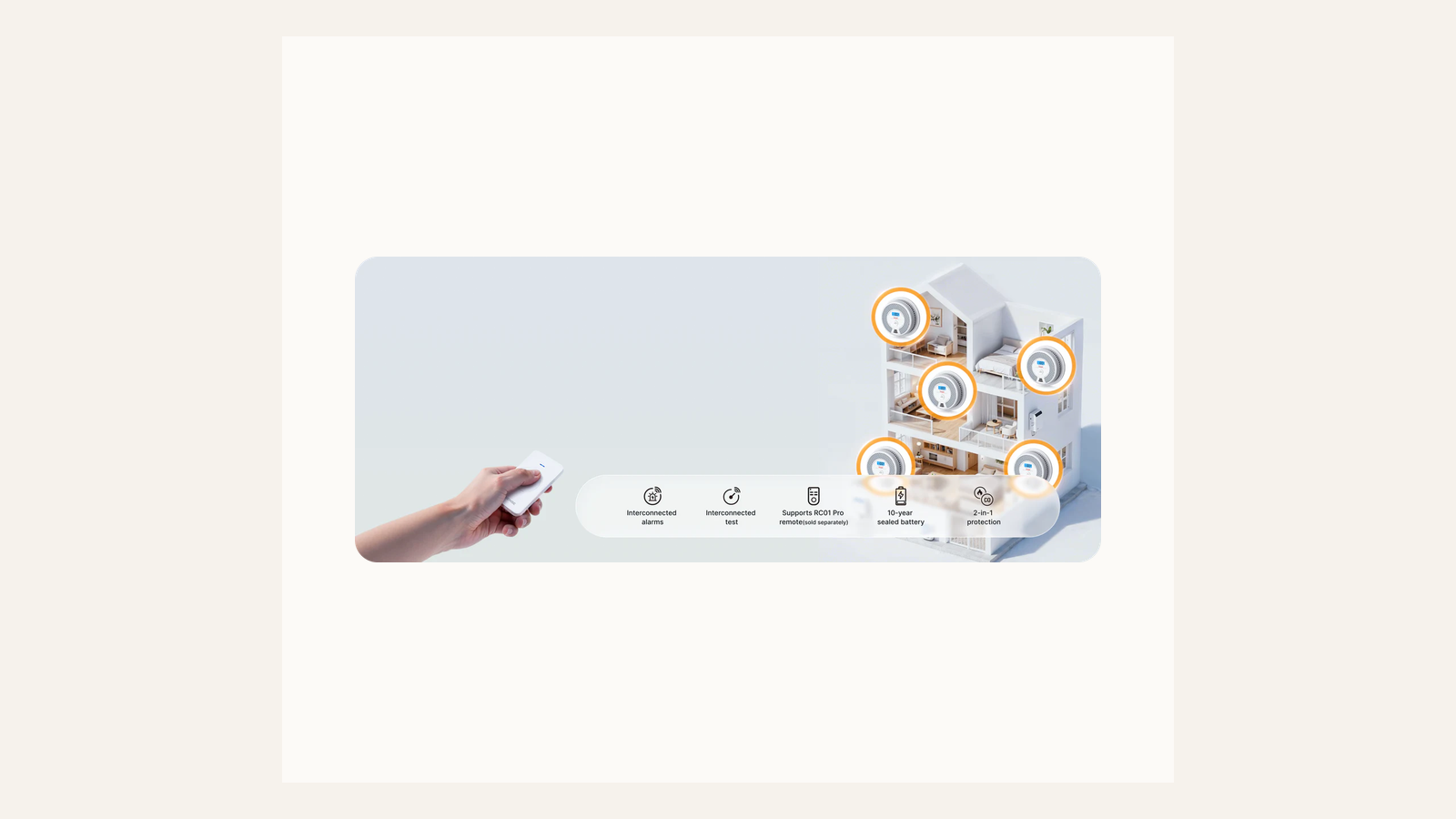
The clearest X-Sense category is smoke and carbon monoxide detection. The SC07-W Wireless Interconnected Smoke and CO Alarm is a good example of the brand approach: it combines photoelectric smoke sensing, electrochemical CO sensing, a 10-year sealed lithium battery, and wireless interconnection. The official specification lists EN 14604:2005 and EN 50291-1:2018 standards, an alarm loudness of at least 85 dB at 3 m, support for up to 24 wireless units, and an open-air transmission range over 250 m.
That feature set is useful for larger homes where one alarm sounding in a far room may not be enough. Interconnected alarms can make practical sense in hallways, bedrooms, and multi-level homes because one detected event can trigger multiple units. The tradeoff is compatibility. X-Sense notes that the SC07-W is compatible only with X-Sense wireless alarms, so buyers should not assume it will join another brand ecosystem.
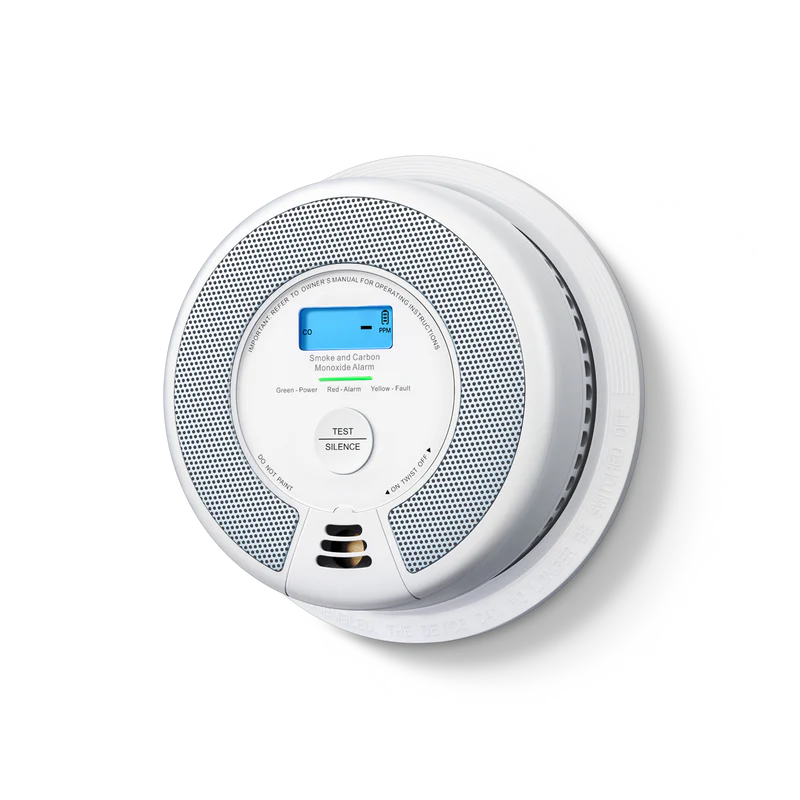
For simpler spaces, the SC07 Standalone Smoke and CO Alarm strips away interconnection and focuses on a sealed 10-year lithium battery, photoelectric smoke sensor, electrochemical CO sensor, LCD display, and UL 217 / UL 2034 conformity claims on the product page. It is a more straightforward fit for an apartment, a small house, or a supplemental location where interconnection is not required.
The important caveat: alarms are regulated safety devices. Local code can require hardwired units, sealed batteries, specific placement, or interconnection in new construction. A product page can tell you what a device claims to meet; it does not replace checking local requirements, landlord rules, or an electrician where needed.
Smart features: helpful, but not the whole safety plan
X-Sense sells both app-connected and non-app alarms. The smart models can add real-time alerts, app testing, alert sharing, or base-station interconnection depending on the model. Those features are convenient if you travel often, manage a property, or want another household member to receive alerts.
They should not be the only reason to buy. A smoke or CO alarm first needs the right certification label, sensor type, placement, loudness, and maintenance routine. A 2026 WIRED guide to smart smoke alarms makes a useful caution: smart features can help, but sensor mix and placement still matter. That aligns with the practical buyer question here: choose smart alerts after the core alarm requirement is satisfied.
For readers comparing X-Sense with other home systems, our Dyson Big+Quiet vs Coway Airmega 250S article is a useful reminder that smart-home categories often involve the same tradeoff: premium automation is only valuable when the core function is already right.
Radon detection: useful for ongoing awareness, not a mitigation plan
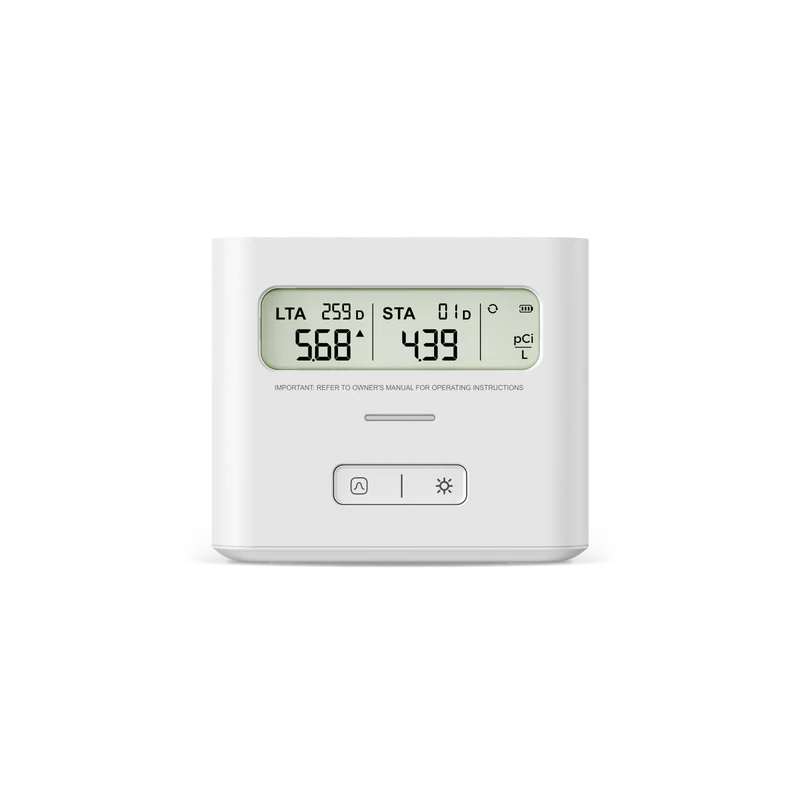
X-Sense has also moved into radon monitoring. The XR0A-SR Radon Detector is listed as a portable detector with detection results within 24 hours, short- and long-term averages, one-button reset for multi-room monitoring, and replaceable AA battery power. The official specifications list a 0-500 pCi/L detection range, passive diffusion chamber, continuous alpha spectrometry, and a recommended testing period of at least 7 days for more reliable data.
That makes the XR0A-SR interesting for homeowners who want repeated checks in a basement, lower-level bedroom, or recently renovated space. It is not a substitute for professional mitigation. The U.S. EPA maintains a radon FAQ covering radon risks, testing, retesting, qualified service providers, and the EPA action level. If a detector shows an elevated long-term average, the next step is confirmation and mitigation guidance, not guessing from a single short reading.
The practical buyer fit is narrow but real: choose a radon detector if you specifically need ongoing radon visibility. Skip it if you only need a one-time real estate test or if your local authority requires a certified test kit or professional measurement.
Water leak alarms: good for early warning around appliances
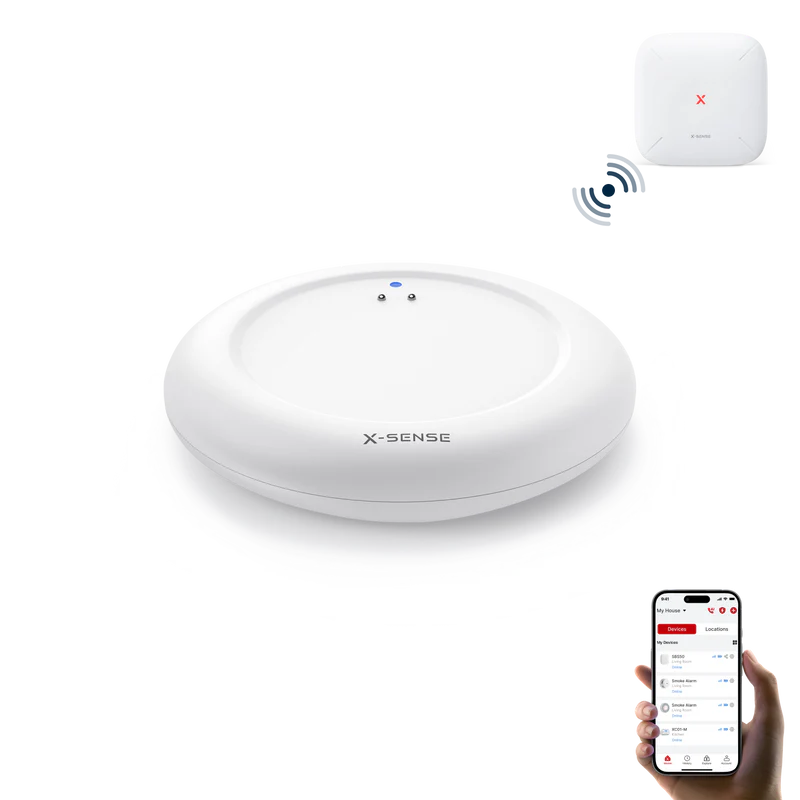
The SWS0A Ultra-thin Smart Water Leak Alarm targets a different kind of home risk: slow leaks and appliance failures. X-Sense lists smart app support, an ultra-thin sensor design, alerts through a base station, and 2.4 GHz Wi-Fi only. The product page says that when water is detected, users can get an app alert, the base station can sound, and the device can flash.
This is a good fit for places where water damage starts quietly: under a dishwasher, near a washing machine, behind a toilet, under a sink, or beside a water heater. The main limitation is infrastructure. Some kits require the SBS50 base station, and the official page says the base station uses 2.4 GHz Wi-Fi, not 5 GHz. That is common for smart-home sensors, but it is worth checking before buying.
If your broader home project is kitchen or utility-room organization, pair leak sensors with a practical layout check. Our best kitchen organizers guide covers storage choices that can keep under-sink and cabinet areas easier to inspect.
What X-Sense does well
X-Sense is strongest when the buyer wants clear product categories, sealed-battery options, and a range of standalone, interconnected, and app-connected devices. The official pages usually state sensor type, battery life, alarm loudness, standards, and operating conditions. That is helpful because many shoppers compare alarms only by price and pack count, then miss the difference between standalone, RF interconnected, hardwired, and app-connected models.
The brand also covers adjacent home safety problems that often get ignored until something goes wrong. Smoke and CO alarms are the obvious starting point, but radon and water leaks are real household risks. A single brand ecosystem can be convenient if you prefer one app and one support channel.
Where X-Sense may not be the right fit
Do not buy X-Sense only because a product is labeled smart. A hardwired Kidde, First Alert, Nest-compatible, Ring-compatible, or professionally installed system may fit better if your house already has an ecosystem, your local code requires hardwiring, or you need professional monitoring. X-Sense also has many similar model names, so buyers must read the exact product page instead of assuming that SC07, SC07-W, SC07-WX, and SC07-MR behave the same way.
There is also a certification-checking burden. Product pages mention ETL, UL, EN, and other standards depending on the model. For safety devices, the label on the exact unit and packaging matters. If you are replacing code-required alarms, match the required standard before checkout.
For another example of how spec details matter in home products, see our Doulton water filter review and Get Canopy review. The category is different, but the buying discipline is the same: match the product to the actual risk in the room.
X Sense vs common alternatives
Compared with older standalone alarms, X-Sense offers more modern options: sealed batteries, LCD readouts, app alerts, RF interconnection, and multi-device systems. Compared with large legacy brands such as Kidde or First Alert, X-Sense may appeal to buyers who want more online-first smart-home packaging and a wider set of compact add-on sensors.
Compared with Nest Protect or broader smart-home platforms, X-Sense is usually more safety-device focused and less centered on a premium smart-home interface. That can be good if you want practical alerts and lower complexity. It can be limiting if you want deep integration with an existing Google Home, Ring, or professionally monitored setup.
Buying checklist before you choose X-Sense
Start with the room. Bedrooms, hallways, kitchens, basements, garages, and utility rooms do not need the same device. Then check whether you need smoke only, CO only, smoke plus CO, radon, heat, or water leak detection.
Next, check power and connectivity. A sealed 10-year battery is convenient, but some homes require hardwired alarms. RF interconnection is useful, but only if every linked alarm is compatible. App alerts can help, but only if your Wi-Fi setup, base station, and notification sharing match your household.
Finally, confirm certification and placement. Look for the standard on the exact model, not the brand category. For smoke and CO devices, follow the manufacturer instructions and local code. For radon, use long enough measurement periods and consult EPA or qualified local resources if readings are elevated.
FAQ
Is X-Sense a legitimate home safety brand?
X-Sense has an active official store, product manuals, support pages, and a broad catalog of smoke, CO, radon, water leak, heat, and temperature-humidity devices. That supports legitimacy as a consumer home safety brand, but each safety device should still be evaluated by exact model, certification, and local code fit.
Are X-Sense smoke alarms hardwired?
Some X-Sense products are hardwired, while others are standalone battery-powered, RF wireless interconnected, or app-connected. Check the exact product name. For example, SC07 is standalone, SC07-W is wireless interconnected, and other models use hardwired or base-station setups.
Is X-Sense better than Kidde or First Alert?
Not universally. X-Sense can be a strong fit for buyers who want sealed-battery, wireless, or app-connected options, but Kidde and First Alert may fit better when a home already uses their hardwired system, local code expects a specific setup, or the buyer wants a legacy brand with broad retail availability.
Do X-Sense alarms work without Wi-Fi?
Many do. Standalone and RF interconnected models can operate without Wi-Fi, while app-connected sensors need the required network or base station for remote alerts. Always check the exact model because X-Sense uses similar names for different connectivity types.
Should I buy an X-Sense radon detector?
Consider one if you want ongoing radon visibility in a basement, lower level, or room you want to retest over time. For real estate transactions, elevated results, or mitigation decisions, follow EPA guidance and use qualified radon professionals where appropriate.
Where should I place X-Sense water leak sensors?
Common locations include under sinks, near washing machines, beside water heaters, near sump pumps, behind toilets, and around dishwashers. The SWS0A is designed for tight spaces, but it may require a base station and 2.4 GHz Wi-Fi for app alerts.
Title Candidates
- X Sense Review: 7 Checks Before You Buy Home Safety Alarms
- X Sense Review: Smart Smoke, CO, Radon, and Leak Alarms Explained
- Is X-Sense Worth It for Safer Homes? A Practical Buyer Review
- X-Sense Smoke and CO Alarms: What to Verify Before Buying
- X-Sense Home Safety Review: Where the Brand Fits and Where It Does Not