Get Canopy Review: 9 Checks Before Buying a Humidifier or Filtered Showerhead
Dry indoor air is easy to notice and hard to solve cleanly. A cheap mist humidifier can make a room feel better, then become another object you avoid cleaning. A shower filter can sound simple until you realize the replacement cartridge schedule is part of the real price. This Get Canopy review is for that exact buyer: someone who wants a calmer bedroom or bathroom routine, but does not want to confuse nice design with guaranteed value.
Our view: Get Canopy is a credible premium home wellness brand when easy cleaning, mist-free evaporation, tap-water compatibility, and bathroom aesthetics matter. It is less convincing if you want the lowest upfront price, visible mist, whole-home humidification, or a product with no recurring filter schedule. For how we evaluate claims, see our editorial policy and about page.
Get Canopy review verdict for quick shoppers
Get Canopy is worth shortlisting if you are buying for a bedroom, nursery, desk-adjacent space, or bathroom where the product will stay visible. The brand's core promise is not raw power. It is cleaner-looking hardware, filter-based evaporation, easier cleaning, and a maintenance routine that tries to reduce the usual humidifier mess.
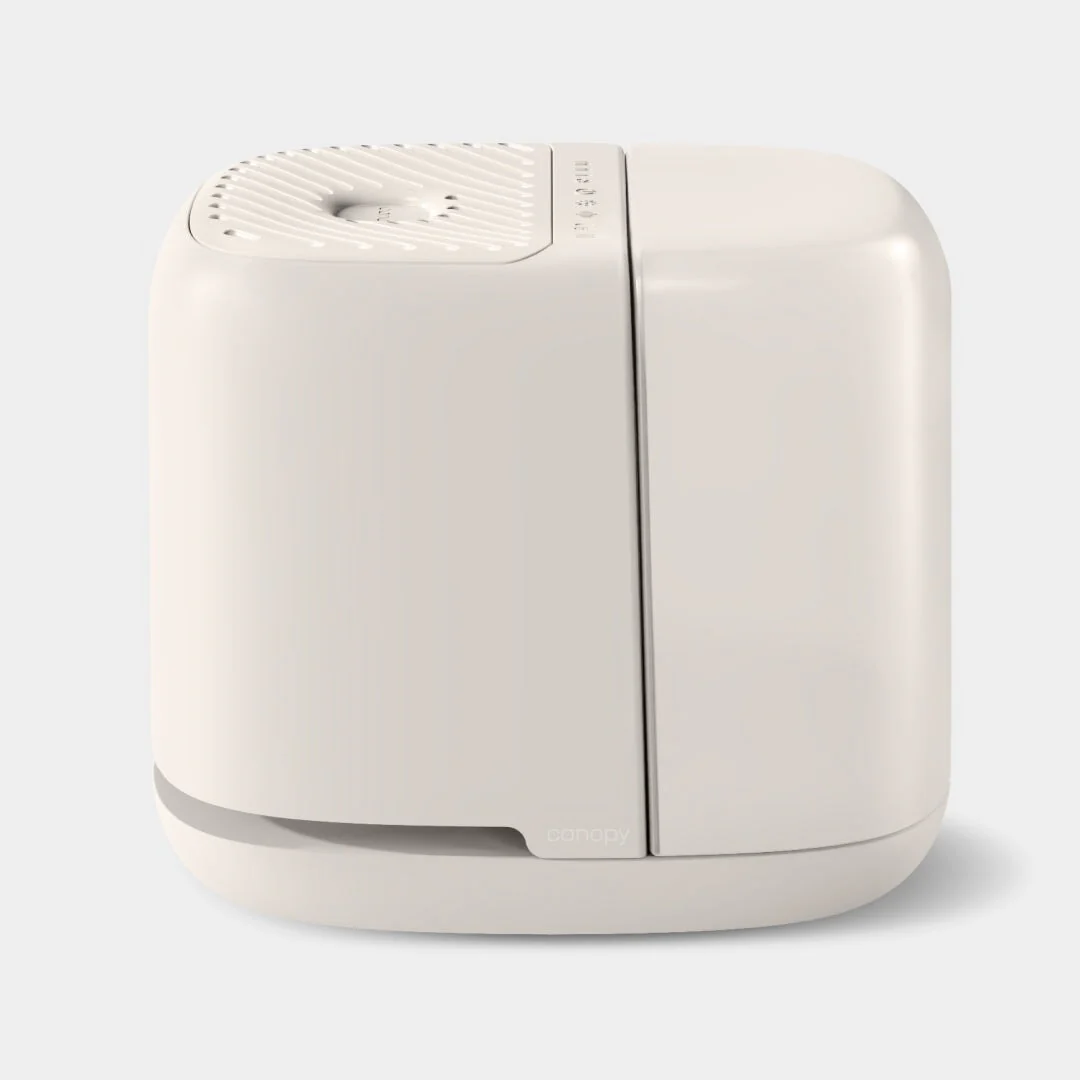
The strongest fit is the Bedside Humidifier 2.0. On the official Canopy Bedside Humidifier 2.0 page, Canopy lists a $159 one-time price, up to 36 hours of run time, up to 500 sq ft of humidification, a 2.5L tank, MERV 5 pre-filter, antimicrobial filter core, UV technology, tap-water compatibility, and dishwasher-safe water-touching parts. Those are useful specifications for a small-room buyer, but the page also shows the filter should be replaced every 45 days. That cadence should be part of your budget.
The weaker fit is a shopper who expects a visible cool mist cloud or wants one appliance to handle a large open-plan living area. Canopy's mist-free style is cleaner visually, but it can feel less obvious than ultrasonic mist if you judge performance by what you can see.
1. Check whether mist-free evaporation matches your expectations
Canopy humidifiers are built around evaporative, mist-free hydration. That matters because mist-free output reduces visible spray, wet furniture concerns, and the white-dust anxiety many buyers associate with some ultrasonic humidifiers. It also means the product may feel underwhelming if you like seeing mist in the air.
Architectural Digest reviewed an earlier Canopy humidifier and liked the look, cleaning access, and filtered approach, but the reviewer also noted the mistless experience felt different from a traditional humidifier and was not ideal for a very hot, dry, open apartment. That is the right caution. Canopy's design can be a better fit for a closed bedroom than for a hard-to-control open loft.
If you want a practical decision rule, use this: buy Canopy for cleaner maintenance and a visible-room object you will tolerate on a nightstand. Skip it if you need the most aggressive humidification per dollar.
2. Check the Bedside Humidifier 2.0 specs against your room
The Bedside Humidifier 2.0 is the product most shoppers will compare first. Canopy lists up to 36 hours of run time, up to 500 sq ft of humidification, a 2.5L tank, dimensions of 10 x 8.5 x 7 in, and a 3 lb product weight. That makes it more of a bedroom and nursery device than a whole-home appliance.
The official page also says the filter catches air and water contaminants before evaporation, with a MERV 5 pre-filter and antimicrobial filter core. That supports the brand's cleanliness positioning, but it does not remove your responsibility to clean the tank and replace the filter. The page says the filter should be replaced every 45 days.
Southern Living's 2024 review of the Bedside Humidifier 2.0 is useful because it tested the product in a dry winter illness context and emphasized tap-water use, filtration, UV, and Smart Persistent Airflow. Treat that as an editorial experience, not a lab measurement. It supports convenience claims better than medical claims.
3. Check the maintenance routine before you pay the premium
Canopy's biggest practical advantage is not just that it humidifies. It is that the maintenance routine is less intimidating than many old humidifiers. The official Bedside page says water-touching parts like the tank, tray, cap, and grill are dishwasher-safe, and the FAQ says a wide tank opening and removable grill make cleaning easier.
That is valuable only if you will actually follow the routine. A filter every 45 days is not a tiny detail. It is the part that turns a premium device into a recurring home supply. If you already ignore replacement reminders for air purifier filters, Canopy may become another neglected appliance.
The maintenance profile favors buyers who want a simple weekly rhythm: fill the tank, let the unit dry fully at least weekly, dishwasher-clean water-touching parts as needed, and keep filter replacements on schedule.
4. Check whether the Large Room Humidifier solves a real space problem
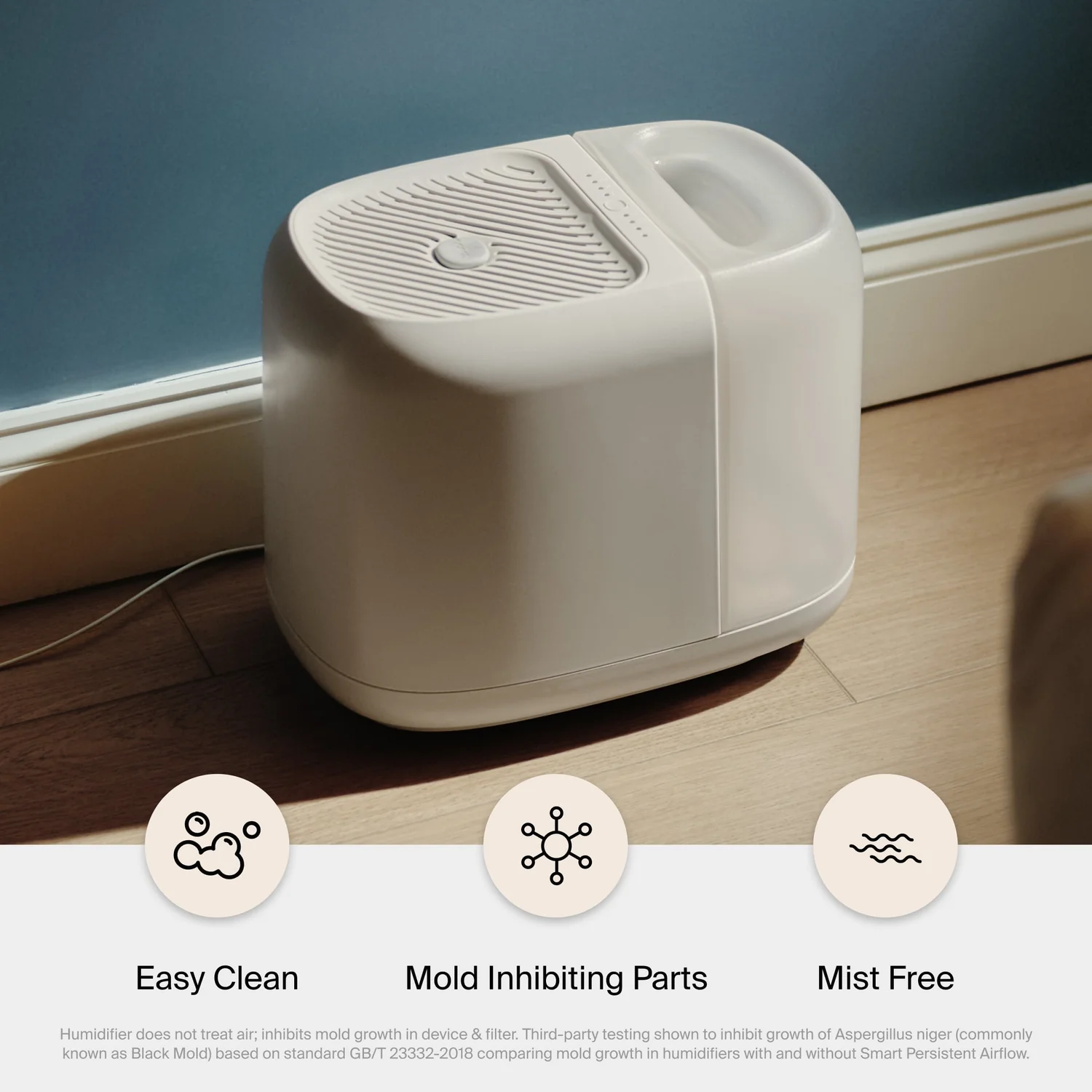
The Large Room Humidifier is the more expensive humidifier option. Canopy's official page lists a $255 one-time price, dimensions of 14.5 x 12 x 9.5 in, 6.6 lb product weight, USB-C power cord, MERV 5 pre-filter, antimicrobial filter core, UV technology, and filter replacement every 45 days. It is positioned for larger spaces like living rooms and bigger bedrooms.
The reason to choose it over the Bedside model is not because bigger always means better. Choose it if the room is actually larger, the humidifier will live on the floor or a low surface, and you want the same Canopy cleaning approach in a larger body. If your target space is a nightstand, desk, nursery corner, or small bedroom, the Bedside model is easier to justify.
One caution: official pages include consumer-perception results such as reduced skin dryness and better sleep agreement. Those figures are brand-claimed and based on a 46-participant external perception study. They are relevant to user expectations, but they should not be read as clinical proof.
5. Check the Shower System as a separate bathroom decision
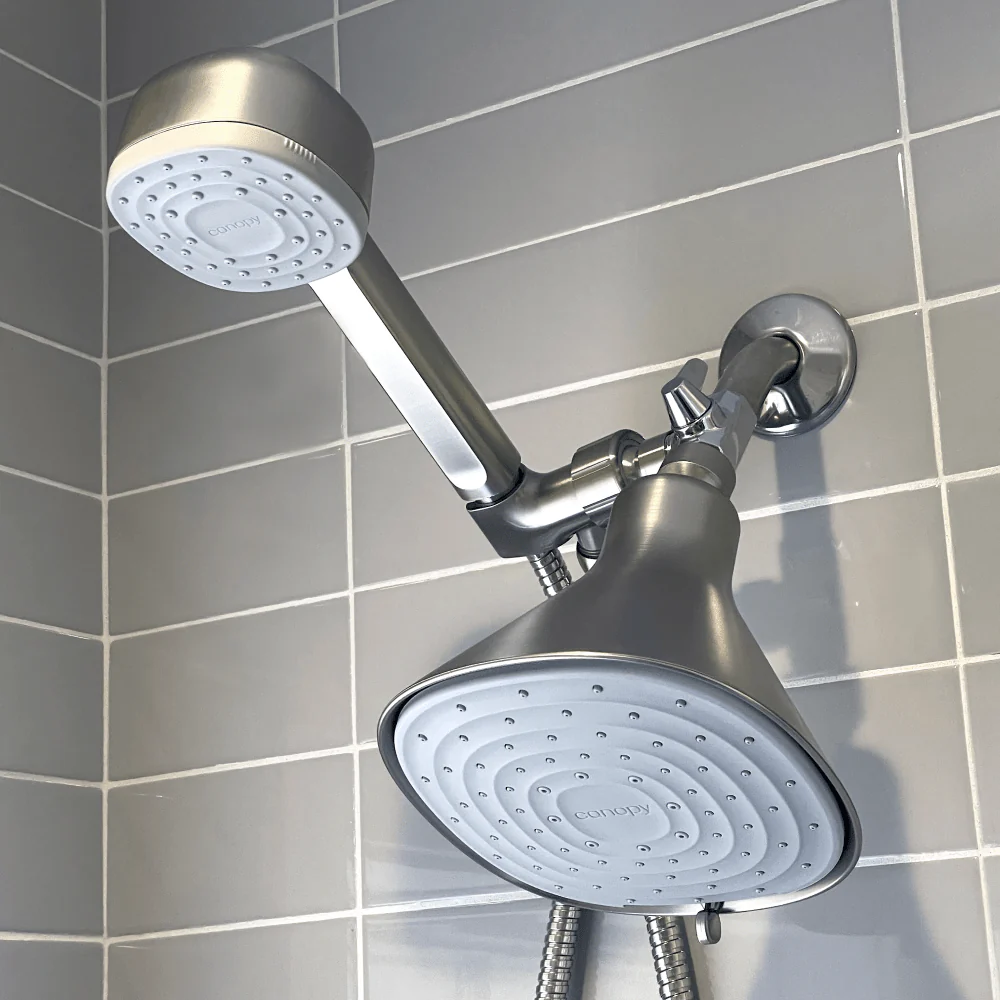
The Shower System is not a humidifier accessory. It is a separate bathroom upgrade. Canopy's official Shower System page lists a $285 one-time price, a filtered fixed showerhead, a handheld filtered showerhead, two filters, mount, diverter, hose, wrench, Teflon tape, how-to guide, and scalp massager. It also lists three stream settings and filter replacement every 90 days.
The filter details are more specific than many beauty-first shower products. Canopy says the filter is tested to ANSI/NSF-177 standards and uses granular activated carbon, copper-zinc, and calcium sulfite filtering media. The company frames this around reducing chlorine, contaminants, and impurities from tap water.
This is most relevant if your local water leaves buildup, your hair or scalp feels dry after showering, or you want a more polished shower fixture without hiring a plumber. It is less relevant if you rent a place where shower fixture changes are not allowed, or if you are mainly trying to solve hard water mineral scale. A shower filter is not the same thing as a whole-home water softener.
6. Check the All-in-One bundle only if you need purifier plus humidity
The All-in-One Humidifier & Purifier combines the Bedside Air Purifier with the Bedside Humidifier. Canopy's product page lists a sale price of $229 at the time checked, down from $358, and describes the purifier as using multistage HEPA-13 filtration. It lists purifier dimensions of 10.75 x 8.25 x 6.5 in, sound level from 17.5 to 50 dB, and filter replacement every 6 months. The humidifier portion keeps the same 2.5L tank, up to 36 hours run time, and up to 500 sq ft claim.
This bundle makes sense only if you were already planning to buy both a humidifier and a small air purifier. If you only need humidity, the bundle adds complexity. If you only need air cleaning, a dedicated purifier comparison may be smarter. For comparison, see our Loberon review and Vevor review for how we separate design appeal from daily-use fit.
7. Check the real ownership cost
The upfront prices are premium, but the recurring cost is where shoppers need discipline. The Bedside and Large Room humidifiers list 45-day filter replacement. The Shower System lists 90-day filter replacement. The purifier bundle lists a 6-month purifier filter schedule, plus humidifier filters.
That does not make Canopy a poor value. It means Canopy is closer to a subscription-friendly home wellness system than a one-time appliance purchase. If you like reminders and fresh filters arriving before you forget, that can be convenient. If you dislike recurring product ecosystems, it can feel like lock-in.
Do the math before buying: device price, filter cadence, aroma add-ons if you use them, and whether you need one device or several. The strongest Canopy purchase is a single device that solves a daily annoyance. The weakest purchase is a bundle bought because the product family looks cohesive.
8. Check what independent reviews actually support
Independent coverage supports some of Canopy's practical strengths, but it is not uniform proof that every shopper will love it. Southern Living praised the Bedside Humidifier 2.0 after comparing several humidifiers and highlighted tap-water use, filtration, UV, SPA, and easier maintenance. Architectural Digest liked the compact design and cleaning approach of an earlier Canopy humidifier, while also warning that mistless output can feel less tangible and may not satisfy every dry-space scenario. Allure has included Canopy humidifiers in beauty-oriented dry-air coverage, which supports the brand's skin-comfort positioning.
Those sources point in the same direction: Canopy is strongest as a clean, design-forward, low-friction humidifier for personal spaces. They do not prove that it is the right answer for every climate, every room size, or every budget.
9. Check who should buy, wait, or skip
Buy Get Canopy if you want a nightstand-friendly humidifier, care about easier cleaning, prefer mist-free operation, and will replace filters on schedule. The Bedside Humidifier 2.0 is the clearest entry point.
Choose the Large Room Humidifier if you have a bigger bedroom or living room and still want Canopy's filtration and cleaning logic. Do not buy it just because it is bigger.
Consider the Shower System if your bathroom upgrade goal is filtered shower water, easier installation, multiple spray settings, and a more finished look. Skip it if you need a true water softening solution.
Wait if you are price-sensitive, unsure about filter subscriptions, or only need occasional humidity during a short dry season.
Skip Get Canopy if you want a budget humidifier, visible mist, no recurring filter purchases, or whole-home coverage. In that case, a simpler appliance may serve you better.
For adjacent home-living research, compare this brand profile with our Vevor review for utility-heavy gear, Two Pages Curtains review for soft-home buying decisions, and raclette hosting setup review for setup-driven purchases.
FAQ
Is Get Canopy worth it?
Get Canopy is worth it if easy cleaning, mist-free evaporation, design, and filter-based maintenance are priorities. It is not the value pick if your main goal is maximum humidification for the lowest price.
Does the Canopy Bedside Humidifier use tap water?
Yes. Canopy markets the Bedside Humidifier 2.0 as tap-water friendly. The device uses a filter and UV step before evaporation, but you still need routine cleaning and 45-day filter replacement.
How often do Canopy humidifier filters need replacement?
The official product pages list humidifier filter replacement every 45 days. That cadence is central to the ownership cost, so budget for filters before choosing a subscription bundle.
Is the Canopy humidifier mist-free?
Yes. Canopy humidifiers use evaporative, mist-free hydration. That can reduce visible spray and condensation concerns, but shoppers who like visible mist may find the output less obvious.
Is the Canopy Shower System a water softener?
No. Canopy describes the Shower System as a filtered showerhead using media such as activated carbon, copper-zinc, and calcium sulfite. It is not the same as a whole-home water softener.
Can renters install the Canopy Shower System?
Maybe. Canopy describes a tool-light installation process for standard U.S. showers, but renters should check lease rules and keep original fixtures so the bathroom can be restored before moving out.
Title Candidates
- Get Canopy Review: 9 Checks Before Buying a Humidifier or Filtered Showerhead
- Is Get Canopy Worth It for Dry Bedrooms and Filtered Showers?
- Get Canopy Humidifier Review: What to Know Before the Filter Subscription
- Canopy Bedside Humidifier 2.0 Review for Real-World Home Use
- Get Canopy Shower System and Humidifier Review for Maintenance-Minded Buyers