If you are shopping for a small appliance in Brazil, Arno is one of those names that can appear in several aisles at once: air fryers, fans, blenders, irons, coffee makers, toasters, and newer cleaning devices. That breadth is useful, but it also makes the buying decision less simple. A strong blender reputation does not automatically prove that a cordless floor cleaner, a digital air fryer, or a breakfast appliance is the right fit for your kitchen.
This Arno review looks at the brand as a practical home appliance choice, not as a single-product verdict. We use the official Arno store, Groupe SEB background, and independent company-history sources. We do not claim hands-on testing; our goal is to help you decide what to verify before you buy. For how we handle source-backed reviews, see our /editorial-policy/ and /about/ pages.
Arno Review: What the Brand Is Known For
Arno is a Brazilian small-appliance brand focused on everyday home tasks. The official Arno store describes a wide portfolio that includes fans, food processors, electric ovens, oil-free fryers, laundry-care appliances, kitchen appliances, coffee equipment, and cleaning products. It also states that Arno is part of Groupe SEB, the French home-appliance group behind brands such as Tefal, Rowenta, Moulinex, Krups, and WMF.
That ownership matters for buyers in two ways. First, Arno is not a short-lived marketplace label with only one or two imported products. It sits inside a large appliance group with manufacturing, distribution, and product-development infrastructure. Second, the local purchase details still matter. The official store lists voltage choices on several products, Brazilian pricing, Pix discounts, installment options, and shipping conditions, so buyers should treat Arno as a Brazil-market appliance brand rather than a universal global model line.
Independent company-history sources also describe Arno as a Brazilian appliance company founded in 1945 and later acquired by Groupe SEB in 1997. That supports the idea that Arno has a long local identity, but it does not prove every current product is equally strong. The practical question is narrower: which Arno categories make sense for your home, and what should you check before ordering?
Product Range: Where Arno Fits in the Home
Arno is strongest as a broad small-appliance brand. On the official store, the main category navigation includes steamers, irons, blenders, fans, and air fryers. The homepage also highlights kitchen, laundry, ventilation, coffee, and home-care use cases. That makes Arno relevant if you want to solve multiple everyday home tasks from one familiar brand.
For kitchen shoppers, the most visible categories include air fryers, blenders, mixers, food processors, sandwich makers, toasters, electric coffee makers, and Dolce Gusto machines. For home comfort and cleaning, Arno lists fans, cordless vacuum and floor-cleaning products, irons, garment steamers, and lint removers. The brand is therefore less like a specialist espresso brand and more like a practical household line.
This breadth is useful when you are outfitting a kitchen or replacing several older appliances. It also creates a comparison risk: two Arno products can serve very different buyers. A large digital air fryer is a capacity and counter-space decision. A toaster is about simple reliability and browning control. A floor cleaner is closer to a maintenance appliance, where battery life, replacement parts, water-tank care, and service access may matter more than headline price.
Arno Air Fryers: Capacity and Counter Space Come First
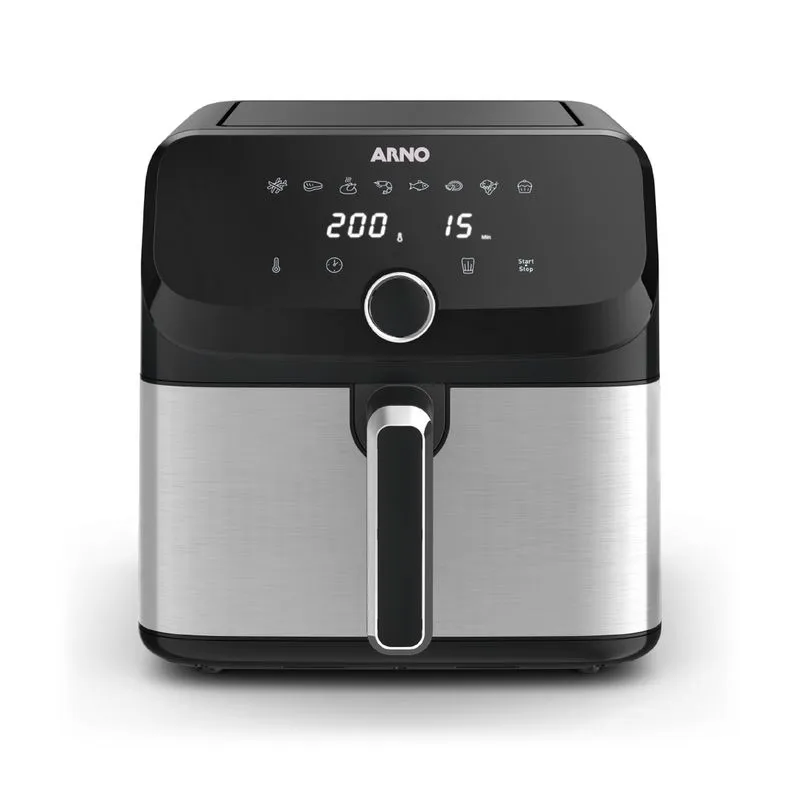
The official Arno store currently lists the Fritadeira Air Fryer Arno Mega Digital 7.5L Inox AFD7 with a reference code of 1510002541_PAI, 127V and 220V options, and a sale price shown at R$579.99 at the time reviewed on July 1, 2026. The product title and store placement make it clear that this is a large-capacity digital air fryer positioned for family-style cooking rather than a compact starter model.
A 7.5L air fryer can be useful if you cook larger batches, want fewer rounds for frozen snacks, or prefer a single basket for family meals. The tradeoff is counter footprint. Before buying, measure the space under cabinets, confirm where hot air will vent, and check whether the basket and accessories are easy to clean. If your household cooks for one or two people, a smaller unit may be easier to store and wash, even if the larger model looks like better value per liter.
The other check is voltage. Brazilian appliance shoppers cannot treat voltage as a footnote. The AFD7 page presents 127V and 220V choices, so verify the selected version before checkout. A wrong-voltage appliance can turn a good sale into a return problem.
Arno Cleaning Appliances: Good Fit for Maintenance, Not Deep-Renovation Cleanup
Arno has moved beyond kitchen appliances into cordless cleaning. The official store lists the Aspirador e Limpadora de Pisos Sem Fio Arno X-CLEAN 4 LXC4 Bivolt at R$2,999.99 at the time reviewed. The product title positions it as a cordless vacuum and floor cleaner, and the page identifies it as bivolt.
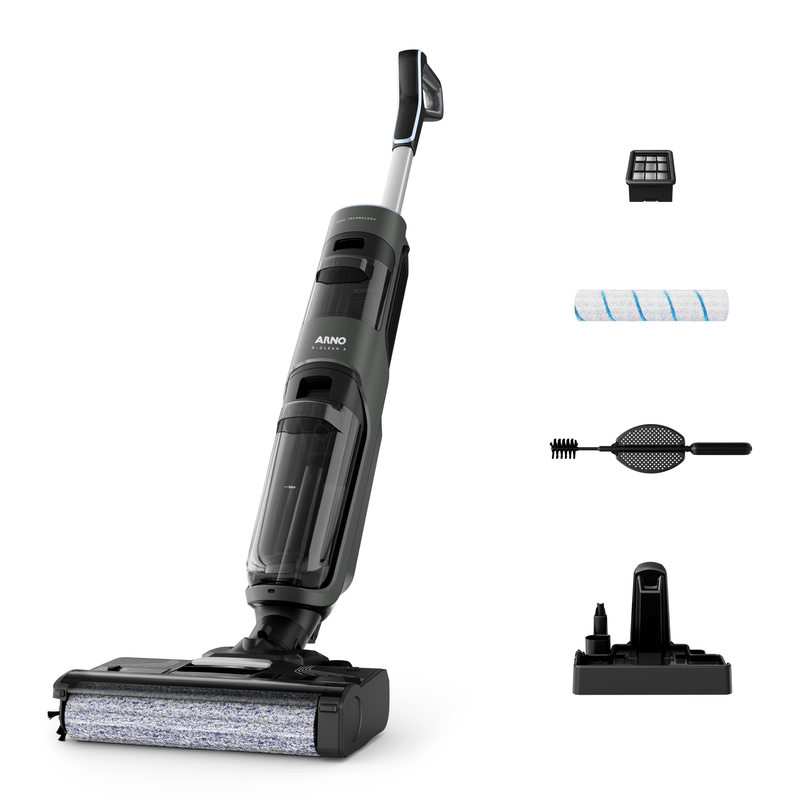
This kind of appliance is most attractive for homes that need frequent light cleaning: kitchen spills, pet traffic, entryway dust, and daily floor maintenance. It is less convincing as a replacement for every cleaning tool. Before buying, compare water-tank capacity, roller availability, filter replacement, self-cleaning instructions, and warranty handling. Those service details matter more over time than the product photo.
The high listed price also changes the buying logic. With a budget appliance, a buyer may accept limited parts availability. With a premium-priced floor cleaner, check replacement consumables and repair access first. If those details are unclear, wait for better documentation or choose a simpler vacuum-and-mop setup.
Breakfast and Coffee Appliances: Simple Features Can Be the Point
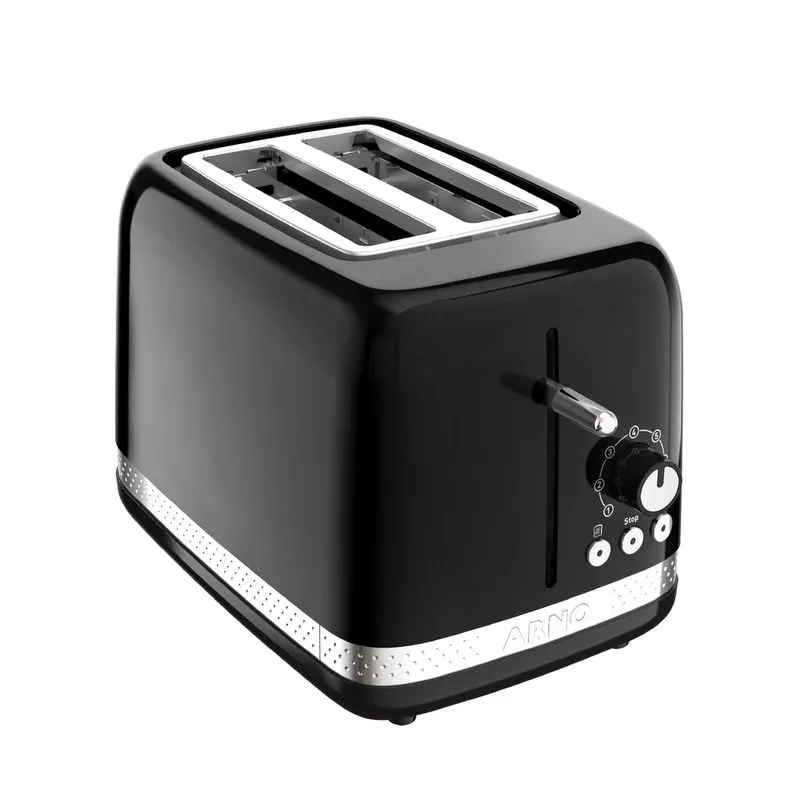
Not every useful appliance needs to be a flagship product. Arno's Soleil toaster page lists the Torradeira Arno Soleil with seven browning levels, 127V and 220V options, and a sale price shown at R$279.99 at the time reviewed. A seven-level browning dial is not exotic, but it is the type of feature that matters in a shared kitchen where one person wants light toast and another wants a darker finish.
The same practical framing applies to the Arno Soleil filter coffee maker. The official product page lists a 1.25L jug and a drip-stop system, with 127V and 220V options and a sale price shown at R$259.99 at the time reviewed. A 1.25L carafe is more relevant for a breakfast table or small office than for someone who makes one cup at a time.
For breakfast appliances, the main buyer checks are simple: voltage, counter footprint, cleaning access, replacement carafe availability, and whether the product is easy enough to use every morning. These products do not need grand claims to be useful. They need predictable controls and parts that are not frustrating to replace.
Quality Signals and Buyer Caveats
Arno has several positive signals. It is a long-running Brazilian appliance name. It is attached to Groupe SEB. Its official store shows a wide category range and clear product pages with reference codes, voltage options, prices, and installment information. For a shopper, that is a better starting point than buying an unknown generic appliance with limited brand support.
The caveats are also real. First, product breadth does not equal category leadership. A brand can make a sensible air fryer and still have a cleaning appliance that only fits certain homes. Second, many official product pages emphasize title-level features and price before deep ownership details. For higher-priced items, buyers should look for manuals, consumables, service information, and warranty conditions before ordering.
Third, prices and discounts change quickly. The official store showed discounts and Pix/payment promotions at the time of review, but those should not be treated as permanent. For buying decisions, current checkout price, shipping, return window, and voltage selection matter more than a past sale label.
Arno Compared With Similar Appliance Brands
Arno competes in the same broad home-appliance space as brands such as Mondial, Britânia, Philips Walita, Oster, Electrolux, and other Brazil-market kitchen and cleaning lines. The best comparison depends on the category. For an air fryer, capacity, basket coating, temperature control, and cleaning are central. For a fan, noise and airflow matter. For a toaster or coffee maker, simple controls and replacement parts may matter more than smart features.
Arno's advantage is brand familiarity and its connection to Groupe SEB. Its limitation is that a broad catalog requires product-by-product checking. If you already trust Arno and the product page confirms the exact voltage, capacity, and warranty terms you need, it can be a sensible shortlist brand. If you need a highly specialized appliance, compare against category specialists before choosing.
Who Should Consider Arno?
Consider Arno if you want a recognizable Brazilian small-appliance brand, you are buying from official or authorized channels, and your priority is practical daily use rather than niche professional performance. Arno is especially relevant for shoppers comparing air fryers, fans, blenders, irons, toasters, coffee makers, and routine home-cleaning appliances.
Skip or pause if the product page does not answer your ownership questions. For higher-ticket products such as cordless floor cleaners, do not rely only on discount percentage or brand familiarity. Confirm consumables, repair access, return rules, and whether the appliance solves a frequent enough problem to justify the storage and maintenance.
For related home buying research, see our guides to /profile/breville-espresso-machines-review/, /sidebyside/cosori-vs-ninja-air-fryer/, /profile/bissell-review-pet-cleaning-brand-guide/, and /workshop/how-to-choose-lighting-fixtures/.
FAQ
Is Arno a Brazilian brand?
Yes. Arno is widely described as a Brazilian appliance brand, and the official store presents it as a home appliance brand with more than 80 years of tradition. Independent company-history sources also identify Arno as a Brazilian small-appliance company founded in 1945.
Who owns Arno?
Arno is part of Groupe SEB, the French small-appliance group behind brands such as Tefal, Rowenta, Moulinex, Krups, and WMF. This gives Arno a larger parent-company context, although shoppers should still evaluate each product individually.
Are Arno air fryers worth considering?
They are worth shortlisting if the capacity, voltage, and cleaning design match your kitchen. The Mega Digital 7.5L AFD7 is a large model, so it makes more sense for batch cooking than for shoppers with very limited counter space.
What should I check before buying an Arno appliance?
Check voltage, warranty, return rules, replacement parts, cleaning instructions, and the current checkout price. For higher-priced cleaning appliances, also check consumables and service access before relying on a sale discount.
Does Arno make only kitchen appliances?
No. The official Arno store includes kitchen appliances, coffee and beverage products, laundry-care devices, fans, and home-cleaning appliances. That broad range is useful, but it also means you should compare products category by category.
Title Candidates
- Arno Review: 7 Checks Before Buying Small Appliances
- Is Arno Worth It? Practical Appliance Checks for 2026
- Arno Appliances Review: Air Fryers, Cleaning, and Coffee
- Before You Buy Arno, Check These Appliance Details
- Arno Review: A Brazil Home Appliance Brand, Explained